www.dailysignal.com
Supreme Court Weighs in on 2 Cases Involving Religious Freedom
The Supreme Court on Tuesday decided on two religious freedom cases, in a pair of 6-3 rulings.
In a victory for tech giant Cisco, the Supreme Court held Tuesday that a company or entity cannot be held liable for aiding and abetting a violation of an anti-torture law. Members of China’s Falun Gong movement claimed that Cisco cooperated with the Chinese communist government’s persecution of the movement.
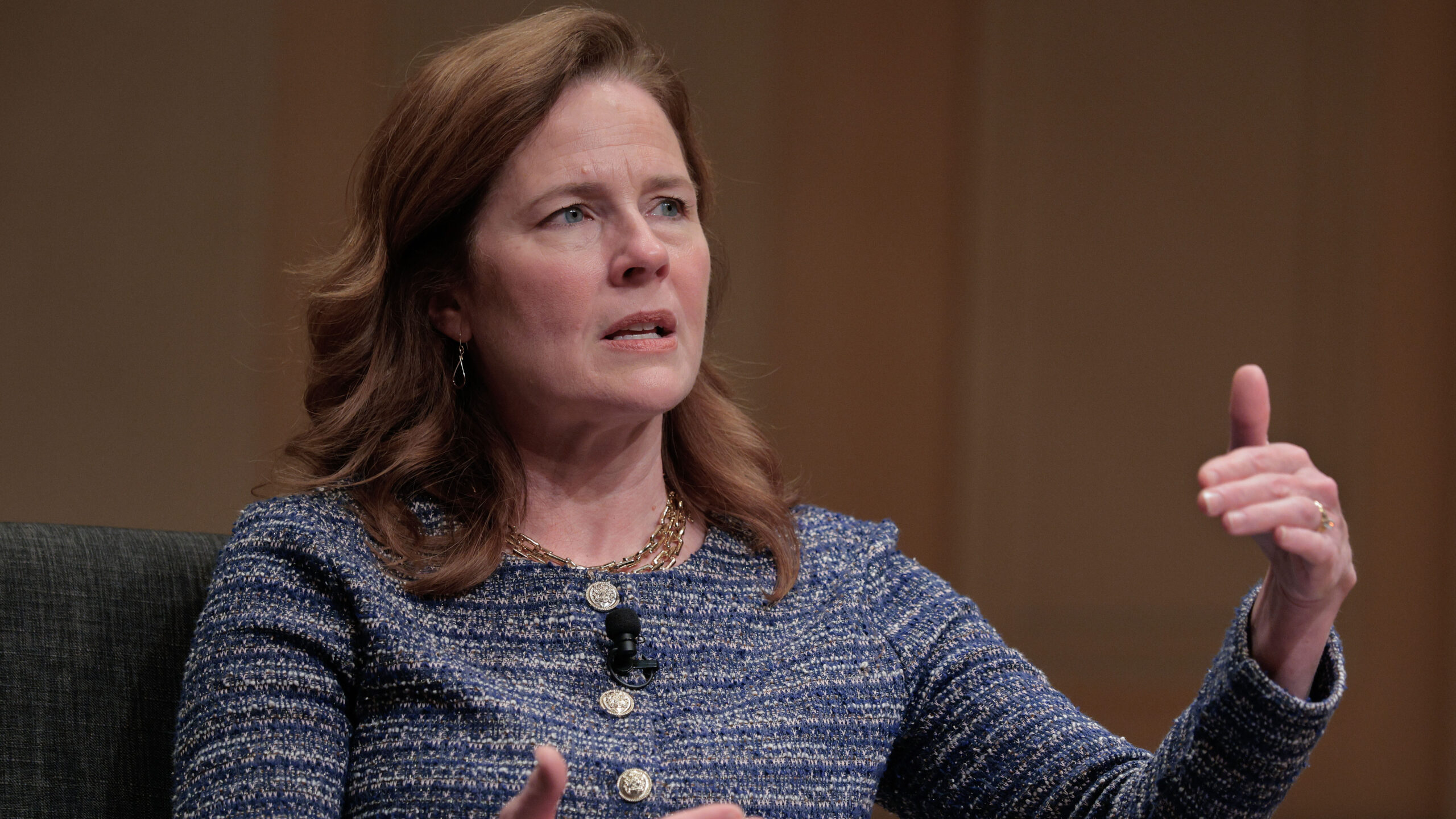
The court ruled in the case of Cisco Systems, Inc. v. Doe that courts can’t create a new cause of action under the Alien Tort Statute. Justice Amy Coney Barrett wrote for the majority.
“Courts may not create new causes of action for violations of international norms,” Barrett wrote for the majority. She later added, “The power to create causes of action belongs to Congress.”
The Falun Gong spiritual movement spread in China in the 1990s, but the Chinese Communist Party banned its practices in 1999. Members of the movement brought the lawsuit against Cisco in 2011.
Justices considered whether two statutes, the 18th-century Alien Tort Statute and the 1991 Torture Victim Protection Act, provide a cause of action to sue. However, several conservatives asked why Congress didn’t specify the right to sue in the law.
In another case, the high court held that a Louisiana prisoner could not sue a government official in his individual capacity for a violation of a religious freedom law, the Religious Land Use and Institutionalized Persons Act.Justice Neil Gorsuch wrote the 6-3 majority opinion for the court.In Landor v. Louisiana Department of Corrections and Public Safety, the court considered whether a prisoner can sue a prison official in his personal capacity for damages. The Religious Land Use and Institutionalized Persons Act of 2000 forbids the government from imposing a “substantial burden” on incarcerated people’s religious free exercise rights.
The plaintiff, Damon Landor, had grown long dreadlocks as part of his practice of Rastafarianism. Officials honored his practices when he was incarcerated in 2020 on a drug offense, but after he was transferred with three weeks left in his sentence in 2022, a prison guard required him to have his head shaved.
Landor petitioned for the right to sue the guard for monetary damages under the Religious Land Use and Institutionalized Persons Act. The trial court and the 5th U.S. Circuit Court of Appeals both determined that Landor wasn’t entitled to financial damages.
“Individuals may not be held liable in their personal capacities under a Spending Clause statute unless those individuals have voluntarily and knowingly consented to answer lawsuits under the statute; because the individual defendants in this case did not voluntarily and knowingly consent to face RLUIPA liability in an agreement with the federal government, Mr. Landor’s case cannot proceed against them,” Gorsuch wrote for the majority.
Interestingly, the conservative-leaning Becket Fund for Religious Liberty, which litigates in favor of religious expression, and the left-leaning Americans United for Separation of Church and State both filed briefs to the high court in favor of the plaintiff.








 New Posts (Home)
 ChatBox
 Popular Posts
  Game Zone
 Top PodCasts