www.upworthy.com
Science confirms that food stolen from someone else’s plate tastes better
Scientists all over the world are doing amazing work. They’re chasing down cures for cancer, discovering breakthroughs for Alzheimer’s Disease, and advancing green energy.
Some scientists are also working on some seemingly less crucial projects, like trying to confirm the answers to age old questions. For instance, do fries stolen from someone else’s plate actually taste better?
Research study puts “food theft” to the test
A recent study published in the journal Food Quality and Preference noted there have been a lot of studies demonstrating how outside factors affect the taste and enjoyment of food. For example, music can make wine taste better while playing crunchy sounds can make potato chips seem more crisp.
However, the researchers write, “There has been little attention on how moral transgression itself might enhance gustatory pleasure in everyday settings.”
In other words, it’s commonly accepted knowledge that a bite “stolen” from a friend, family member, or maybe even a stranger is far more delicious than one from your own plate. But the phenomenon has been scarcely studied. Until now.
Participants in the study Stolen fries are spicier than justice: How covert larceny enhances taste were asked to “steal” French fries from the plate of a confederate under different conditions. After the theft and consumption, volunteers were surveyed on their emotions (guilt, excitement, etc.), and on how the food tasted.
The findings? Not only did “covert acquisition” increase people’s enjoyment of the fries, but the risk involved was highly correlated with stronger enjoyment. Meaning, when the confederate guarding a plate was “stern” and more watchful, the people who stole the fries reported they tasted even better.
The guiltier people felt about the taking, the yummier the spoils.
The Forbidden Fruit Effect explained
Researchers based their hypotheses, that were largely proven correct in the study, based on the well-documented Forbidden Fruit Effect.
It’s human nature. The more forbidden, taboo, or restricted something is, the more it naturally piques our curiosity and desire. It’s highly applicable to food, as seen in one study which showed that children who weren’t allowed to eat candy were far more transfixed by candy marketing.
The researchers of the stolen fries study write, “Indulgence paired with mild guilt increases enjoyment more than guilt-free consumption.”
Not only does the context affect our enjoyment of food, it affects the way our taste buds and brain react. The stolen French fries were perceived as saltier, crispier, and fresher when served with a side of guilt.
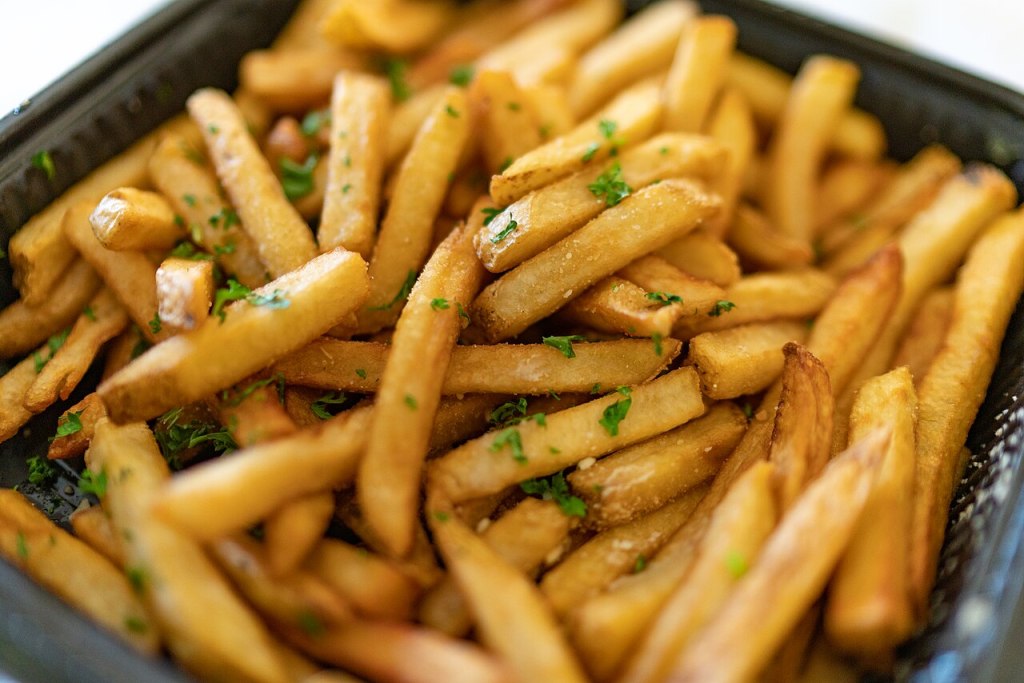
Truffle oil fries
The fascinating psychology and science of food
Anybody who’s ever eaten a sandwich or savored a cup of coffee knows a few things to be true.
For starters, food tastes better when made by someone else. This is just an anecdotal human truth. When a loved one makes you a sandwich, it’s objectively more delicious than if you’d made it yourself.
Fascinatingly, this has also been studied scientifically, or at least tangentially. When you make a sandwich yourself, you’re imagining the end product over and over as you make it. Surprisingly, this has the effect of making the sandwich less desirable. When someone brings you a completed sandwich, not only does it pique your interest, imagination, and hunger, but its contents and makeup are a delightful little surprise.
Next, some food tastes better as leftovers. Fresher is better ,but you’re not imagining things if that casserole or those muffins from a few days ago are actually peaking for you. There’s a lot of complex science involved including the breakdown of proteins and fats, moisture distribution, and starch retrogradation—all factors that can change, and improve, taste and texture.
Finally, your “dessert stomach” is actually real—sort of. Most people can relate to feeling exceptionally full from dinner, yet still having room for a bit of dessert. This phenomenon has been studied in mice, and researchers have found that sugar has a unique effect: even just the anticipation of the pleasure from eating something sweet can literally trick our brains into blocking the signals that our stomach is actually full.
The stolen French fries study proves that food is so much more than just the sum of its ingredients. Food is culture and community, of course, but the pleasure we take in enjoying it can vary wildly based on things like music, love, and even guilt.
The post Science confirms that food stolen from someone else’s plate tastes better appeared first on Upworthy.








 New Posts (Home)
 ChatBox
 Popular Posts
  Game Zone
 Top PodCasts