www.dailywire.com
The Battle Over AI Dominance Starts With The States
As artificial intelligence transforms the global economy, America faces a choice that will shape our economic and national security future for decades to come. Will we build the infrastructure needed to lead the AI age here in the United States, or will we allow regulatory barriers, political opposition, and short-sighted policymaking to push investment elsewhere?
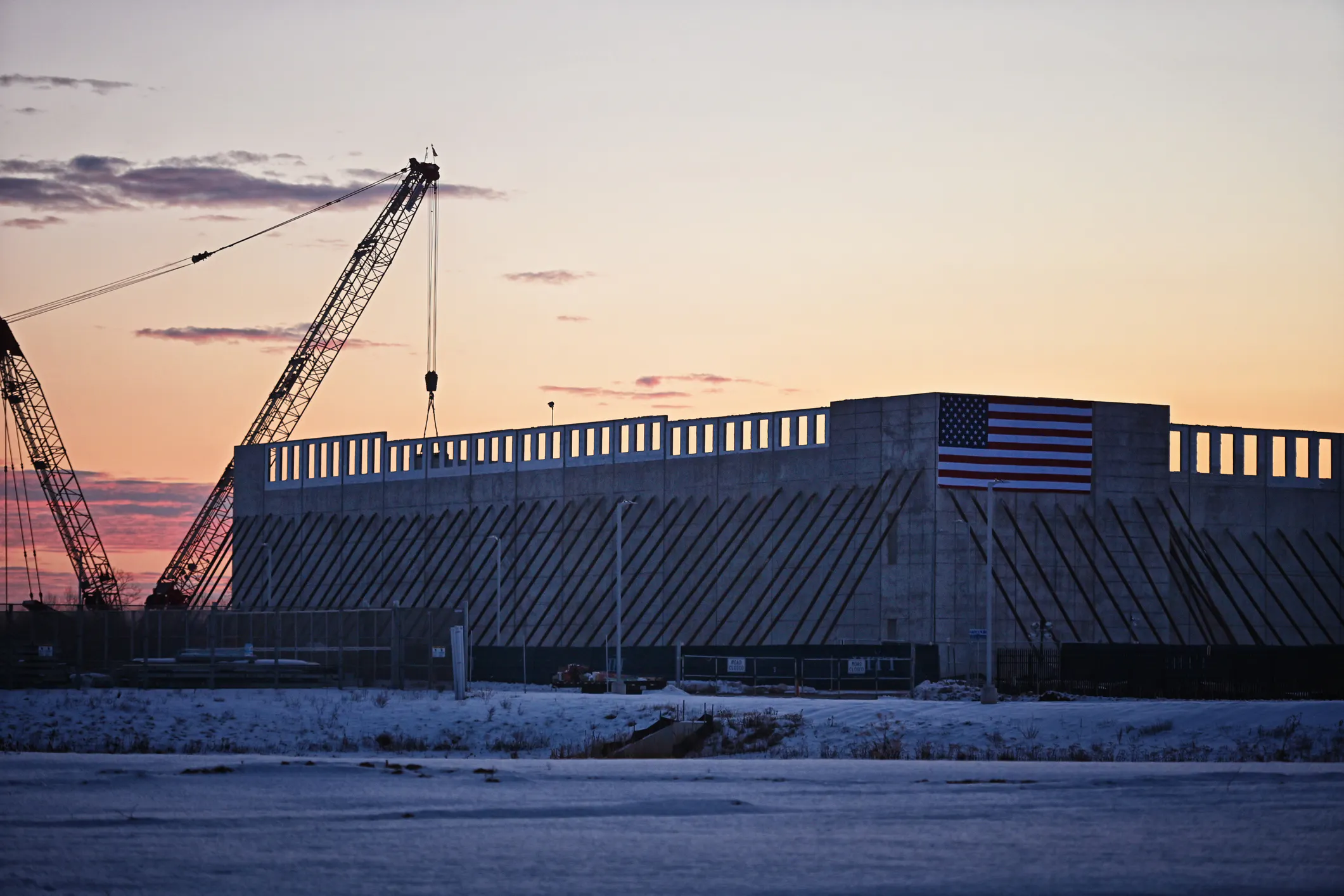
The resistance we’re seeing to data center development in some states is concerning from both national security and economic perspectives. Data centers are the physical infrastructure that powers everything from cloud computing and financial transactions to military operations and artificial intelligence.
This fact makes data centers critical national security infrastructure. Furthermore, states that embrace data center investment will be rewarded with jobs, tax revenue, and long-term economic growth, while states that reject it risk being left behind. The bottom line is that we must keep data centers on U.S. soil.
Data centers house and process some of the most valuable information in the world. They support government operations, financial institutions, healthcare systems, defense contractors, communications networks, and the growing AI ecosystem that is becoming increasingly important to America’s economic and military strength. Allowing critical computing infrastructure to be hosted overseas would create strategic vulnerabilities precisely at the moment when technological competition with China is accelerating.
If America fails to expand domestic data center capacity, we risk becoming dependent on infrastructure located beyond our borders and potentially subject to foreign influence, disruption, or control. Every breakthrough in artificial intelligence depends on massive computing power. Every AI model requires enormous amounts of data storage and processing capacity. That capacity comes from data centers.
National security in the 21st century requires military strength, energy security, and digital infrastructure. Data centers are now part of that equation.
States that welcome data centers will win in the next economic boom. Yet, we’re seeing a tale of two states when it comes to data center policy: those that are putting out the welcome mat — and those pushing bans. In fact, 11 states are considering bills to pause the construction of data centers. Such resistance is foolish. Data centers represent one of the greatest economic development opportunities available to states today. The evidence is already visible.
Virginia, which hosts the largest concentration of data centers in the world, has become a model for how states can benefit from embracing digital infrastructure. According to a 2024 report by Virginia’s Joint Legislative Audit and Review Commission, the state’s data center industry supports approximately 74,000 jobs annually, generates $5.5 billion in labor income, and contributes $9.1 billion to Virginia’s economy each year. Last year alone, data center investment accounted for roughly 84% of all announced capital investment projects in the Commonwealth.
Those numbers are not an accident. Virginia built a policy environment that welcomed investment. State leaders recognized early that data centers would become essential infrastructure for the digital economy and worked to create a competitive environment for development.
Other states face a similar choice. Some are pursuing policies that encourage investment by streamlining permitting, supporting workforce development, modernizing infrastructure, and maintaining competitive tax policies. Others are considering moratoriums, burdensome regulations, and restrictions, erroneously blaming data centers for rising energy costs and other community concerns.
Companies building AI infrastructure have options. They can invest in Virginia, Texas, Ohio, Georgia, and other states that welcome growth — or they can move projects to competing states or even competing countries. States that make it easier to build data centers will attract billions of dollars in private investment, create thousands of high-paying jobs, expand their tax base, and position themselves at the center of the AI economy. States that choose obstruction instead of opportunity will watch those benefits flow elsewhere.
China recognizes that America’s ability to build large-scale data centers is essential to maintaining leadership in AI, cloud computing, and advanced technologies, which is why it has been aggressively pushing misinformation on social media about environmental impacts, power consumption, and water usage of data centers. The most effective lies fueling the Not In My Backyard (NIMB) movement are that data centers drive up energy prices and are transferring their costs onto Americans. Both are false but are, nevertheless, taking hold among the American public.
The reality is that data centers are already regulated at the local, state, and federal levels. There is no data center exemption to environmental and nuisance laws.
Beijing has spent years investing heavily in artificial intelligence, advanced computing, semiconductors, and related technologies, and views technological leadership as a core national objective. America cannot maintain leadership in AI without the infrastructure to support it. The states that choose to lead will help secure America’s technological future, with the added benefit of attracting jobs, investment, and economic growth.
***
Patrick Hedger is Director of Policy at NetChoice








 New Posts (Home)
 ChatBox
 Popular Posts
  Game Zone
 Top PodCasts