www.dailywire.com
A 1,500-Foot Plunge. A Broken Ankle. An Unbelievable Survival Story.
A 31-year-old novice climber is lucky to be alive after falling 1,500 feet down California’s Mount Shasta.
The female climber suffered a serious fall while ascending the Left of Heart variation, a steeper section of the Avalanche Gulch route on Mount Shasta, according to the U.S. Forest Service. Mount Shasta is the second-highest peak in the Cascades and the fifth-highest in the Golden State.
The woman, who has not been publicly identified, was with three novice climbers when she plunged 1,500 vertical feet—from an elevation of about 13,000 feet to approximately 11,500 feet—before coming to rest on the mountain.
Moments later, three U.S. Forest Service Climbing Rangers, with assistance from the California Highway Patrol, launched a rescue response.
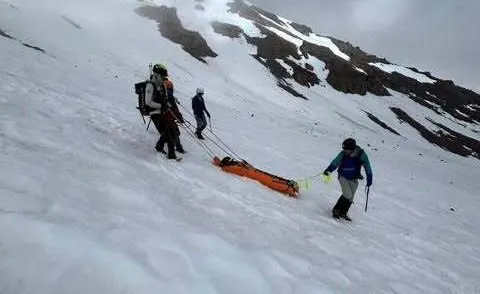
Due to heavy cloud cover, Climbing Ranger Falconer left the helicopter and continued the rescue on foot to reach the injured woman, aided by one member of her party, who helped carry rescue equipment.
“The patient was found alert, in good spirits, and suffering from a suspected fractured right ankle along with additional injuries consistent with the significant fall,” the U.S. Forest Service said in a social media post. “After being stabilized and packaged in a SKED rescue litter, Climbing Rangers Falconer, Jordan, and MacArthur, along with members of the climbing party, carefully lowered the patient to Lake Helen.”
Later that evening, rescuers evacuated the woman from Lake Helen before she was transported to Mercy Medical Center in Mount Shasta for further treatment.
The route the woman and her group were climbing is considered “steep and rigorous,” requiring climbers to carry specialized gear—including crampons, an ice axe, and a helmet—as well as possess basic snow travel skills, according to the Mount Shasta Avalanche Center.
“Don’t consider this route as a cakewalk,” the center said. “Though not an overly technical route, it does follow a 7,000 vertical foot ascent that exposes the climber to steep snow and ice, rock fall, and weather extremes.”
Over the decades, nearly 50 people have died on Mount Shasta since recordkeeping began in 1916.
“This incident serves as an important reminder that Mount Shasta is a high-altitude mountaineering environment, not a hike,” the Forest Service said. “Even experienced climbers can encounter rapidly changing weather, steep snow and ice, rockfall, and hazardous fall conditions.”








 New Posts (Home)
 ChatBox
 Popular Posts
  Game Zone
 Top PodCasts