reclaimthenet.org
Apple Loses EU App Store Gatekeeper Appeal
If you're tired of censorship and dystopian threats against civil liberties, subscribe to Reclaim The Net.
Apple spent years arguing that the App Store on your iPhone is somehow five different stores, and a European court has now told the company what most people already assumed. It doesn’t buy it.
The General Court of the European Union in Luxembourg threw out all three of Apple’s legal challenges on July 8, upholding the company’s status as a gatekeeper under the Digital Markets Act. The ruling keeps Apple bound by the rules it has fought hardest against, the ones forcing it to open iOS to rival app stores, allow sideloading so people can use whatever apps they want, and let competing services connect to its own.
We obtained a copy of the order for you here.
Apple has tried to make all this a clever piece of accounting. Apple never denied it was big. Since 2024 the company has insisted it runs five separate App Stores rather than one, a distinct storefront for iPhone, iPad, Mac, Apple TV, and the Apple Watch. Split the empire into five smaller pieces and, so the theory went, only the iPhone store would clear the size thresholds that trigger the DMA. Everything else would slip loose.
The judges weren’t persuaded. “Irrespective of the devices in question,” they wrote, “those stores have the same purpose, namely to connect app developers with end users in order to facilitate the distribution of software applications.”
The differences Apple leaned on came down to the hardware, and the court found that hardware alone does not turn one storefront into five.
The European Commission first tagged Apple as a gatekeeper in September 2023, covering the App Store, iOS, and the Safari browser. Gatekeeper status lands on the largest platforms between businesses and their customers, and it carries obligations meant to stop those platforms from rigging the game for themselves. Apple has treated the label as an existential threat ever since.
Apple’s response reached for the words it always reaches for.
“We firmly believe the DMA’s mandate goes beyond what is lawful and proportionate, threatening to erode decades of privacy and security protections we’ve built and leaving our users vulnerable to new risks,” an Apple spokesperson said. “We will continue advocating for the innovation and privacy our European customers deserve.”
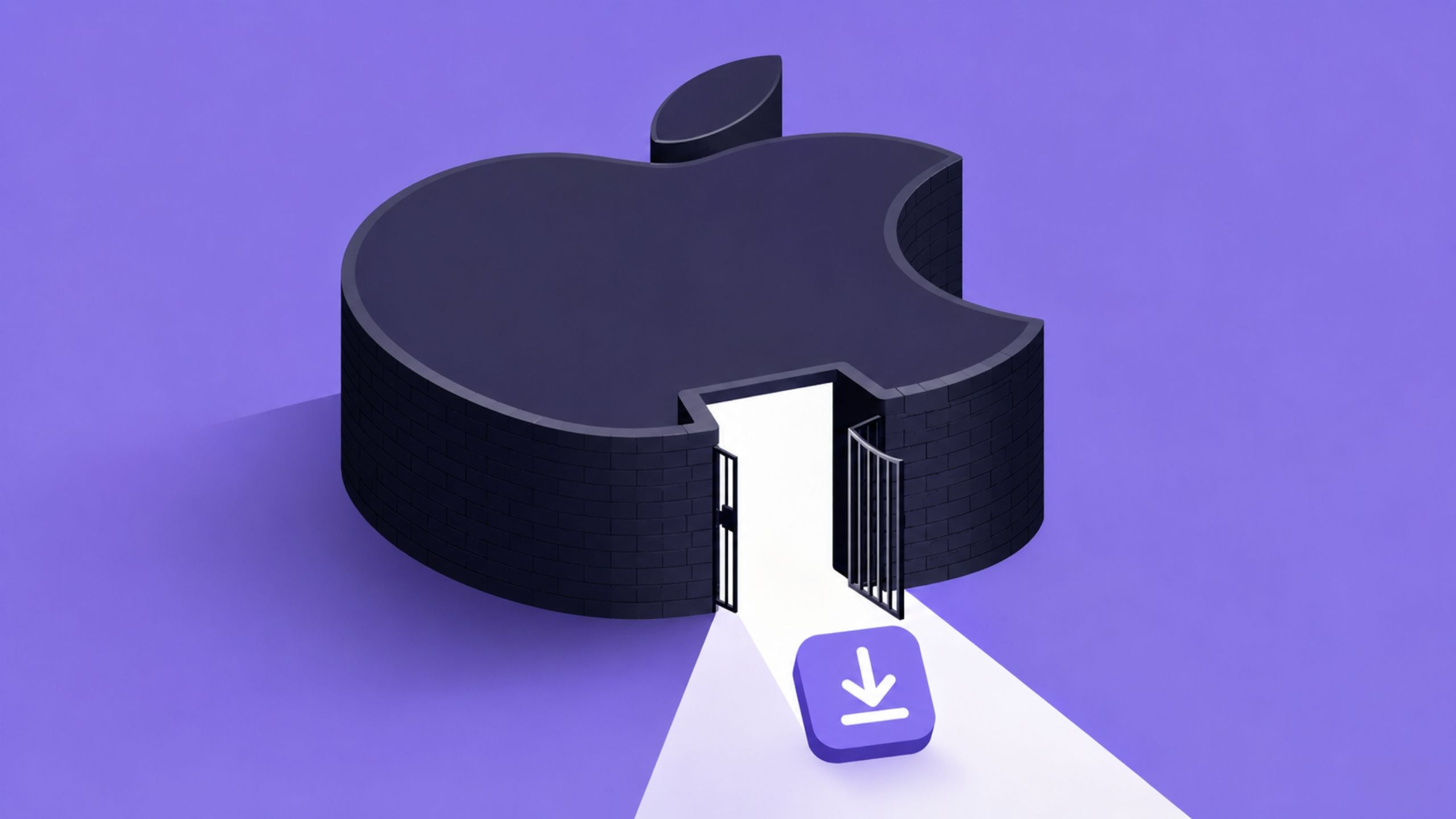
The protections Apple describes are the same walls that stop users from installing software Apple hasn’t blessed, and that route every purchase through the store Apple controls.
Security and lock-in have always traveled together in Cupertino’s telling, and the DMA tries to pull them apart, to let people load a store Apple would rather they never see. Calling that vulnerability is a choice.
iMessage was the one place Apple came away with something, though not the outcome it wanted. The court ruled Apple’s challenges over iMessage inadmissible. The Commission had classified the service as a number-independent interpersonal communications service, then decided in February 2024 not to designate iMessage as a gatekeeper.
Because iMessage was never named an “important gateway,” the DMA’s obligations never attached to it. The classification, the judges wrote, “does not, by itself, produce binding legal effects that bring about a change in Apple’s legal position.” There was nothing to appeal, because nothing had been imposed.
Apple can still take the App Store ruling to the Court of Justice of the European Union, the bloc’s highest court, on points of law. It has two months and ten days to file.
Given how much money and lawyering the company has thrown at resisting the DMA, another appeal seems all but certain.
For anyone who wants the freedom to install what they choose on hardware they own, the decision holds the line. Apple’s five-store gambit failed, iOS stays open to competition under European law, and the idea of a walled garden as a privacy feature took another hit in open court.
If you're tired of censorship and dystopian threats against civil liberties, subscribe to Reclaim The Net.
The post Apple Loses EU App Store Gatekeeper Appeal appeared first on Reclaim The Net: Free Speech, Privacy, Digital Rights.








 New Posts (Home)
 ChatBox
 Popular Posts
  Game Zone
 Top PodCasts