www.theconservativebrief.com
Trump’s Loyalty Test Shocks NATO
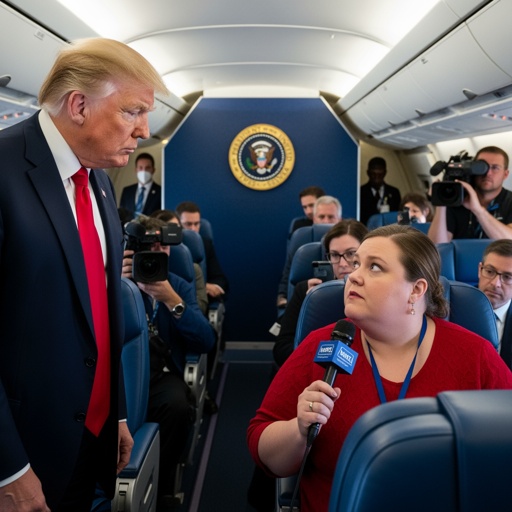
As President Trump lands in Turkey for a tense NATO summit, allies are being told that American protection now comes with a bigger price tag and a political loyalty test.
Story Snapshot
Trump arrives in Ankara for a NATO summit focused on a sharp jump in defense spending and new industry deals.
The summit comes as Trump links U.S. security guarantees to how much allies spend and whether they back his Iran war strategy.
Fact‑checkers say several of Trump’s Iran claims are false, deepening doubts about his judgment and honesty.
Anti‑NATO protests in Turkey and talk of canceling future summits show growing anger at elites on both sides of the Atlantic.
Trump’s Arrival in Ankara and the Stakes of the Summit
President Donald Trump has arrived in Ankara, Turkey, for a two‑day NATO leaders’ summit held at the Beştepe Presidential Compound, with meetings scheduled for July 7 and 8. The gathering brings together 32 heads of state and government to review how well allies are meeting a new target to spend about 5% of their national economy on defense and related programs. Trump has pushed this higher spending for years, saying Europe must carry more of the load if it wants continued American protection. His brief trip is framed as a test of whether allies will match U.S. efforts and “reciprocate” for America’s security commitments, especially as the United States wages war against Iran. For many ordinary citizens on both the right and the left, this looks less like shared defense and more like a bill from distant elites who never ask what taxpayers can afford.
On paper, NATO officials describe the Ankara summit as a chance to turn earlier promises into “concrete results” through higher investment, more weapons production, and ongoing support for Ukraine. NATO Secretary General Mark Rutte calls this part of a “defense industrial revolution,” with “tens of billions” of dollars in new defense contracts expected. For defense firms and lobbyists, this is a major victory. For workers facing inflation and squeezed wages, it can feel like proof that global institutions move faster to fund weapons than to fix broken schools, crowded hospitals, or rising energy costs. That sense feeds the belief, across party lines, that the system serves the well‑connected first.
Transactional Security and Trump’s Iran Narrative
Trump has long treated NATO not as a family of nations with shared values, but as a deal where U.S. protection is something to sell. He has repeatedly said he might not honor the alliance’s core pledge—Article 5, the promise to defend any ally that is attacked—if partners do not spend enough on their militaries. At past summits, he even invited Russia to “do whatever the hell they want” to countries that miss spending targets. This year, Trump’s team is openly framing the summit as a way to pressure allies to back the U.S. war against Iran, going beyond NATO’s own mutual defense rules. That posture worries many Europeans and Americans who fear leaders are turning life‑and‑death security ties into leverage for short‑term political gain.
At the same time, several of Trump’s most dramatic claims about the Iran war have been proven false. He boasted that the United States had sunk the entire Iranian navy, but military reporting shows U.S. forces destroyed nine Iranian naval ships, not the full fleet of about 159 vessels. He suggested Iran’s Supreme Leader Ayatollah Ali Khamenei had been killed, yet news outlets and footage from Tehran confirm Khamenei remains alive. He also claimed Iran was using Tomahawk cruise missiles, even though experts say those weapons are made for the U.S. military and there is no evidence Tehran possesses them. PolitiFact found his statement that the U.S. had wiped out “100%” of Iran’s military power to be untrue, as Iran continued to launch drones and missiles. When a president bends facts this far, it feeds the common fear that the people in charge are not honest about war, money, or risks to ordinary families.
Rising Turkish Role, Public Protests, and Summit Fatigue
Turkey’s status inside NATO is central to this year’s summit. Once viewed with suspicion for buying a Russian air defense system and clashing with Western‑backed Kurdish forces, Turkey is now seen as a key weapons producer and host to major alliance meetings. Turkish leaders are using the summit and the parallel NATO Summit Defense Industry Forum to showcase their growing defense industry and political weight. Trump has hinted he is arriving with a “big gift bag” for Turkish President Recep Tayyip Erdogan, possibly including the offer of dozens of advanced F‑35 fighter jets. Such deals underline how much profit and power swirl around these events, even as many citizens struggle to pay for basics at home.
In the two weeks before leaders arrived, anti‑NATO protests spread across Turkish cities including Istanbul, Ankara, and Izmir. Labor unions and civil society groups marched against rising military budgets and NATO’s expansion, arguing that more weapons spending will not solve daily problems like low pay, expensive housing, and economic inequality. Their message sounds familiar to many Americans and Europeans who feel ignored by political elites. While Trump’s base may cheer his tough talk on allies and Iran, and liberals may warn about his threat to collective defense, people in both camps often agree on one point: the system keeps asking them to sacrifice, while insiders build careers and contracts around endless security crises.
NATO Contemplates Fewer Summits as Trust Erodes
Behind closed doors, some NATO governments are asking if they should even keep holding annual summits. Reporting based on six diplomatic sources says the alliance is weighing a return to less frequent meetings to avoid more public clashes with Trump in his final year in office. Leaders have met every summer since 2021, but officials are now considering skipping a summit altogether in 2028 and moving toward gatherings every two years. Some say this would let them focus more on “real defense” and less on summit drama. Others worry it is another sign that trust among allies—and between voters and their governments—is wearing thin.
Trump’s confrontations with NATO chiefs did not start in Ankara. Earlier meetings, from Brussels to The Hague, were shaped almost entirely around keeping him engaged and preventing explosive scenes. European leaders flattered him, raised spending targets, and shortened agendas, all in hopes of avoiding a public meltdown that could shake markets or embolden rivals like Russia. Those tactics delivered big defense budgets but left deeper questions unresolved: How much should European taxpayers pay? Will the United States really show up if a smaller ally is attacked? And who, if anyone, is speaking for citizens who feel crushed between foreign threats abroad and economic struggles at home? As this summit unfolds in Turkey, those questions hang over the proceedings far more than any staged photo of leaders standing together.
NOW: Epic moment as Air Force One is WHEELS DOWN with President Trump aboard in Turkey, for the NATO summit
47 has his team ASSEMBLED on board: Rubio, Hegseth, Bessent and more
First time the new Air Force One is overseas! pic.twitter.com/8N46Aebfpz
— Eric Daugherty (@EricLDaugh) July 7, 2026
For American readers, the Ankara summit is not just a far‑off diplomatic event. It is a window into how their own government now talks about power. Trump is telling allies that U.S. help is conditional on their spending and loyalty, even as he faces credible fact‑checks on his war claims and anger from protesters who see NATO as part of a failing global elite. Whether one leans conservative or liberal, it is hard to miss the pattern: big promises, bigger price tags, and very few voices asking how ordinary people will carry the load. The danger is that, amid the speeches and deals in Ankara, the core idea that free nations should stand together in defense of their citizens gets replaced by something colder—a marketplace where security is traded like any other commodity, and where regular families are just another line on the bill.
Sources:
youtube.com, abcnews.com, en.wikipedia.org, nato.int, washingtonpost.com, apnews.com, militarytimes.com, reuters.com, facebook.com, politifact.com, nato.usmission.gov, brookings.edu, americanprogress.org








 New Posts (Home)
 ChatBox
 Popular Posts
  Game Zone
 Top PodCasts