www.theconservativebrief.com
Trump’s NATO Ultimatum Lands in Ankara
The Ankara NATO summit crystallizes a long-building shift: an alliance forced to adapt to both a more dangerous world and a U.S. president who treats collective defense as a transaction to be continually renegotiated.
Key Points
The 2026 NATO summit in Ankara centers on implementing a new 5% of GDP defense spending benchmark and converting pledges into industrial capacity and concrete contracts.
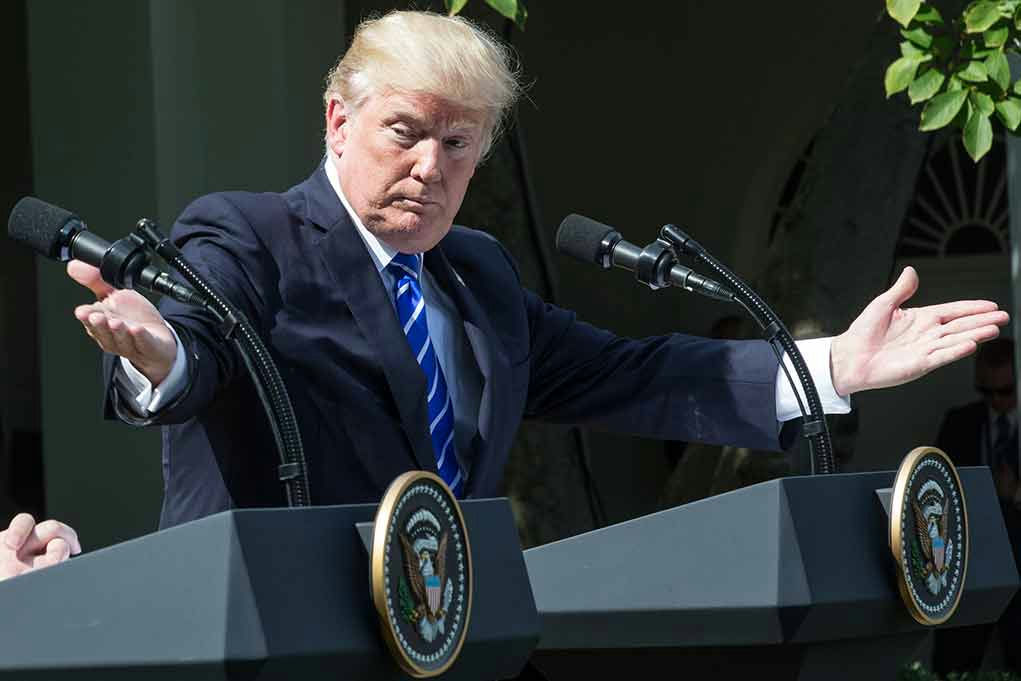
President Trump arrives framing NATO as a test of “reciprocity” in the context of a U.S. war with Iran, continuing his pattern of conditioning U.S. security guarantees on allies’ financial contributions.
Trump’s most dramatic Iran-related claims—sinking the entire Iranian navy, killing Ayatollah Khamenei, and destroying “100%” of Iran’s military—have been directly and convincingly debunked by military reporting and fact-checkers.
Turkey leverages the summit to cement its elevated status inside NATO, even as protests at home and its history with Russia and the Kurds underscore the alliance’s internal strains.
The meeting exposes a structural tension: NATO’s institutional push for long-term cohesion and deterrence versus Trump’s short-horizon leverage politics and threats to withhold protection.
Ankara 2026: A summit built around money, missiles, and leverage
The Ankara summit is formally about implementation—turning last year’s political agreement on a 5% defense spending target into actual aircraft, missiles, ammunition, and industrial lines that can sustain a long war if necessary. NATO’s official agenda describes the task in technocratic terms: higher investment, increased defense production, and continued support for Ukraine, all under the banner of stronger “industrial deterrence.” But the politics wrapped around that agenda are anything but technocratic.
For President Trump, Ankara is the next chapter in a project he has pursued since his first term: recasting NATO from a community bound by Article 5 into a protection service the United States provides only if others pay enough and show sufficient “loyalty.” In public and private, he has repeatedly complained that allies “free-ride” on American power, proposed targets above NATO’s traditional 2% benchmark, and openly suggested that the U.S. might not defend countries that lag on spending. The 5% target agreed in The Hague in 2025—3.5% on core defense and another 1.5% on related expenditures—was in large part a response to those demands.
Ankara is therefore less a routine mid-decade check-in than a stress test of whether the alliance can absorb Trump’s transactional approach without losing the credibility that makes deterrence work. The immediate backdrop—the U.S. war with Iran, Russian aggression against Ukraine, and a global economy still adjusting to higher defense outlays—only sharpens that test.
How Trump’s “reciprocity” test collides with the facts on Iran
One of the most consequential dynamics at Ankara is the way Trump fuses those burden-sharing demands with a highly dramatized narrative of the U.S.–Iran conflict. In the run-up to the summit and during national celebrations, he has claimed “one of the greatest naval victories in history,” asserting that the U.S. Navy sank all 159 ships in Iran’s fleet “in just a moment’s time,” and implied that Ayatollah Ali Khamenei was killed in the early stages of the war.
Those claims do not withstand scrutiny. U.S. military reporting and independent outlets document the destruction of nine Iranian naval ships—serious, but a fraction of the 159 vessels Trump described. Iran’s navy, while damaged, continued to operate, and Iranian forces retained the capacity to launch missiles and drones, which they did repeatedly after Trump declared “100%” of their military capability destroyed. The country’s political leadership also remains intact; Khamenei is alive, and coverage of Tehran’s “funeral” events identified them as mass mobilization rituals within Iran’s narrative of martyrdom and resistance, not confirmation of his death.
Fact-checkers and defense analysts have also dismantled Trump’s assertion that Iran possesses Tomahawk cruise missiles—U.S.-manufactured weapons tightly controlled by export restrictions and not known to be in Iranian hands. In each case, the pattern is the same: a kernel of real conflict exaggerated into total victory, then used to dramatize the stakes of allied support.
That matters for Ankara because Trump explicitly casts the summit as a test of whether European allies will “reciprocate” for U.S. actions in the Iran war, even though that conflict lies outside NATO’s formal Article 5 framework. NATO’s collective defense clause obliges members to respond to an attack on an ally; it does not automatically apply to a U.S.-initiated war of choice. By blurring that line, Trump seeks to transform discretionary support into an implied obligation—and to judge allies morally and financially if they demur.
Turkey’s moment: from difficult partner to indispensable hub
Hosting the summit allows Turkey to showcase its evolution from problem ally to central player. Ankara last hosted NATO leaders in 2004; since then, its trajectory has been marked by sharp friction with the alliance. Turkey purchased Russia’s S-400 air defense system, fought Western-backed Kurdish forces in Syria, and stalled Sweden’s accession, all of which alarmed other members and led to its ejection from the F-35 program.
Yet by 2026, the picture looks different. Turkey has invested heavily in its domestic defense industry, producing drones, armored vehicles, and naval platforms that have seen export success and combat use from Libya to the Caucasus. As NATO reorients around industrial capacity and long-war readiness, those factories become assets rather than irritants. A Washington Post analysis framed Ankara’s summit as a moment when Turkey’s “status in NATO” visibly rises, precisely because it can build weapons at scale while sitting astride the Black Sea, the eastern Mediterranean, and the routes into the Middle East.
Trump understands the leverage that creates. He has openly linked his decision to attend the summit to his personal relationship with President Recep Tayyip Erdoğan and floated the idea of arriving with a “big gift bag” for his host—most notably, a potential sale of dozens of F-35 fighters if the prior restrictions can be unwound. Earlier meetings between the two leaders in Washington had already signaled that the White House was reconsidering the F-35 ban. For Turkey, an F-35 offer would be more than hardware; it would mark a symbolic reacceptance into the alliance’s technological core.
At the same time, Ankara faces domestic cross-pressures. In the weeks leading up to the summit, anti-NATO protests in Istanbul, Ankara, and Izmir, driven by labor unions and civil-society groups, denounced higher military budgets and the alliance’s expansion policies. Erdoğan must balance the prestige of hosting 32 leaders and deepening defense ties with the optics of aligning more tightly with a bloc that a vocal segment of his public distrusts, especially amid anger over Israel, Syria, and the Iran war.
The 5% benchmark and the “defense industrial revolution”
From NATO’s institutional perspective, the heart of Ankara is the move from spending promises to production lines. The 2025 Hague summit locked in the headline figure—5% of GDP on defense and related security spending—after intense pressure from Trump and considerable skepticism from European governments. At Ankara, Secretary General Mark Rutte describes the task as launching a “defense industrial revolution,” with announcements of tens of billions of dollars in new contracts expected.
The NATO Summit Defence Industry Forum (NSDIF26), running alongside the leaders’ meeting, is designed as a marketplace for that revolution: governments, prime contractors, and suppliers matching long-term orders to NATO’s updated force plans. Unlike earlier summits that focused on high-level political declarations, Ankara leans into metrics: ammunition output per month, number of combat-ready brigades, air-defense coverage, and stockpile resilience. The idea is straightforward: deterrence is only credible if production can sustain combat operations against Russia, and potentially Iran, for years rather than months.
Yet the 5% benchmark is not purely a technocratic fix; it is a political concession to Trump’s narrative that Europeans do too little. Analysts from across the Atlantic policy spectrum note that no plausible level of European spending will satisfy a president who questions the value of alliances as such. The risk is that by chasing ever-higher numeric targets, NATO obscures the deeper question: does the United States still see Article 5 as an unconditional commitment, or as a bargaining chip?
Trump expected to support potential sale of F-35 jets to Turkey, sources say, ReutersThe move would be biggest gesture yet from Trump – who is traveling to Ankara to attend a NATO summit – to Turkish President Tayyip Erdogan, whom he regularly praises and sees as a close ally. pic.twitter.com/bUHGYQfL8L
— 5th Pass (@5th_pass) July 7, 2026
Conditionality versus collective defense: what Ankara reveals about NATO’s future
Across eight years, Trump’s approach to NATO has been remarkably consistent. He calls the alliance “obsolete,” demands more money, and hints that the U.S. might stand aside if allies fall short. At Brussels in 2018, he claimed Washington covered “probably 90 percent” of NATO’s costs and threatened to let the alliance “go on its own” unless spending rose—rhetoric echoed in his second term, only now tied to higher targets and live conflicts rather than hypothetical war games.
Think tanks and former officials warn that this conditionality undercuts the very mechanism that has kept peace in Europe: the attacker’s confidence that the U.S. will respond automatically, not after a check of who has hit 5%. The more Trump treats protection as a service to be purchased, the more Russia—or any adversary—can doubt NATO’s response and probe its edges. European governments have responded partly by spending more and partly by debating contingency plans to defend themselves even if an American president wavers.
Ankara distills that tension. On one level, the summit showcases adaptation: higher budgets, stronger industrial bases, a prominent role for a frontline state like Turkey, and continued support to Ukraine and other partners. On another, it highlights fragility: an American president whose Iran narrative is riddled with factual errors, who conditions aid on “loyalty,” and who openly flirts with walking away from Article 5.
For a reader looking beyond the photo of Trump and Erdoğan on the tarmac, this is the real significance of Ankara. NATO can modernize its weapons and factories relatively quickly once political decisions are made. Rebuilding the presumption that the United States will be there, without qualification, is far harder—and every summit conducted under the shadow of transactional threats makes that task more difficult.
Sources:
youtube.com, abcnews.com, en.wikipedia.org, nato.int, instagram.com, apnews.com, militarytimes.com, reuters.com, facebook.com, politifact.com, nato.usmission.gov, brookings.edu, americanprogress.org








 New Posts (Home)
 ChatBox
 Popular Posts
  Game Zone
 Top PodCasts