www.theconservativebrief.com
Federal Power Clash Erupts in Michigan
The real story behind federal election monitors is not that the Justice Department invented a new power; it is that a long-standing civil-rights tool now sits at the fault line between routine election oversight and a modern partisan war over legitimacy. In the Michigan dispute, the legal question is narrower than the rhetoric: what exactly can DOJ monitors do, where can they go, and on what authority?
Key Points
DOJ election monitoring is an old Civil Rights Division practice, not an invention of the current administration.
The present controversy is driven less by the existence of monitors than by who controls access, what records DOJ may request, and whether the federal government can enter polling places without a court order or local permission.
Michigan officials reject DOJ’s allegations as baseless and argue that states, not Washington, run elections.
Supporters of the DOJ response say federal oversight is justified when jurisdictions raise operational or compliance concerns; critics say the deployment looks like intimidation when directed at politically aligned cities.
What Federal Election Monitoring Actually Is
Election monitoring by the Civil Rights Division is not the same thing as federal takeover. In its traditional form, it is a compliance mechanism: observers watch polling-place procedures, ballot counting, and related administration to detect violations of federal voting-rights law. The Justice Department says it has monitored elections for decades, and its public record shows that this activity has been routine across multiple administrations and in many states. That history matters, because it means the presence of federal personnel at an election is not, by itself, proof of extraordinary federal intrusion. The legal and practical significance lies in scope.
Scope is everything. The department can request voter data, precinct lists, and other election records when it believes federal law is implicated, and Harmeet Dhillon has said the Civil Rights Division is using those requests as part of a broader data-audit and enforcement effort. But monitoring does not automatically mean unrestricted physical access. The Brennan Center notes a key legal distinction: absent a court order, DOJ lacks clear authority to place federal observers inside in-person voting locations, and permission from the local jurisdiction may still be required. That distinction is the backbone of the current fight.
Why Michigan Became the Flashpoint
Michigan is the perfect test case because the political and legal stakes are unusually concentrated. The state attorney general and secretary of state responded to DOJ letters by insisting that Michigan’s elections are secure, transparent, and administered by the state, not the federal government. Their public line is blunt: the allegations are “completely and factually baseless,” and the federal monitoring effort is being treated as an intimidation tactic rather than a neutral compliance check. They also stress that federal observers, even when allowed, are not entitled to interfere with state administration or demand hands-on access to voting equipment.
That response is not just political posture; it reflects a real federalism argument. Under the constitutional system, states retain primary responsibility for administering elections, while federal enforcement enters when there is an identifiable voting-rights issue or a court-supported legal basis. In other words, the dispute is not over whether the DOJ may ever monitor an election. It is over when monitoring becomes legally justified, how far it can go, and whether the department’s stated concerns in specific cities are strong enough to overcome state resistance. Michigan’s officials are betting the answer is no.
The Legal Fault Line: Observers, Monitors, and Access
Much of the confusion in public debate comes from language. “Observers,” “monitors,” and “federal agents” are often used interchangeably in headlines, but the terms do not carry identical legal weight. DOJ’s own civil-rights materials say the Voting Rights Act permits federal observers to monitor procedures in polling places and ballot-counting sites in eligible jurisdictions. That is the classical framework. Yet the Brennan Center’s Michigan handbook and related legal commentary emphasize that access can be constrained, especially where there is no court order and where the state or locality declines consent. So the question is not whether federal oversight exists in principle; it is whether this particular deployment fits the statutory lane.
Michigan’s critics of DOJ point to that lane as too narrow for the department’s current posture. The state has argued that the federal government cannot use monitoring to pry into local election administration beyond what federal law allows. Supporters of the department answer that the Civil Rights Division is not asking to run elections; it is trying to verify compliance, particularly where long lines, missing provisional-ballot procedures, or technical failures are alleged. Dhillon has framed the work as routine, saying the DOJ sends monitors when jurisdictions have raised questions or shown a history of noncompliance. That is the department’s strongest argument, and it is credible as a description of the broader practice.
What the Evidence Does and Does Not Show
The strongest evidence in favor of DOJ’s position is institutional and historical. Federal election monitoring has been used for decades, and recent DOJ materials show repeated deployments across many states, including large-scale monitoring in 2022 and 2024. Dhillon has also said the department is asking for election data from every state and Washington, D.C., with some jurisdictions voluntarily complying and others fighting in court. That pattern supports the claim that the Civil Rights Division is acting within a familiar enforcement framework, not improvising a new one.
The strongest evidence against the department is also institutional: legal ambiguity around unconsented entry into polling places, plus direct state resistance from officials who control the machinery of election administration. The Brennan Center’s analysis is especially important because it separates routine observer authority from broader claims of access that the DOJ has not conclusively established in public. And Michigan’s own officials have supplied a factual counter-narrative, saying the state’s 2024 election produced only 15 credible fraud cases out of 5.7 million ballots, which undercuts the suggestion that emergency intervention is plainly warranted. That does not disprove every operational concern, but it does weaken the case for alarmist rhetoric.
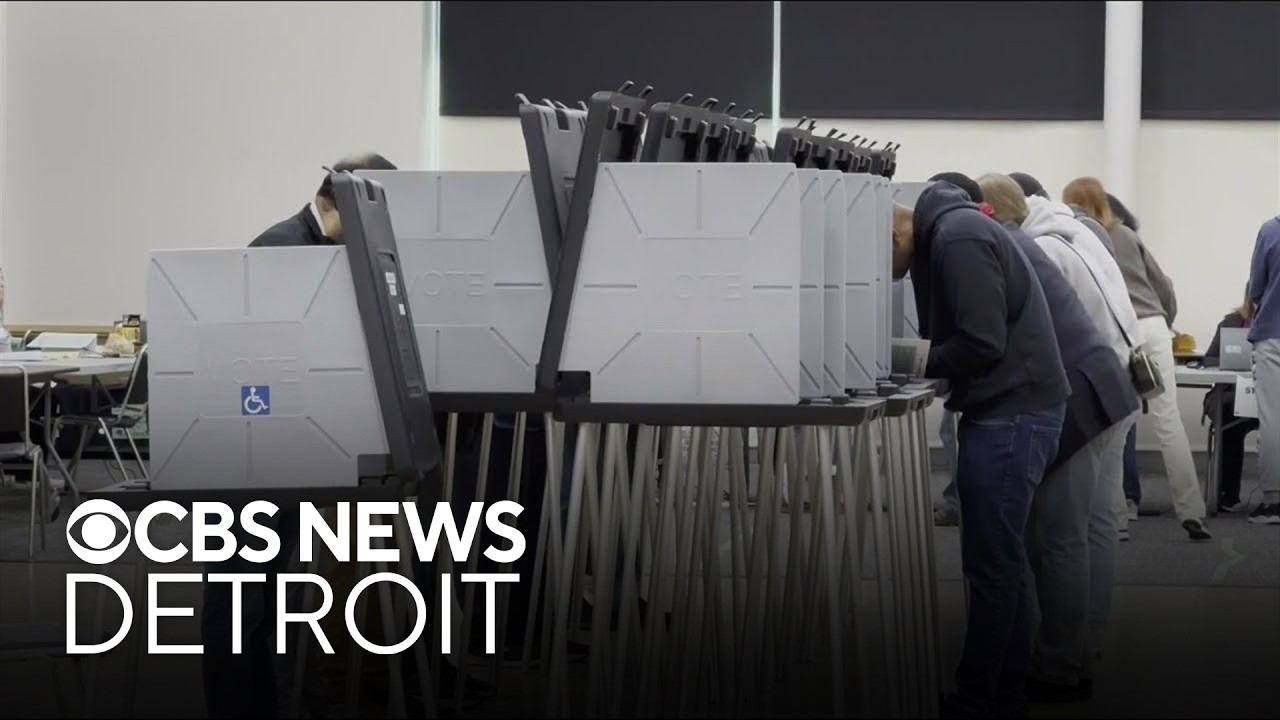
DOJ says it will send election monitors to 3 Michigan cities: The Detroit News
— The Bias (@thebias_news) July 9, 2026
Why the Political Fight Is So Intense
Federal election monitoring now lands in a political environment that treats process as motive. When critics see monitors in Democratic-leaning cities, they infer intimidation; when supporters see resistant state officials, they infer noncompliance. That is why the same act can be described as either ballot protection or a power grab. The partisan temperature is heightened by the fact that Dhillon, as a Trump DOJ official, is simultaneously enforcing voting-rights law and defending a broader election-integrity agenda that critics view as aligned with the administration’s fraud narrative. The result is a legitimacy contest masquerading as a procedural dispute.
Still, the underlying mechanism remains ordinary enough. DOJ can investigate, demand records, and place observers where the law allows. States can refuse access, challenge subpoenas or requests, and argue that federal officials are exceeding their statutory lane. Courts become the referee when the parties cannot agree. That is the durable architecture of American election oversight: federal power is real, but bounded; state authority is primary, but not absolute. The present controversy is not evidence that the system has broken. It is evidence that the system still depends on old legal distinctions that politics has made newly combustible.
Sources:
redstate.com, democracydocket.com, justice.gov, brennancenter.org, facebook.com, instagram.com, michigan.gov, clickondetroit.com, reddit.com, pbs.org








 New Posts (Home)
 ChatBox
 Popular Posts
  Game Zone
 Top PodCasts