reclaimthenet.org
UK’s Ofcom Seeks Wider Powers After American Forum Fine Fails
If you're tired of censorship and dystopian threats against civil liberties, subscribe to Reclaim The Net.
Ofcom wasted months chasing a website it cannot reach, came up empty, and has decided the fix is more power.
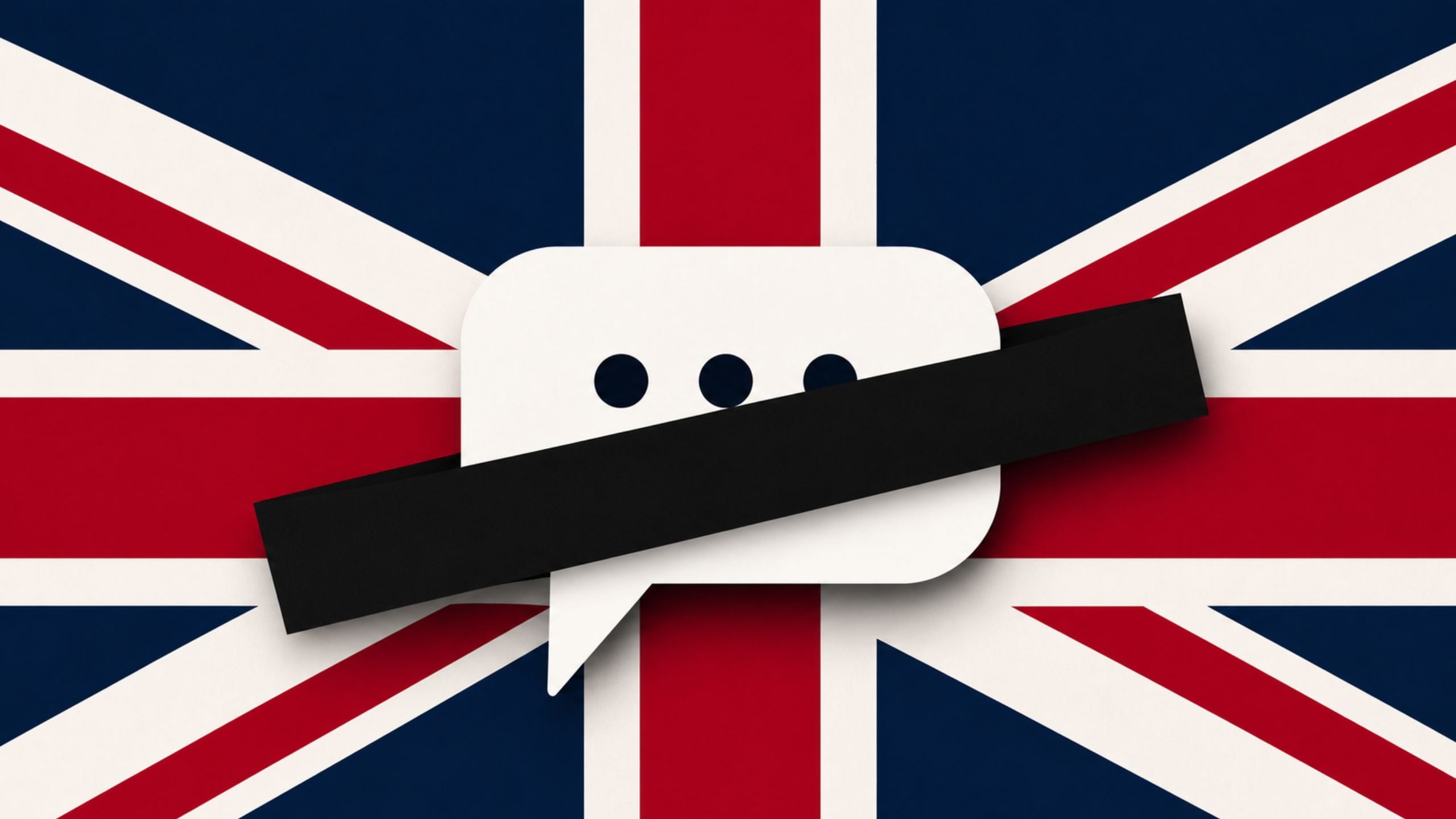
Britain’s speech regulator closed its investigation into an American suicide discussion forum this week, admitted it has hit the outer wall of what the Online Safety Act censorship law allows, and used the same announcement to ask the government for tools that reach further.
The forum, which Ofcom will only call an “online suicide forum,” has allegedly been linked with more than 130 deaths in the UK and named in coroners’ reports.
Ofcom fined it £950,000, roughly $1.3 million, under the Act. The forum is based in the United States, holds no assets in Britain, is protected by the First Amendment, and has not paid. So the regulator is holding a penalty against a company it has no clear way to bill.
Ofcom thinks there’s a chance the money is still coming. It says it has “initiated work regarding the pursuit of this debt, as we have done with all companies that have not paid their fines by their deadlines.”
A separate post, cheerfully titled “What happens when a company doesn’t pay a fine,” lays out the plan. For a company with no UK assets, obtaining a judgment debt “is more complex and challenging,” and Ofcom says “it is often necessary to engage with law enforcement agencies and private specialists in other countries to identify individuals and assets against which Ofcom can take action.”
Whether Ofcom recovers a penny “can also depend on whether a court in that country will recognise a UK court judgment, and whether we can identify individuals on whom we can serve proceedings.”
That means, a British regulator wants American help to collect a British censorship fine from Americans, and even Ofcom concedes an American court might throw it straight out.
Ofcom has tried this before. It floated the same approach while chasing a fine against 4chan, a strategy that Preston Byrne, the US lawyer representing both sites, called “legally illiterate.” Byrne was just telling it like it is about the forum case. “Censorship fines are anathema to our Constitution,” he said, adding that “if Ofcom attempts to enforce the fine in a US court, which we do not expect, American law is on our side. As far as we can tell, however, this enforcement action is functionally over.”
Ofcom’s own words describe the ceiling it has reached. The forum has “made changes that block access for vast majority of UK users.” Those changes, Ofcom says, “are the fullest extent of what can be achieved under the Online Safety Act,” and “all possible legal routes under the Act have now been exhausted.”
An agency that has run out of legal options usually stops there. Ofcom did the opposite. It is working with the government to “consider areas for strengthening enforcement powers,” with a particular appetite for “business disruption measures,” the court orders that force internet providers to block a site across the UK. Keep in mind that this type of blocking is easily bypassable with a VPN and VPNs are impossible to ban.
The current powers already frustrate Ofcom, and it listed exactly where they pinch. Today it cannot ask a court to block a site purely because that site poses “a significant risk of harm to people in the UK”; it also has to prove “ongoing non-compliance.”
It cannot apply for a blocking order “for failure to pay a fine alone.” It looked at seeking a “conditional order,” a pre-emptive block that would take effect the moment a site drops its geoblock, and found the Act “does not provide a mechanism to do so.”
It also noted that “neither Ofcom nor the UK courts have the power through the business disruption measure process to shut down a website globally.”
The pattern in that wishlist is hard to miss. Ofcom wants to block sites on a risk-of-harm test alone, before any actual breach. It wants preemptive orders that trigger on their own. It is eyeing impossible powers that reach past British borders to pull a site down for everyone on earth. All three are bigger levers than the one that just failed, and all three will outlast this particular forum.
The whole proposal turns on one phrase, “significant risk of harm,” and Ofcom would write the definition. A test that broad does not stay pointed at suicide forums. It stretches to whatever a regulator decides is risky this year, and the site goes dark before a court hears a word of defense.
The tally is grim reading for Ofcom. The fine looks uncollectible. The forum has already blocked British users. The case is, in Byrne’s words, “functionally over.” What outlasts all of it is a regulator lobbying for permanent authority to block websites faster, on looser grounds, and with the rest of the world in view.
If you're tired of censorship and dystopian threats against civil liberties, subscribe to Reclaim The Net.
The post UK’s Ofcom Seeks Wider Powers After American Forum Fine Fails appeared first on Reclaim The Net: Free Speech, Privacy, Digital Rights.








 New Posts (Home)
 ChatBox
 Popular Posts
  Game Zone
 Top PodCasts