www.optimistdaily.com
The physics of what happens when you suppress a sneeze
BY THE OPTIMIST DAILY EDITORIAL TEAM
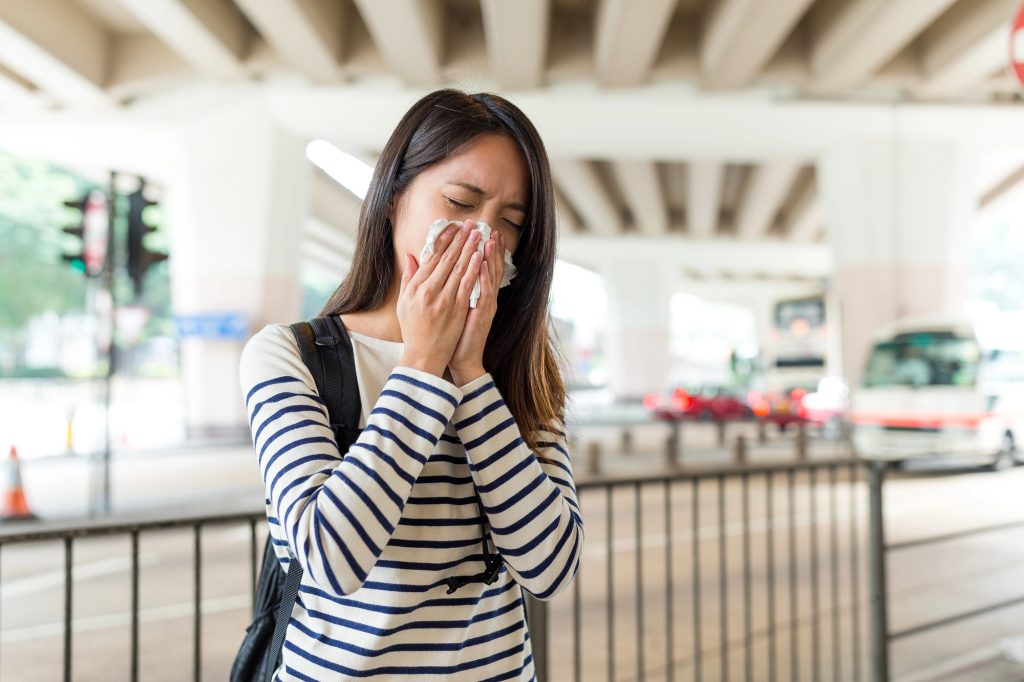
Holding in a sneeze carries more risk than most people assume. The injuries it can cause include ruptured eardrums, damage to the tissue lining the throat, and in rarer cases, air trapped under the skin of the neck or leaking into the space between the lungs. These are uncommon. But they happen, which says something about how much force the body generates when it sneezes.
“The same physical principles that make sneezing an effective airway defence mechanism can, under unusual circumstances, contribute to injury when the reflex is forcibly interrupted,” says Dr. Qin Liu, a researcher at Washington University in St. Louis.
How the body generates a sneeze
Sneezing evolved as a defense mechanism: a fast, forceful way to clear irritants, allergens, and pathogens from the upper airway. The body does not hold back.
Liu’s description of the mechanics: “Diaphragm and intercostal muscles function as a gun, while air pressure serves as a bullet.” In a normal sneeze, that bullet exits through the nose and mouth and disperses into the air. When both exits are blocked, it does not.
“A sneeze is designed as an open pressure-release system,” Liu says. “Problems arise when that release pathway is suddenly blocked.”
Where the pressure goes when you hold one in
Pinch your nose and clamp your mouth shut, and the redirected pressure travels into the nasopharynx, the sinuses, the Eustachian tubes, and the middle ear. In rarer cases, it pushes further into the deeper tissues of the neck or chest. None of those structures are designed to absorb that kind of force. They are just in the path when the pressure has nowhere else to go.
“If those forces exceed the mechanical limits of a particular structure, tissue injury may occur,” Liu says.
Ruptured eardrums and middle-ear barotrauma are among the possible results, where the ear takes pressure loads it was not built for. Pharyngeal injury, damage to the tissue lining the throat, is another. At the more serious end: cervical emphysema, where air becomes trapped under the skin of the neck and can produce visible swelling, and pneumomediastinum, where air leaks into the space between the lungs.
Most people who occasionally hold in a sneeze will not end up in an emergency room. The risk from any single suppressed sneeze is low. But the structures in the path run from the ear to the chest, which gives some indication of the forces involved.
What to do instead
The safest option is to let the sneeze happen, directed into a tissue or the elbow. When that is not possible, Liu recommends against blocking both exits entirely. Keeping the mouth open even slightly allows some pressure to escape.
There is also a narrow window before the reflex fully engages where interruption is possible. Liu’s list: removing the triggering stimulus, altering the breathing pattern, pressing the tongue against the roof of the mouth, or applying mild pressure near the nose or upper lip. “These approaches may interfere with sensory processing before the reflex reaches full activation,” she says. “Once the sneeze motor program has been fully engaged, voluntary control becomes quite limited.”
The elbow is not graceful. It is, however, the option that does not risk your eardrum. “Allowing the sneeze to occur in a controlled and hygienic manner remains the safest recommendation,” Liu says.
Did this solution stand out? Share it with a friend or support our mission by becoming an Emissary.The post The physics of what happens when you suppress a sneeze first appeared on The Optimist Daily: Making Solutions the News.








 New Posts (Home)
 ChatBox
 Popular Posts
  Game Zone
 Top PodCasts