www.optimistdaily.com
What India’s hydrogen train launch means for its vast railway network
BY THE OPTIMIST DAILY EDITORIAL TEAM
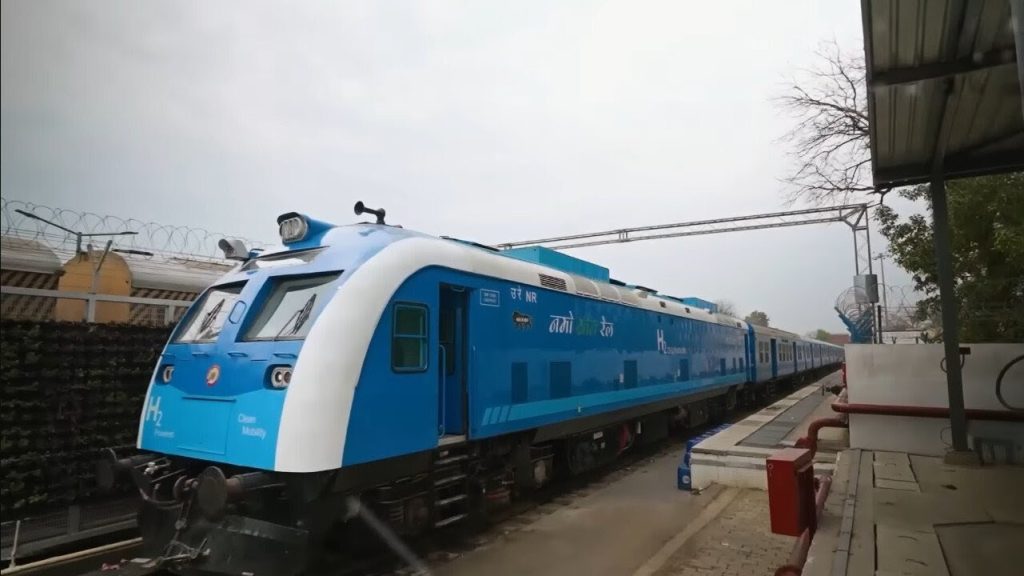
India launched its first hydrogen-powered train earlier this month. It was built domestically and is now operating in Haryana. Two hydrogen-powered driving cars, eight passenger coaches, a capacity of about 2,600 passengers, and a top speed of 47 mph (75 kph).
Prime Minister Narendra Modi inaugurated the train, called the “NaMo Green Rail,” at Jind railway station. The name is a common abbreviation of Modi’s first and last names. “This is a very significant day in the direction of self-reliant India and sustainable development,” he said.
The chemistry
Hydrogen fuel cells generate electricity by combining hydrogen and oxygen. The only direct emission is water vapor. The pilot includes hydrogen storage and refueling infrastructure to test how the technology performs in India’s rail network before any wider rollout.
What it’s replacing
India’s rail network is one of the world’s largest. Not all of it is electrified, and diesel powers most of the unelectrified routes. Hydrogen replaces diesel without requiring those lines to be fully electrified first. Several other countries have already deployed hydrogen trains on similar routes.
The net-zero picture
India has committed to net-zero emissions by 2070. The hydrogen rail push is part of a broader national effort to develop green hydrogen domestically, cut carbon from heavy transport, and reduce fuel import dependency.
Friday’s launch is a pilot. The storage and refueling infrastructure being tested alongside the train will determine how far the approach can scale.
This solution is highlighted by The World Business Academy, the umbrella organization producing The Optimist Daily. To learn more, please visit our website.The post What India’s hydrogen train launch means for its vast railway network first appeared on The Optimist Daily: Making Solutions the News.








 New Posts (Home)
 ChatBox
 Popular Posts
  Game Zone
 Top PodCasts