www.thegospelcoalition.org
What Complementarianism Is (and Isn’t)
In opening her 1923 novel, Whose Body?, which introduced the world to the crime-solving and monocle-wearing Lord Peter Wimsey, Dorothy L. Sayers tells of a respectable family who finds a body in their bathtub one morning. It has appeared there overnight by means unknown and for reasons unknown. Likewise unknown is the identity of the victim—or the murderer. Unknowns stacked on unknowns obscure the truth from view, necessitating careful detecting.
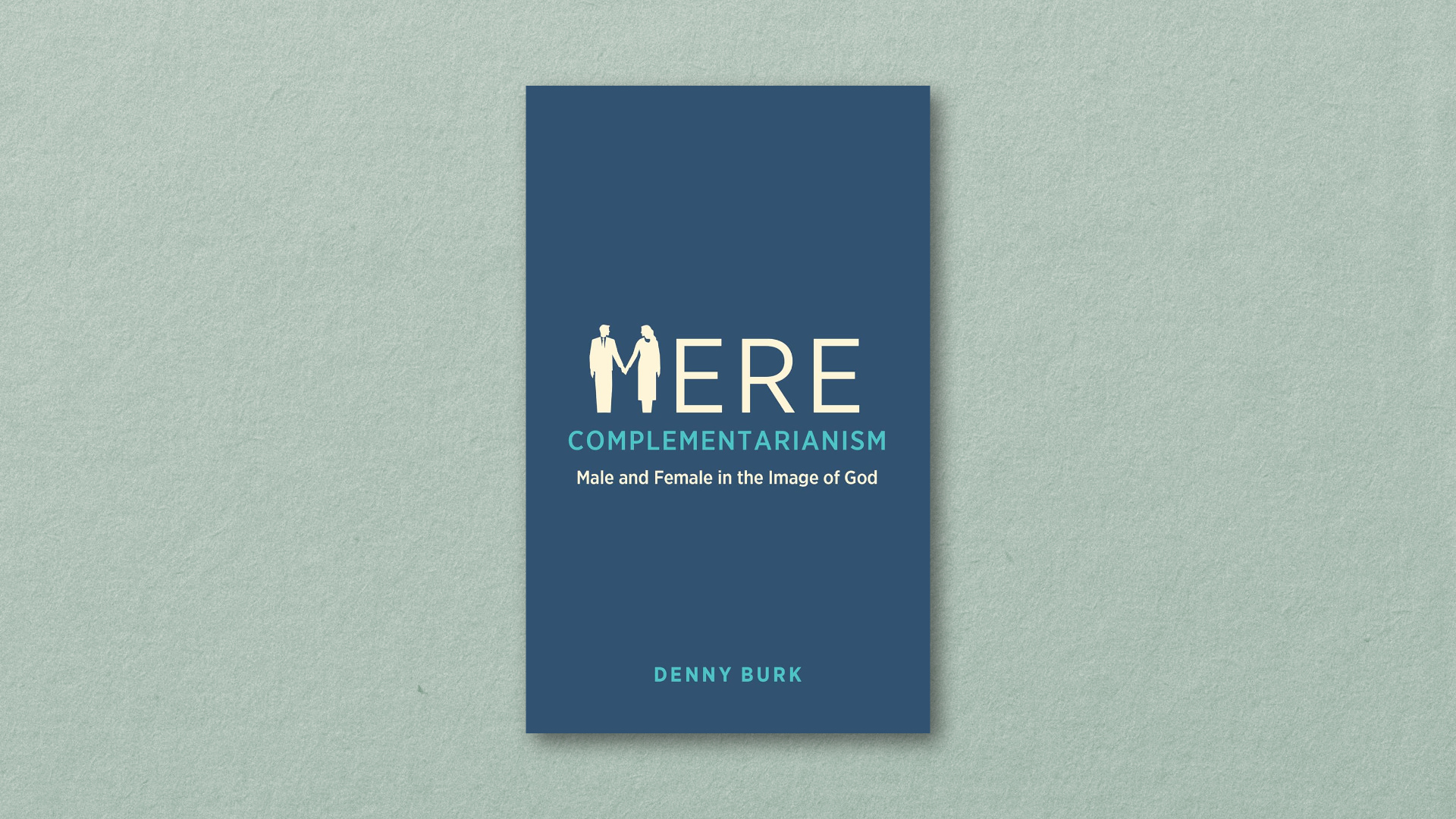
As I was reading Denny Burk’s Mere Complementarianism: Male and Female in the Image of God, I reflected on Whose Body? and other theological whodunits. Complementarianism too has appeared in the world by means unknown to some, leading to charges that it’s a modern innovation, imposed by fiat by a few conservatives on a power trip.
The complementarian-egalitarian debates in the 21st century, furthermore, have coincided with debates over whose body any body is—consider the debates over transgender ideology, which begin with the premise that every person’s body belongs to him or her alone, to be remade in accordance with the individual’s wishes.
Amid this cultural noise, Burk’s aims are simple—as the title reflects. Conversations about complementarianism have become muddled over extras, distracting us from seeing clearly what it really means for both men and women to be made in the image of God. Depending on whose version of complementarianism we hear described, it looks different.
According to Burk, professor of biblical studies at Boyce College, his aim for this book is to “explain and commend mere complementarianism—that is, what has been common to all complementarians at all times” (22). The rest, like a mystery unraveled at the end of a whodunit, readily falls into place.
Definitions Matter
Before we talk about complementarianism, we must define the term. At its core, this is a conversation about our bodies—male and female—and the extraordinary idea that both are made in the image of God: “Complementarianism is a biblical doctrine defining the identity of, and relationship between, man and woman. It presupposes that a man is an image-bearer whose body is organized for reproducing as a father and that a woman is an image-bearer whose body is organized for reproducing as a mother” (1).
While in the ancient Near East and the Mediterranean world women were repeatedly presumed inferior to men, the Bible presents a different story of the creation of men and women, emphasizing the significance of both for the created order. This is one important part of what Scripture tells us. From this starting point, there are additional implications for men and women beyond merely their roles as parents. And these implications apply to those who never marry and those who never have children.
Why Does This Matter?
Burk makes a theological argument:
It’s important to recognize that the offspring of the woman is literal offspring—meaning that the offspring will come from childbirth. . . . God’s redemptive plan for the world requires procreation between a man and a woman—not just one couple but between countless couples in an unbroken line until the chosen seed finally appears in fulfillment of prophecy. In this way, marriage has a central role in God’s plan to redeem the world. (96)
These ideas, foundational to what we now refer to as complementarianism, have been part of the gospel from the beginning. Our bodies—and the differences between men’s and women’s bodies—have theological significance.
Of course, we’re much more than our bodies. Burk writes,
That “more than” has implications for how we define what a man is and what a woman is. Our bodily design is not separate from, but in an organic unity with, the invisible part of our human nature. The material ordering of our bodies is in an organic unity with the immaterial ordering of our souls. (55)
But while these ideas are very old, the term “complementarianism” is new. Early in the book, Burk offers a helpful overview of the term’s history. For those who have heard of the Danvers Statement but are unfamiliar with how it came about, the brief overview is informative. The key, though, is to understand that the term describes in English something that’s embedded in the Bible in such an axiomatic way that it has no name in Greek (or in other ancient languages, for that matter).
Complementarianism on Trial
Complementarianism has been subject to many charges by its opponents. Among other claims, critics argue that the entire system is an innovation by a few patriarchs on a power trip, that it’s inherently abusive to women, and that the very concept of different roles for men and women in any sphere of life in the modern world is disrespectful and demeaning for women.
Our bodies—and the differences between men’s and women’s bodies—have theological significance.
Except, many of those who make the charges don’t even seem to know precisely what complementarianism is. The accusation that it’s inherently abusive, for instance, is untrue.
As Burk argues, “In the Bible, there are at least three institutions that demonstrate an authority of command—parents, the state, and the church. God gives all three of these not only authority but also the right to enforce their will through coercive measures. . . . Yet when it comes to husbands and elders/pastors/overseers, God gives them no means to enforce their directives” (123).
Church members who submit to the authority of their pastors and elders do so because they respect them and their authority. The same applies to the marriage relationship. Violence and abuse violate God’s commands for the use of power in these relationships—and it absolutely isn’t part of God’s design. Neither is it part of complementarianism.
Real-Life Applications
Burk dedicates the book’s later chapters to the various applications of the above ideas in particular spheres—especially in marriage and in the church. A concluding “catch-all” chapter provides applications in a wider variety of settings about which people often have questions as well—such as Sunday school and seminary.
Throughout this chapter, Burk cautions against making distinctions between function (e.g., preaching) and office (e.g., pastor). Those who have proposed at times separating the two and allowing a woman to preach by stating that she expressly isn’t doing so in a pastoral role are undermining the pastoral office.
Violence and abuse violate God’s commands for the use of power in these relationships—and it absolutely isn’t part of God’s design. Neither is it part of complementarianism.
When it comes to women teaching in seminaries, Burk interviewed seminary presidents on their hiring practices, and they agreed they don’t have a blanket prohibition on women teaching in their institutions, but they don’t hire women to teach in positions that involve modeling the work of a pastor—especially theology and preaching.
I would have liked to see Burk refer more to complementarians outside his tradition (the Southern Baptist Convention) in this section—the Presbyterian Church in America, the Evangelical Free Church, and the Churches of Christ, to name just a few, have a robust tradition of complementarianism as well. This is my one quibble with this book. The argument for “mere complementarianism” would have been strengthened with more references to other traditions than only Burk’s own.
In this chapter, also, Burk notes a few areas where complementarians themselves disagree. For example, there are a few self-described complementarians, like Harold Hoehner and Sam Storms, who argue that “pastor is not an office in the New Testament but a gift” of the Holy Spirit, which can at times be bestowed on women as well (245). This perspective separates the roles of elder and pastor. Burk argues that it “presses against the created order and contradicts the mere complementarianism” he argues for (254). However, it’s helpful to recognize that there are still live debates among complementarians.
This book is a helpful and readable resource for those who want to understand why complementarianism is important both theologically and practically—because (to answer the Whose Body? question one last time) this matters for the body of Christ that is the church. Mere Complementarianism delivers as promised: an overview of God’s vision for men and women in the church and beyond that’s straightforward and helpful.








 New Posts (Home)
 ChatBox
 Popular Posts
  Game Zone
 Top PodCasts