www.theamericanconservative.com
Iran’s Leaders Now Doubt a Peace Deal Is Possible
Foreign Affairs
Iran’s Leaders Now Doubt a Peace Deal Is Possible
What I’ve learned from speaking with Iranian officials and analysts.
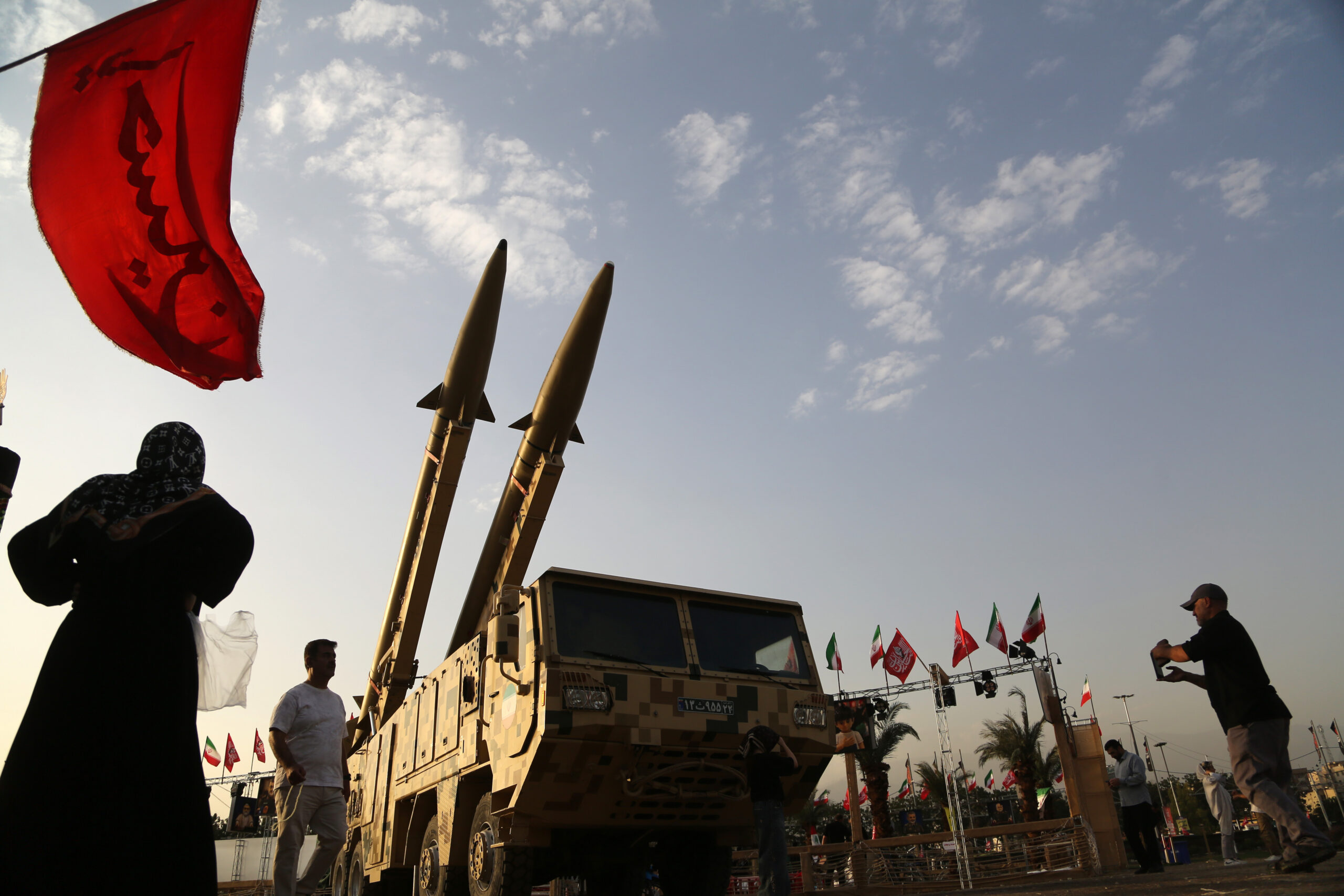
Photo by Fatemeh Bahrami/Anadolu via Getty Images
Last week, I was invited to join a program hosted by an independent Iranian media platform called Azad, which specializes in facilitating debates between policy experts in Iran and further abroad. My debate was with Majid Shakeri, who gained prominence as a foreign policy advisor to Mohammad Bagher Ghalibaf (the current speaker of the country’s parliament) during Ghalibaf’s most recent presidential campaign. Shakeri was also part of the negotiating team that went to Islamabad earlier this year to hammer out the (now-moribund) MOU with the United States.
These days, when you listen to Shakeri’s interviews, you will hear him insist that he holds no official position. But he remains influential. His worldview, which brings together—not always convincingly—the principles of a son of the revolution with the pragmatism of an academic economist, is ascendant in Tehran. It is a reflection of Iran’s intellectual environment, which retains significant space for public discussion of political, economic, and social issues, that I would be invited on to talk with Shakeri. It was also characteristically Iranian that the discussion lasted three hours.
Our debate, at its core, was about how much pessimism is warranted on the war. Shakeri, like other Iranian analysts and officials I have spoken to in recent weeks, simply does not believe a deal with the Trump administration is possible. As a result, his prescriptions for Iranian policy are not focused on maximizing the potential for a diplomatic breakthrough. Instead, he is calling for proactive management of an ongoing U.S. threat.
Interestingly, we were not miles apart in our understanding of the causes of the U.S.–Iran war or the nature of the crisis now unfolding in the Strait of Hormuz. For many years, the divergence between Western and Iranian policy analysis reflected fundamental differences in worldview. But recently those differences in perspective have become less pronounced. Policy analysis in Iran has been fully professionalized, with think tanks, research institutes, and media platforms adopting the same kinds of methodologies and modalities as their Western counterparts. Moreover, the crises at hand have become more legible. Whereas analysis during the War on Terror leant itself to a significant degree of esotericism about ideologies and their impacts, the crisis unfolding in the Persian Gulf is a question of material realities, including stockpiles of missile interceptors and inventories of crude oil. It is easier for analysts to be objective when all they must do is count.
And when it comes to diplomacy with the United States, Iranian analysts are often counting. They are counting the times the Trump administration has violated agreements, or interrupted negotiations with military attacks. They are counting the reasons a comprehensive agreement seems impossible to reach with this White House.
First, at a technical level, the Trump administration was unable to execute even the most basic confidence-building measures of the MOU. After it was signed, no Iranian assets were released; while a waiver was initially issued to permit Iranian oil exports, it was never fully implemented and ended up being rescinded. Iranian leaders are also looking to other contexts. In Venezuela, where the administration has used its complete political control to make a full-court press for economic engagement with the U.S., reports indicate that American oil companies are struggling to make headway, even as Trump touts his big investment targets.
Second, in the domain of politics, Iranian policy experts discern a growing rift between the Rubio and Vance camps and are concluding that the administration is inherently dysfunctional. As NBC recently reported, the president is “exasperated” because “there is no unity” among his top aides. During the Biden years, the issue was whether the president could defend his deal from political rivals in Congress. Now, the rivals are within the cabinet itself.
Finally, at an individual level, there is a growing sense that Trump is too erratic to stick by his own deals. Even Saudi Arabia, the Mideast country with perhaps the greatest influence in the White House after Israel, could not protect its own recent nuclear deal from the President’s inconstancy.
Facing the perceived inexperience and irrationality in Washington, policymakers in Tehran are struggling to find a way out of this crisis. Advocates for diplomacy have been forced to acknowledge that talks have a low chance of success, even as they insist that Iran cannot afford to sustain this war for much longer. For more hawkish figures like Shakeri, there is no strong, positive case for diplomatic engagement. They believe that Washington’s dysfunction will continue to manifest in the form of economic pressure and kinetic action against Iran—and it is therefore necessary to “win” the war before any discussion of new diplomatic understandings, whether with regional neighbors or the United States.
Stuck between the U.S. and Iran are the regional countries, which have borne a huge cost during the last six months of fighting. But the war arguably would have been much worse were it not for the strength of regional diplomacy. As I insisted to Shakeri, Iran’s shift towards a more constructive “neighborhood policy,” a move that began seven years ago in response to Trump’s withdrawal from JCPOA and imposition of “maximum pressure” sanctions, prevented the outbreak of a full regional war. While Iran struck its Arab neighbors in retaliation for the American and Israeli attacks, regional countries have been able to forestall further escalation through direct dialogue with Tehran. In other words, the region has been trying to compensate for Washington’s strategic errors for the better part of a decade, and it is this compensatory approach that offers the best chance to bring the war to a close and restore security and stability in the Persian Gulf.
Amid growing pessimism about what Washington can do to resolve this war diplomatically, perhaps there should be optimism that Trump can be convinced to step away from the crisis altogether. If he tries to do less, the negotiations underway between Iran and its regional neighbors will provide an opening for the United States to reduce its military and economic interventionism in the region. The Trump administration should rely on regional allies—especially Saudi Arabia, Qatar, and the United Arab Emirates—to advance their own interests in a manner that also addresses American concerns over potential Iranian hegemony.
Shakeri insisted that Iran would not allow the Strait of Hormuz to reopen until it saw a definitive change in U.S. strategy—not just a shift in tactics. We might hope that he is wrong in that assessment, but I too am skeptical the crisis can be resolved in any other way.
The post Iran’s Leaders Now Doubt a Peace Deal Is Possible appeared first on The American Conservative.








 New Posts (Home)
 ChatBox
 Popular Posts
  Game Zone
 Top PodCasts