www.theamericanconservative.com
The Real Munitions Shortage Transcends the Iran War
The Iran War
The Real Munitions Shortage Transcends the Iran War
Americans have a right to know whether their government is wasting the military power they pay for.
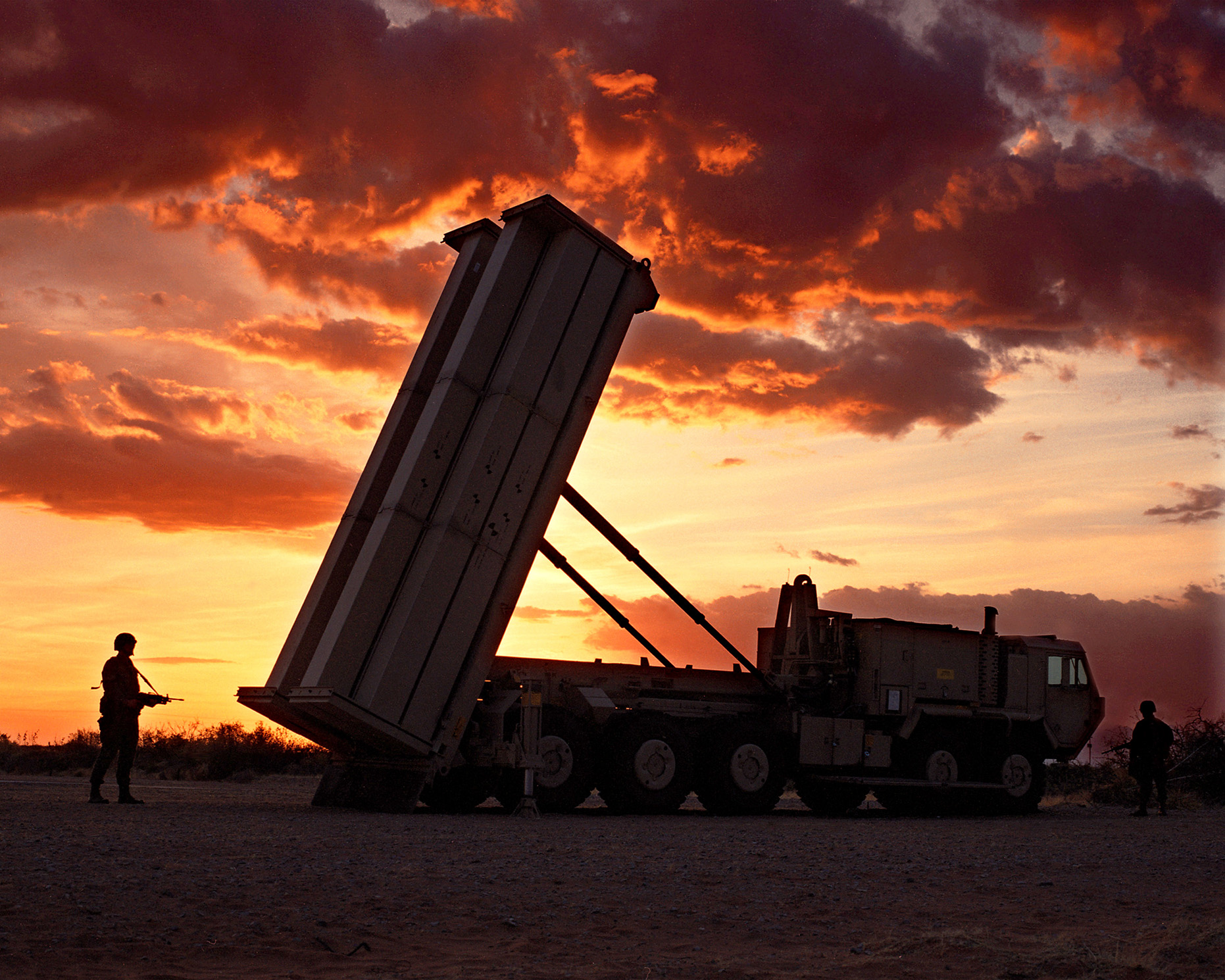
(Lockheed Martin)
Frustrated by the lack of progress in his war with Iran, President Donald Trump is stuck in a cycle of threatened retaliation and retreat. Officially, Trump’s restraint is intended to give ongoing diplomatic talks space. Unofficially, however, Trump’s hesitancy to go all-in has a more troubling cause: warnings from the Pentagon about the sufficiency of U.S. missile stockpiles.
Reporting on such concerns, expressed to the president by Chairman of the Joint Chiefs of Staff General Dan Caine, has fed two widely disseminated narratives: First, that the United States has a “shortage” of the missiles necessary to continue fighting in the Middle East. Second, that this information was inappropriately leaked to the public and has compromised the U.S. bargaining position.
Neither storyline is accurate, but understanding why they misstate the reality is vital to any conversation about the costs of the war in Iran for the United States.
Let’s start with the idea that the United States has too few missiles to continue the war with Iran. This is certainly false.
Operation Epic Fury and the weeks of on-and-off strikes that followed did expend a massive number of weapons, including high-end precision missiles, ballistic missile interceptors, and a range of other cheaper offensive and defensive munitions. But stockpile constraints are not an issue for many, or even most, of the missiles in the U.S. arsenal.
For instance, the United States has tens of thousands of JDAMs and other “stand-in” munitions that can be dropped right over the target. These are inexpensive and relatively easy to manufacture. With Iranian air defenses degraded, CENTCOM could keep up its offensive operations for months or even years relying mostly on these weapons, though such a campaign would have diminishing returns and would not be risk free.
There are more legitimate reasons to be concerned about the sufficiency of U.S. supplies of more sophisticated and longer-range munitions, including those needed to strike hard-to-reach and well-defended targets, and anti-ballistic missile interceptors, used to defend U.S. bases and assets. But even here, coverage is often misleading.
On the offensive side, there are worries about supplies of Tomahawk cruise missiles and the ground-launched PRSM, which the U.S. Army just started acquiring. The war has certainly depleted U.S. stores of these weapons. Because the PRSM is a new weapon, Operation Epic Fury likely burned through most if not all of what the United States had available. The campaign has also absorbed about a third of Tomahawk missiles so far, along with smaller quantities of other precision missiles like the JASSM and ATACMS.
These numbers are substantial, especially given the short duration of the war. What has been expended will take several years at least to be replenished, but U.S. supplies are far from exhaustion. Even using only these higher-end munitions, the United States could continue striking Iran for some time if it chose to do so, and would probably run out of valuable targets before running out of missiles.
On the defensive side, the situation is more worrisome, especially when it comes to ballistic missile interceptors. Here, estimates suggest the United States has burned through 60 percent of prewar stockpiles, which were already depleted due to the 12-Day War last June and the large amounts of military aid given to Ukraine.
Still, with 800 or so Patriot missiles and 250 THAAD missiles, the United States could feasibly continue fighting for an extended period without accepting undue risk to U.S. forces in the region. This is especially true because Iran’s rate of ballistic missile launches has dropped substantially since the beginning of the war and could fall even further if the United States were to resume its strikes on Iran’s military infrastructure. These supplies could also be extended by prioritizing targets such as critical assets or bases with large numbers of personnel.
The bottom line: While we should not exaggerate the strength of the U.S. military, we also should not overstate its weakness. The United States could keep fighting in the Middle East. It has the firepower to do so. But this doesn’t mean that it should or that the war has been consequence-free for U.S. national security.
The actual munitions challenge facing the United States today is not about the Middle East or Iran. These are the proximate driver of pressure on U.S. stockpiles, but not its root cause. The real problem is that the United States has for years failed to prioritize its many military commitments or grapple with the reality of growing constraints on U.S. military power, believing that it could be everywhere and do everything without facing tradeoffs. Now, the bill for that gluttonous approach to foreign policy is coming due.
Over the past six months, the Trump administration has chosen to invest a significant percentage of American military power, in the form of munitions and other assets, into a conflict in the Middle East in which no core American interests were at stake. In doing so, it has put at risk or even fatally compromised its ability to respond to challenges that might threaten those interests in a serious way in the future.
It now seems almost silly, for example, to plan for a U.S. war with China over Taiwan or any other flashpoint in the near or medium term. China currently has over 3,000 ballistic missiles, more than four times the number of Patriot interceptors the United States has remaining. Moreover, in a war against China, the U.S. military would not be able to depend on JDAMs and similar munitions because China’s air defenses and missile capabilities are likely overwhelming. If the United States used up a third of its high-end precision munitions against Iran in a few weeks of war, then it is unlikely to have much staying power in a Pacific contingency.
To be sure, China is unlikely to invade Taiwan in the near term, and a U.S. war in Europe against Russia is even less probable. But, at least for now, the war in Iran has eliminated America’s margin of error and taken away its strategic flexibility. The U.S. could not enter either of these conflicts or others that might threaten its interests in a sustained way even if it wanted to.
This is the true “munitions shortage” that the United States faces today—a shortfall in the military power and readiness that would be required to defend the country in a truly existential crisis. Washington has plenty of weapons to keep fighting in Iran, but its costly blunder in the Middle East has already effectively ruled out U.S. participation in a range of other possible scenarios in which vital American interests would be at stake.
In this sense, it is too late to start a conversation about conserving weapons or combat power for future conflicts. That the United States will be more vulnerable going forward is now a foregone conclusion. The U.S. can reconstitute some of what it has lost, but it will also have to scale back its ends to match what is feasible given more limited means.
The time to have had a serious discourse about whether a war in Iran was worth mortgaging U.S. national security was back in January. Even then, there were worries about military stockpiles and readiness. Officials inside the Trump administration publicly flagged concerns about U.S. weapons supplies when cutting aid to Ukraine. Under Biden and then Trump, the Pentagon has requested massive sums to expand the defense industrial base, arguing that munitions stockpiles needed to be replenished.
This is why the faux outrage about the “leaking” of information regarding the depletion of U.S. military supplies is so bizarre and nefarious.
Information about the U.S. arsenal is widely available in the budget books that the Department of Defense submits to Congress and in congressional testimony. The accessibility of this information is a feature of the U.S. political system, not a bug. If Americans are being asked to pay more taxes or give up benefits to support more military spending, they deserve to know what this spending is for and how it protects them. They deserve to understand the opportunity costs of that spending, and they deserve a robust public debate before the United States uses the military power they pay for oceans away.
Advocates of the Iran War have tried at every turn to circumvent this necessary public discussion, and the Trump administration, initially believing that the war could be won quickly and easily, hasn’t been honest with the American people about its costs, not simply in terms of dollars, but in terms of future limits on U.S. military power and their implications.
As Congress debates giving the military $1.5 trillion next year, the American people should be asking questions about how the Pentagon plans to spend that money and whether those investments will make them safer or just feed new, damaging military adventures. Accurate updates on how the war in Iran is affecting the country’s future are not leaks, but a necessity and a right.
The post The Real Munitions Shortage Transcends the Iran War appeared first on The American Conservative.








 New Posts (Home)
 ChatBox
 Popular Posts
  Game Zone
 Top PodCasts