www.thegospelcoalition.org
Sleep Is More than Rest—It’s a Lesson in Grace
For a season, I was raising a spy. My son went through a short but intense season of operating a local “spy business.” He walked around with special spy goggles featuring one blue lens and one red lens. While people giggled at his gear, he was seeing hidden depths in ordinary occurrences.
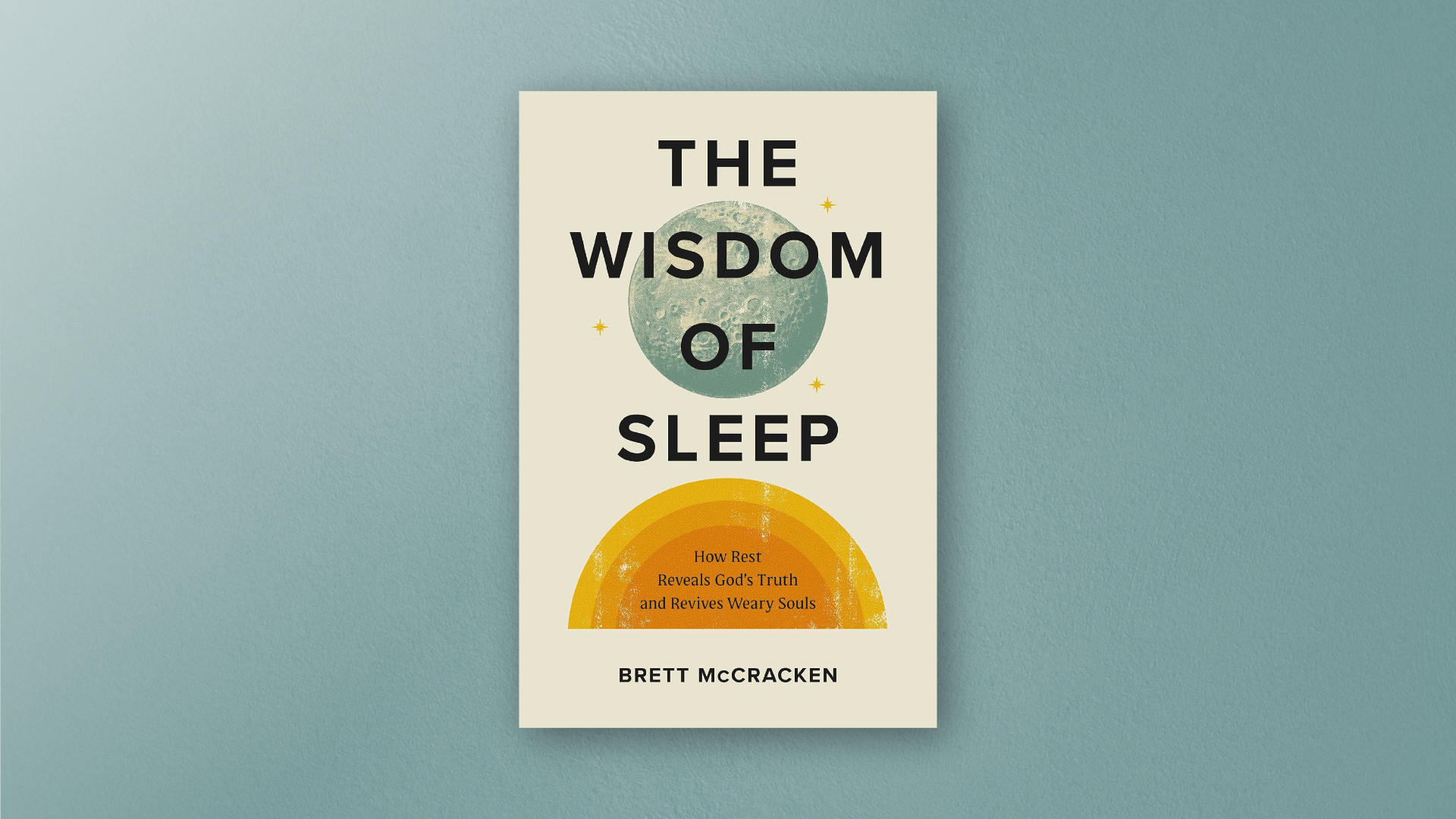
In The Wisdom of Sleep: How Rest Reveals God’s Truth and Revives Weary Souls, Brett McCracken, senior editor and director of communications at The Gospel Coalition, offers readers a similar pair of lenses to see something as ordinary and familiar as sleep with depth and discernment.
While reading an entire book on sleep might sound like a sleep aid to some, McCracken’s approach helps us to see sleep as interesting, invigorating, and even awe-inducing. Peering through the two lenses of general and special revelation and thus practicing “creational theology,” McCracken invites readers to ponder sleep through “God’s Word and God’s world, . . . a powerful interpretative combo for making sense of things” (8).
Seen through these spy goggles, sleep takes on a whole new topography—biological limitations are seen as features rather than flaws, and dreams have new depth. The more we peer into the perplexities of sleep, the better we’re postured to worship the God who both created and enables it.
Loving Limitations
In a cultural moment that proliferates the twin illusions of limitlessness and control, sleep is a biologically installed governor, keeping our pride and penchant for busyness in check.
Sleep is a biologically installed governor, keeping our pride and penchant to busyness in check.
According to McCracken, believers should “be the first to reject digital life’s illusion of disembodied limitlessness.” However, we’re often susceptible to “secular tenets such as unbridled freedom, bodily autonomy, and a ‘no sleep until I’m dead’ obsession with achievement” (18).
Sleep stops the charade as our creaturely need for cessation levels the playing field—and all our attempts to create modern-day towers of Babel. But God’s good design for sleep goes even further: It models the very shape of the gospel. As McCracken argues,
God made us so that one-third of our lives is spent doing nothing but lying flat, eyes closed, unproductive, and passively receiving the gift of replenishing repose. He designed us so that daily we assume a physical state that bears unmistakable resemblance to death, only to “resurrect” hours later feeling miraculously energized and enlivened. In our sleep-wake cycle we enact nothing less than the gospel arc itself: not just life after death but life from death. (7)
In a me-centric culture, habits of healthy rest offer more than a glow-up. Sleep isn’t just good for us. It helps us love our neighbor. Protecting bedtimes and honoring others’ limitations can become “a ministry of spreading rest that glorifies the God of rest” (78).
The consumer market offers sleep hacks. The scientific community uncovers the biological brilliance behind sleep. Meanwhile, at the back of sleep, believers see their Savior. Even those who struggle to slumber—every good gift has been corrupted by the fall—have a chance to cling to God’s promise to give his beloved sleep (Ps. 127:2).
Deep Dreams
Beyond rest, sleep also gives us opportunities to dream, something that has fascinated the human mind for millennia. Neuroscientists are barely beginning to understand the whys and wherefores of what happens in our skulls while we snore.
Some scientists posit that “the dreaming brain is sorting through cognitive inputs, trying to discern what to absorb and what to discard” (53). Others claim a more creative cause for dreaming, likening it to “a creative workspace” in which “ideas can percolate, possibilities emerge, connections can be forged, and rough sketches can be attempted” (55). Some scientists take the angle that dreaming is a time for “mental mapping and future-priming exploration of possibilities”—the mind’s chance to play out different potentials with low risk at a time of low consciousness (57).
In a me-centric culture, habits of healthy rest offer more than a glow up. Sleep isn’t just good for us. It helps us love our neighbor.
No matter how you slice it, we should stand in awe of all that God freighted into humanity’s nonwaking hours. The Scriptures are replete with examples of God using dreams to steer, convict, and instruct. We ought not to be surprised that a limitless, boundless Creator equips his image-bearers with minds capable of such depth when dozing. Even dreams in which we act unbecomingly can be used as pointers to the depths of God’s grace—they remind us of our need for the gospel.
Whether Waking or Sleeping
Sleeping is one thing, but learning to rest with our eyes open is another. Thankfully, God has given his people patterns of rest that extend beyond our beds.
In physical sleep, our bodies lie prone; in Sabbath, our souls learn to live in the same posture. McCracken observes, “The heart of Sabbath is remembrance and receptivity of God’s provision, a conscious letting go of our anxious urge to control, hoard, acquire, nervously scroll or swipe” (89).
Our culture prioritizes optimization and often presents rest as a key to productivity. McCracken challenges that approach, asking, “What if sleep, rest, and Sabbath are gifts meant to mold us to the contours of grace, rather than hacks for our wellness or rewards for our striving?” (136).
Behind the Sabbath is the God who spoke both time and matter into existence. “God is perfectly at rest in himself. He needs no object of love beyond himself,” observes McCracken. “Yet as an utterly free act, he created us for his glory, and we glorify him by entering his rest” (106). We can trust in the God who upholds everything as we seem to do nothing (Col. 1:17; Heb. 1:3).
By running our lives along the grain of God’s good design for work and rest, waking and sleeping, rather than against it, we show off the beauty of his design. We don’t need spy goggles to understand God’s grace, but sometimes we may need a sleep mask. The Wisdom of Sleep reminds us that rest—whether waking or sleeping—is an act of worship.








 New Posts (Home)
 ChatBox
 Popular Posts
  Game Zone
 Top PodCasts