allthatsinteresting.com
Charles I’s Sunken Treasure Ship May Have Just Been Found Off The Coast Of Scotland After 400 Years
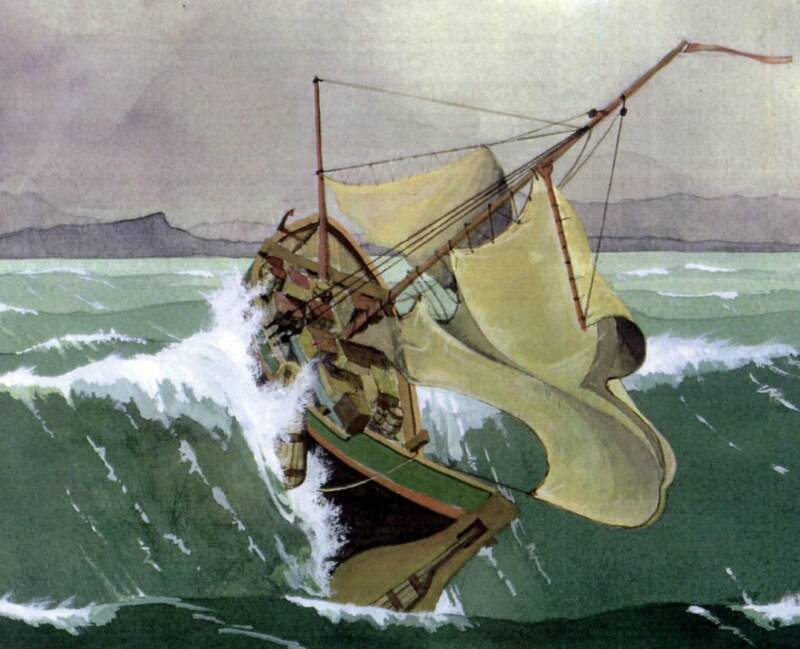
Burntisland Heritage TrustThe Blessing of Burntisland was carrying Charles I’s treasure and baggage when it sank off the coast of Scotland in 1633.
After almost 400 years, a royal ship of England’s King Charles I that sank off the coast of Scotland while laden with his treasure may have finally been found. Burntisland Heritage Trust believe their team has located the wreck of the Blessing of Burntisland in the Firth of Forth bay in southeastern Scotland.
While the group describes the chances that they have indeed found this wreck — at a site sitting about a mile from Burntisland — as “promising,” they’ve also urged caution that more testing needs to be done in order to absolutely confirm that they’ve finally found this fabled shipwreck.
The Royal Treasure Ship Of Charles I That Sank In Scotland In 1633
The Blessing of Burntisland was traveling from Burntisland to Leith as part of Charles I’s Scottish coronation tour in 1633. But on July 10, stormy weather descended upon the seas.
Public DomainCharles I likely covered up the shipwreck due to fear of political embarrassment.
Charles I was aboard a different vessel for the tour, which survived the storm. But the Blessing of Burntisland, carrying his baggage and treasure, sank during the short voyage. Reportedly, only two of the 35 people on board the Blessing survived.
According to the Burntisland Heritage Trust, the accident was likely covered up due to potential political embarrassment, which also meant that no one was looking for the wreck for decades.
The cargo lost with the wreck reportedly included royal jewelry, textiles, coins, and precious-metal plates — in total, valued at around £100,000 at the time, or some $27 million today.
Historical accounts have also suggested that a gold and silver dinner service commissioned for King Henry VIII during the 16th century was also aboard the vessel. But no official inventory or valuation of those goods was established.
The exact dimensions of the ship are also unknown, but surveys have found that the wreck suspected of being the Blessing of Burntisland is about 55 feet in length.
The Possible Discovery Of The Blessing of Burntisland
The Burntisland Heritage Trust stated that they found the possible location of the wreck with a combination of subsea ground-penetrating radar, various advanced scanning techniques, and direct examination via diving.
Wikimedia CommonsThe wreck is believed to have been discovered in the Firth of Forth, just a mile from shore.
“Core samples now strongly point to the wreck being that of the Blessing,” a report from the trust said, according to Divernet.
“We may have found the site of a historic wreck, but we have not yet identified it,” said search team leader Ian Archibald. “We have retrieved a timber sample but we do not know at this stage what ship that has come from. The next stage would be carbon-dating.”
The team has reported the recovered timber to the Receiver of Wreck, a government official who presides over matters of shipwrecks and maritime treasure.
Although still unconfirmed as of now, this promising find is exciting for the trust, which has been involved in more than 30 years of investigations related to the Blessing of Burntisland. According to a short history of the search on the trust’s website, the trust took over the search after an American exploration company pulled out in 1996.
In previous searches, scuba divers attempting to investigate sonar targets have struggled with strong tides, deep silt, and low visibility.
Wikimedia CommonsCharles I was later tried, convicted, and executed for high treason in 1649 after years of clashing with Parliament over the extent of his powers as part of the English Civil War.
Over time, despite the difficult conditions, the team did make some finds — though not the royal treasure ship they were hoping for. The discoveries included pottery, shoe leather, and fastenings, but none helped identify the Blessing. Instead, the team discovered an armed naval tug boat from World War I and a fighter plane from World War II.
If the identification of the Blessing is confirmed, this find would become one of Scotland’s most significant marine archaeological discoveries ever.
While the chance of securing recovered treasure is exciting, it’s hard to know the estimated current value of the sunken goods — not to mention the haul’s value as a mythic piece of Scottish history.
Discussions about the establishment of a visitor center or museum in Burntisland to exhibit the ferry’s story and artifacts have been in the works.
The next step is carbon-dating of the recovered timber to see if this wreck is truly the royal ship lost 400 years ago. If not, the search will simply have to continue on.
After reading about the potential discovery of the ship carrying Charles I’s treasure that sank 400 years ago, learn about the oldest discovered shipwreck found at the bottom of the Black Sea. Then, dive into the history of the Picts, the people who called ancient Scotland home.
The post Charles I’s Sunken Treasure Ship May Have Just Been Found Off The Coast Of Scotland After 400 Years appeared first on All That's Interesting.








 New Posts (Home)
 ChatBox
 Popular Posts
  Game Zone
 Top PodCasts