New Posts (Home)
 ChatBox
 Popular Posts
  Game Zone
 Top PodCasts


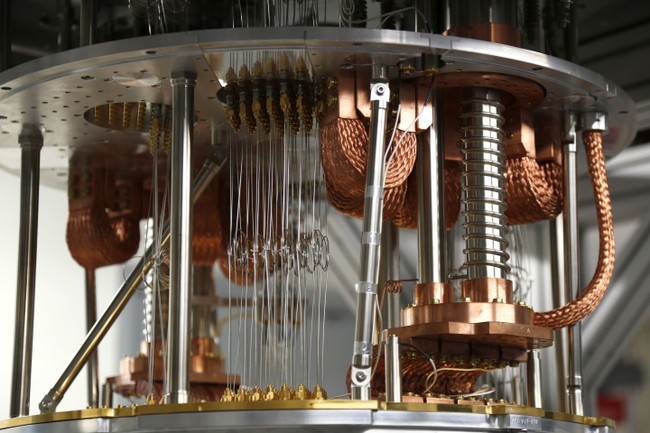
Quantum mechanics turned 100 years old! A century ago, a group of physicists stared into a strange new world that refused to behave like anything they had ever known. They found electrons that acted like waves, particles that appeared only when measured, and energy levels that jumped rather than slid. It felt as if nature waited until the late 1920s to reveal a private joke.
Advertisement
Everything people trusted about classical physics held only until atoms arrived; then the rules changed.
Scientists 100 years ago did not see electrons. They saw nature behaving in ways only quantum ideas could explain.
They took the odd behavior and built a new field around it. They argued, wrote papers, skipped sleep, and produced the foundation of what we now call modern physics.
Quantum mechanics became the strange child of the scientific family: brilliant, troubling, and necessary. A century later, the field continues to remind people that the universe remains wilder than imagination.
When the Old Rules Broke
Before the idea of quantum anything took hold, physics felt steady. Newton explained motion, Maxwell explained light, and engineers built machines with predictable behavior.
Then, a few stubborn problems started to bother people. Light acted like a particle and a wave at the same time. Atoms refused to spiral inward the way old equations predicted. Electrons jumped between energy levels without crossing the intervening space.
The more scientists observed, the stranger the universe appeared.
When thinkers like Heisenberg, Schrödinger, Dirac, Born, and Pauli realized something bold, the field came to life. They didn't need to fix the old system; they needed to build a new one that accepted uncertainty, probability, and dual behavior as part of nature.
Advertisement
They refused to ignore the strange results but accepted them as real.
From that leap came the birth of quantum mechanics.
The World Changed Once Physicists Followed the Mystery
Once the rules of the microscopic world became clear enough to use, the field ignited. Quantum mechanics gave scientists the tools that led to semiconductors, lasers, MRIs, and nearly every technology that shaped the modern era. What began as a way to describe electrons turned into the roadmap for a new century.
Yet the field did more than change devices; it changed how people think about nature. Classical physics offered comfort, and quantum mechanics provided humility. It reminded people that the universe owes no simple explanation, moving as it pleases, and sometimes revealing its rules only when asked in the right way.
Those Who Study It Never Stay the Same
Quantum mechanics demands a kind of intellectual surrender. Students walk in thinking they'll dominate equations. Instead, the equations show them who their boss is. They learn that probability carries more weight than certainty, discover that observation alters behavior, and grasp that two particles can share a link across vast distances.
Gravity feels heavy, while quantum behavior feels slippery.
It's this experience that shapes minds, turning scientists into people who chase ideas with curiosity rather than fear, and teaching them to follow the results, even when those results contradict their intuition.
Advertisement
Every generation that studies quantum mechanics ends up changed by it. The field forces people to pause, look again, and accept mystery as part of the bargain.
A Chalkboard Lesson That Never Left
I remember my own introduction to physics with a clarity that surprises me. Near the end of college, I carried a full load while working 50 or more hours each week. I was only a handful of credits away from degrees in history, mathematics, and physics, while also finishing my journalism degree.
I was burned out back then; money ran short, while life pushed back.
One day, a physics professor stopped us before a scheduled lecture and told us to put down our pens and watch. He walked to the chalkboard on the far left side of the room and began to write, then crossed to the board on the right and kept going — all the while explaining the equations he was sharing and building them like train tracks. They met in the middle, resulting in the famous E = mc^2. On the left, he worked through the energy half; on the right, he focused on the speed of light.
He didn't present the equation theatrically; he simply wanted us to see how the pieces fit.
Energy. Mass. Light. Motion.
It all tied together in a way that only chalk and a patient teacher can explain.
Advertisement
Although that lesson had almost nothing to do with quantum mechanics, it shaped the way I looked at physics, showing me that every rule people trust came from someone willing to follow a question until understanding appeared.
That lesson planted the seed that led me to chase quantum ideas with the kind of restless curiosity. Like it always does, life pulled me away. Marriage, jobs, daughters, and change.
A part of me still sits in that room, watching the chalk dust swirl.
The Century Ahead
Quantum mechanics marks a hundred years not as a completed field of study, but as an open invitation. Scientists are now working on quantum computing, quantum communication, and new ways to use entanglement to push technology forward. Nothing about the next century looks simple, and everything looks promising.
The spirit that launched the field still guides it. The world never stands still, and neither does curiosity. When physicists meet today, they carry the same mixture of wonder and frustration that filled rooms in Copenhagen a century ago, while knowing they study a universe that refuses to sit quietly. They know they'll never know enough, but they continue walking those paths anyway.
Final Thoughts
The same message quantum mechanics delivered at its birth continues today. Reality hides more than it reveals, while the universe makes sense only when observers approach it with humility.
Advertisement
The people who chase those questions today inherit a tradition built on courage, patience, and the willingness to look beyond the comfortable. The field continues to grow as the questions deepen. Mysteries remain, and those who study them will feel the same spark that carried me through the chalkboard lesson years ago.
The century ahead, thankfully, still belongs to the curious.
For readers who enjoy columns that blend history, science, and storytelling, PJ Media offers complete access to every deep dive and every member thread.
Join today with promo code FIGHT and follow the writers who dig into the ideas shaping the modern world.