New Posts (Home)
 ChatBox
 Popular Posts
  Game Zone
 Top PodCasts


How many times have we walked past one? A rusted padlock with its key has sat on a gate for decades. People walk around it. Then, one cold morning, someone twists the key, the metal snaps open, and every rule changes. The gate was never a law of nature: It was a habit.
Advertisement
The System Players Couldn’t Escape
For almost one hundred years, professional baseball worked under a simple assumption: Teams owned players, not just their contracts, but their entire careers.
The reserve clause tied a player to one baseball club indefinitely, even after the contract expired. If a player refused the terms, their only options were to retire or go into exile.
Owners were the bosses. Period. They called the arrangement stable, but players lived a different reality. Salaries stayed artificially low.
Loyalty ran one way, even stars held little leverage, and average players had none at all. There was an excellent chance that you'd see a favorite player selling siding during the off-season.
The arrangement survived because challenges rarely succeeded; after all, most players needed their paychecks more than principles. A few tried anyway, but they paid the price.
The First Man Through the Wall
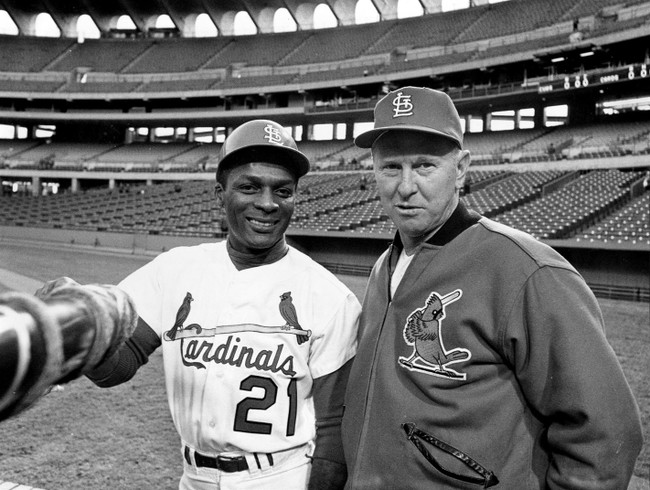
A strong-willed, All-Star centerfielder challenged the system around a decade before free agency arrived. Curt Flood refused a trade and argued that forced relocation violated fundamental labor rights. The stance cost him his career — Flood was a borderline Hall of Fame player, but his battle cost him everything baseball-related.
Unfortunately for him, baseball closed its ranks, owners punished the defiance, and players watched and learned how steep the price could be.
Flood's challenge went all the way to the United States Supreme Court, where he lost, but the damage left a lasting scar. Players now knew the system could be questioned, but they also knew any real change would require precision, patience, and a different battlefield.
Advertisement
The Case That Finally Landed
That moment arrived a few years later, when a veteran pitcher played an entire season without signing a contract, fulfilling every obligation. After the season ended on Dec. 23, 1975, Andy Messersmith argued that his service under the reserve clause made him free to negotiate with other teams.
In an action that shocked baseball owners to their core, an arbitrator agreed. It was a ruling that shattered the logic that owners had relied on for generations.
One player's challenge rewrote the baseball labor landscape overnight.
The word "revolution" wasn't uttered; no voices were raised; the arbitrator simply read the contract as written and followed its language to its logical end.
Why Baseball Changed Everything Else
Messersmith's free agency first transformed baseball, then professional sports everywhere. Salaries exploded because markets finally existed. Careers lengthened because players gained control over their own training, workload, and destination.
Owners still profited, and boy, they did, but power now required negotiation.
Football, basketball, and hockey followed the same path. Collective bargaining grew teeth, while players gained representation. Contracts became agreements instead of assignments.
The economics of modern sports trace directly to that 1975 arbitrator's decision. The balance of power shifted without threats, such as strikes, riots, or even fanfare: It happened in a quiet room with documents sitting on a table.
The Uncomfortable Legacy
Free agency provided fans with a two-sided coin: fairness to clubs not named the New York Yankees, but also excess. Payroll gaps widened once clubs like, yes, those same Yankees, recognized the new opportunity in front of them. Small-market clubs adapted or faded, and fans learned that loyalty now flowed through contracts rather than geography.
Advertisement
That said, there wouldn't be many people who would trade the system back. Professional athletes stopped being treated as inventory, and careers became choices rather than permissions.
The business matured, becoming messy at times. The original players involved are rarely mentioned today, but their names live in footnotes, not statues.
That silence doesn't diminish their outcome.
Fifty Years Later
Modern fans debate salary caps, luxury taxes, and billion-dollar television deals without realizing where the line was first crossed. Every offseason signing traces back to Messersmith's ruling, while every trade demand echoes the earlier fights.
The padlock never protected the game, only control. Once broken, the gate didn't collapse; it opened.
And once players walked through, nobody could pretend the gate had always been locked for a good reason.
PJ Media's YUGE Christmas and New Year's sale is on — now at our lowest rate of the year! This huge sale on our VIP Memberships ends on January 1, so make sure you join the club to get our special behind-the-scenes look at the news. Receive 74% off by following this link and using our promo code MERRY74.