New Posts (Home)
 ChatBox
 Popular Posts
  Game Zone
 Top PodCasts


Every long road trip always has that moment when the sun dips low, glare vanishes, and the horizon sharpens. Your hands relax on the steering wheel, and all conversations grow quiet.
Advertisement
That moment turns the ordinary into something memorable for a few seconds.
Starting this year, our sky offers that feeling over and over: a rare stretch of solar eclipses starts with six headline events packed into three years.
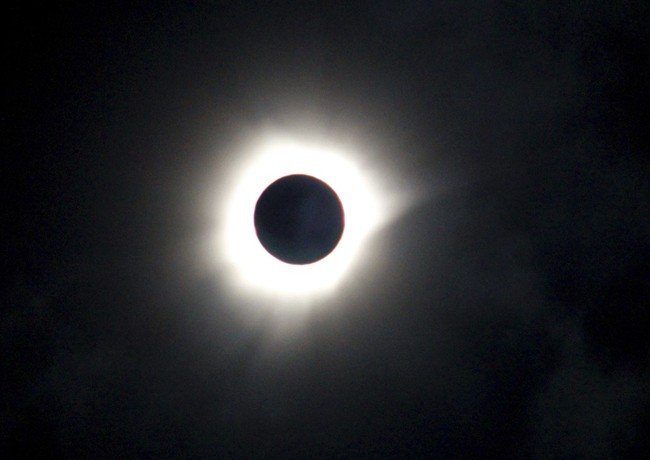
Three solar eclipses briefly turn day into night. Three annular eclipses carve a glowing ring around the moon: the ring of fire.
The timing couldn't be better for people who are willing to step outside and look up.
What’s Coming, in Plain Terms
Between 2026 and 2028, our Earth, Moon, and Sun will line up in ways that people will enjoy in large parts of the world.
Total eclipses occur when the Moon fully covers the Sun, revealing the Sun's outer atmosphere and causing a sudden drop in temperature.
Annular eclipses happen when the Moon sits a little farther away, leaving a bright ring around its silhouette.
Even though each event lasts only for moments, the memories will last much longer. Fans of eclipses who have often seen one plan vacations around the next occurrence.
The Big Dates To Watch
A total solar eclipse on August 12, 2026, will sweep across Greenland, Iceland, Spain, and parts of northern Africa. Major Spanish cities lie along the path, offering rare access without having to travel far from home.
But the one to really get ready for lands on August 2, 2027.
On Aug. 2, 2027, a total solar eclipse lasting up to 6 minutes, 22 seconds will see the moon's shadow move slowly across southern Spain, North Africa, and the Middle East. Totality will be visible from historic and cultural landmarks, including the temple- and monument-strewn Luxor, Egypt, offering a near-guaranteed view of the sun's corona in clear skies (although dust storms are possible). No wonder it's being dubbed the "eclipse of the century."
Advertisement
The run of eclipses ends on July 22, 2028, with a total eclipse crossing Australia and nearby regions.
In October 2027, February 2027, and January 2028 the annular eclipses arrive, tracing paths across South America, Africa, and Asia.
Why People Chase Eclipses
Interesting things happen during totality: birds fall silent, streetlights turn on, and the sky takes on a metallic hue. There isn't a screen that matches the sensation. Solar physicists value the chance to study the sun's corona.
Annular eclipses are different; the sun is still visible, but reshaped into a perfect ring, sharp enough to feel surreal.
How To Watch Without Ruining It
Remember the warnings we all grew up with: Don't stare into the sun!
Eye safety matters: Certified eclipse glasses block harmful rays and protect your vision during partial phases. Using your naked eyes is okay only during totality; those minutes are here and gone. If you're planning on using a telescope or binoculars, make sure you include the proper filters at all times.
Weather plays its role, too; clear skies may be better suited for deserts, high plains, and coastal zones with stable summer patterns.
A Reason to Care Right Now
Our lives run hard and fast when our phones buzz and news never sleeps.
Eclipses force stillness that overpowers everything else, turning strangers into companions looking upward at science in real terms.
Chances multiply this year; if you miss one, another one will replace it. Catch one, though, and you'll remember how cool that was!
Advertisement
Once the paths of the Moon and Sun move their separate ways, daylight resumes, brightening the road again. Conversations pick up, but something lingers, like a reminder that even the most dependable routines are sometimes forced to pause, letting wonder take over.
Final Thoughts
I remember trying to see an eclipse in elementary school using a cardboard box with a hole, a very safe way to see one. I'm pushing 60 now, but the inner geek is still a 12-year-old who loves looking out for that excitement again.
Not to mention, watching something as big as an eclipse reminds us of just how small we are in the universe, because our sky offers humility for the next three years; calendars bend, trips shift, chairs are hauled into backyards, while the sun dims, returns, and leaves behind the stories worth telling.
Big moments don’t announce themselves loudly. They reward attention. PJ Media VIP keeps focus on events that matter, even when the noise rises. Join the conversation and support independent coverage.