New Posts (Home)
 ChatBox
 Popular Posts
  Game Zone
 Top PodCasts


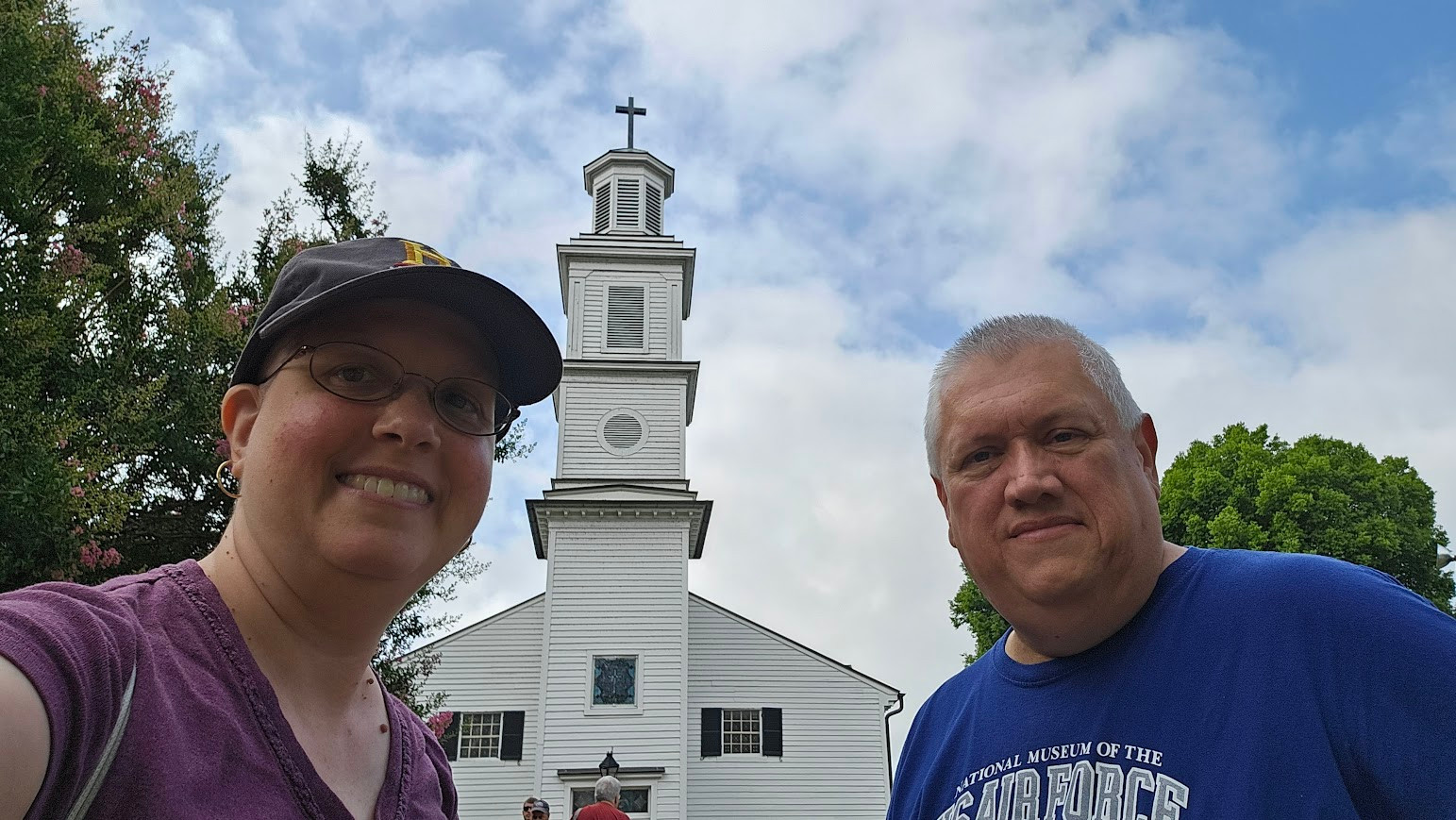
While exploring Richmond in the summer of 2025, Marianne picked up a local tourist magazine from the lobby of our hotel and noticed that Old St. John’s Church was just a short distance away. Given its close proximity—and its deep roots in American history—we quickly added the church to our list of must-see stops before leaving the city, not realizing just how memorable the visit would become.

Our visit to Old St. John’s Church in Richmond became one of those memorable stops that often happen when plans are flexible and curiosity takes over. We already knew the church offered an in-depth, hour-long history tour, but our schedule simply did not allow for that much time. Since we were preparing to leave town, we assumed we would only be able to see the church briefly, if at all.
Even knowing our time was limited, we decided it was still worth stopping by the church to see what we could. Our original plan was modest—walk around the outside of the building, take a few photos, and continue on our way. Sometimes even a short visit to a historic site can still leave a lasting impression.
As we arrived, we realized the facility had not officially opened yet. The doors were closed, and the grounds were quiet, creating a peaceful atmosphere that felt fitting for such an important historic location. It gave us time to pause and appreciate the exterior architecture without distractions.
While we were standing nearby, we noticed a docent arriving and unlocking the gift shop. Seeing someone on-site gave us hope that we might still be able to step inside. We approached him and struck up a conversation, explaining that we were visiting from out of town and were short on time.
The docent welcomed us warmly and invited us into the gift shop area. He began explaining the different tour options available and what visitors typically experience during their visit. We appreciated how approachable and informative he was right from the start.
We were honest with him and explained that while we were very interested in the history of Old St. John’s Church, we simply could not commit to a full hour-long tour. Our travel schedule made it difficult, and we expected that might mean missing the interior altogether.
That is when he mentioned something we had not known about—a shorter tour option. He explained that they offered a brief experience lasting up to fifteen minutes that allowed visitors to go inside the church. This option also permitted photography and video, which immediately caught our attention.
Hearing about the shorter tour felt like hitting the jackpot. It was exactly what we needed and far more than we had hoped for when we pulled into the parking area. The flexibility made it possible for us to experience the church without feeling rushed or stressed about time.
Once we stepped inside Old St. John’s Church, the atmosphere immediately felt different. The space carried a sense of gravity and reverence that was hard to ignore. Standing there, it was easy to feel connected to the countless moments in history that had unfolded within those walls.
During the tour, we were told the story of Patrick Henry and his famous “Give me liberty or give me death” speech. Hearing that story while standing in the very place where it was delivered added an emotional depth that cannot be replicated elsewhere. It was one of those moments where history felt alive and present.
The docent also explained how the church served as more than just a place of worship. It was a gathering space for political meetings and community discussions during a pivotal time in American history. Understanding its role in shaping early American ideals made the visit even more meaningful.
We were then given time to explore the interior on our own. This allowed us to take photographs and video at a comfortable pace, capturing details that stood out to us personally. The lighting, wooden pews, and simple elegance of the space made it an ideal setting for documentation.
What stood out most was that we never felt rushed. Even though it was a shorter tour, the experience felt relaxed and welcoming. That sense of hospitality made a strong impression on us and enhanced the overall visit.
Before leaving, we made sure to thank the docent for taking the time to work with our schedule. His willingness to offer options turned what could have been a quick glance into a meaningful stop. It was clear he genuinely cared about sharing the history of the church.
As we continued on our way out of Richmond, we reflected on how glad we were that we stopped. Old St. John’s Church exceeded our expectations, even with limited time. We later left a very favorable Google review, grateful for an experience that respected our schedule while still delivering a powerful connection to history.
Patrick Henry's Speech

Patrick Henry’s “Give me liberty, or give me death!” speech stands as one of the most defining moments of the American Revolution, not only for its fiery rhetoric but also for the dangerous uncertainty that surrounded it. Delivered on March 23, 1775, at the Second Virginia Convention, the speech came at a time when open rebellion against Great Britain was still a terrifying prospect rather than a foregone conclusion.
The setting itself added gravity to Henry’s words. The delegates gathered inside St. John’s Church in Richmond, a modest brick structure that had been repurposed to accommodate the convention. Sunlight filtered through tall windows, illuminating pews filled not with worshippers but with some of Virginia’s most influential political minds.
Tensions were already high among the delegates. British troops had tightened their grip on the colonies, dissolving assemblies and seizing gunpowder stores. Yet many Virginians still clung to the hope that reconciliation with the Crown was possible, fearing that war would bring ruin to families, farms, and the fragile colonial economy.
Patrick Henry rose to speak in response to a proposal calling for Virginia to organize and arm its militia. This was no small suggestion. Supporting it meant accepting the reality that peaceful resolution was unlikely and that armed conflict was approaching. For many in the room, the idea bordered on treason.
Henry began calmly, acknowledging the intelligence and patriotism of those who disagreed with him. He framed his argument not as reckless defiance but as a sober assessment of reality. Britain’s actions, he argued, spoke louder than any diplomatic assurances sent across the Atlantic.
As his speech continued, Henry’s tone sharpened. He warned that the colonies had exhausted every peaceful option—petitions, remonstrances, and appeals to reason—all of which had been met with contempt. Each British response, he insisted, was another chain tightening around colonial freedom.
The delegates listened in stunned silence as Henry dismantled the argument for waiting and hoping. Delay, he argued, only strengthened Britain’s position while weakening the colonies’ ability to respond. To remain passive was not an act of caution but one of surrender.
Henry’s oratory reached its climax when he declared that the struggle had already begun. The war, he said, was inevitable, and pretending otherwise would not prevent it. His words transformed fear into resolve, forcing the delegates to confront the reality they had been avoiding.

Then came the line that would echo through American history. With dramatic intensity, Henry declared that liberty was worth any sacrifice, even life itself. The phrase “Give me liberty, or give me death!” was not a call for martyrdom but a declaration that freedom was more valuable than safety under oppression.
Eyewitness accounts describe the speech as electrifying. Some delegates reportedly leapt to their feet, while others sat frozen, deeply shaken. George Washington and Thomas Jefferson, both present, would later reflect on the speech as a turning point in their own revolutionary thinking.
The immediate result was decisive. Despite earlier resistance, the convention narrowly approved Henry’s resolution to organize Virginia’s militia. This action placed Virginia on a clear path toward armed resistance, making it one of the earliest colonies to formally prepare for war.
The significance of the speech extended far beyond Virginia. News of the convention’s decision spread quickly, emboldening patriots in other colonies. Within weeks, shots would be fired at Lexington and Concord, confirming Henry’s assertion that war had already arrived.
Interestingly, no official transcript of the speech exists. The version most people know today was reconstructed decades later from eyewitness recollections. Yet even stripped of its exact wording, the spirit of Henry’s message remains unmistakable.
Henry’s speech endures because it captures a universal truth about freedom and risk. It confronts the uncomfortable reality that liberty often demands sacrifice and that safety without freedom is its own form of imprisonment.
Standing today inside St. John’s Church, visitors can still imagine the weight of that moment. The pews, the pulpit, and the quiet walls bear silent witness to a decision that helped ignite a revolution.
More than two centuries later, Patrick Henry’s words continue to resonate not just as patriotic rhetoric, but as a challenge. They ask each generation to consider what it values most—and what it is willing to risk in defense of liberty.