New Posts (Home)
 ChatBox
 Popular Posts
  Game Zone
 Top PodCasts


We’ll all fall prey to a dashboard warning light that flickers while driving. We did this past weekend, when the car informed us of low tire pressure—which was true on all four tires, something I don’t know how could happen at once.
Advertisement
We know the moment's decision: Keep going and hope for the best, or pull off, lose time, and let somebody who knows what they're doing look under the hood.
Human pride urges motion, yet wisdom chooses the shoulder.
NASA just chose the shoulder.
A Return That Deserved Respect
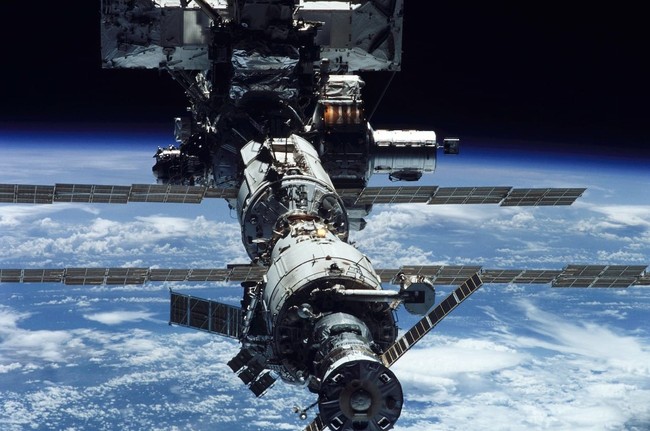
NASA is splashing four astronauts near San Diego with SpaceX on Thursday morning after one crew member needed a medical evaluation.
“Our timing of this departure is unexpected,” NASA astronaut Zena Cardman said before the return trip, “but what was not surprising to me was how well this crew came together as a family to help each other and just take care of each other.”
Officials refused to identify the astronaut who needed care last week and would not divulge the nature of the health concerns.
The ailing astronaut is “stable, safe and well cared for,” outgoing space station commander Mike Fincke said earlier this week via social media. “This was a deliberate decision to allow the right medical evaluations to happen on the ground, where the full range of diagnostic capability exists."
Their return marks the first medical evaluation of astronauts from orbit, a step NASA took without panic or theatrics. The agency opted for a quick return rather than attempt an extended observation aboard the International Space Station.
Advertisement
NASA said it would stick to the same entry and splashdown procedures at flight’s end, with the usual assortment of medical experts aboard the recovery ship in the Pacific. It was another middle-of-the-night crew return for SpaceX, coming less than 11 hours after undocking from the space station. NASA said it was not yet known how quickly all four would be flown from California to Houston, home to Johnson Space Center and the base for astronauts.
The call showed discipline, not alarm, because regardless of technology, spaceflight remains unforgiving to human bodies. Astronauts don't become immune to risk once a rocket clears the atmosphere. A medical concern in orbit deserves the same seriousness as one on the ground, if not more.
Judgment Over Romance
Space exploration carries a cultural myth of grit and endurance at any cost. The "at any cost" myth sells posters and movie tickets. Professional crews, however, operate by a different set of rules.
NASA chose a medical exam conducted by specialists equipped to perform complete diagnostics, emphasizing that the right people must make the right calls with the proper tools, and that crew health guides every operational decision.
There's no drama in that tone, an absence signaling professionalism.
Advertisement
Why Speed Matters
When dealing with medical matters in space, it often means acting sooner rather than later. Delays create variables, which invite cascading problems. Uncertainty is removed from the equation by using a return capsule, because there are no urgent care facilities in space. Yet.
Part of NASA's response included postponing a spacewalk. The safety of astronauts supersedes any work tasks, something every trained professional respects. Part of the astronaut's training is for emergencies, which is precisely why leaders never hesitate when a real one arrives.
The decision protects the affected astronaut while safeguarding the remaining crew, earning space agencies through restraint, not bravado.
A Lesson Worth Noticing
We always pay attention to launch days and splashdown, yet quiet judgment moments are hardly applauded; those moments only keep people alive.
The actions NASA took offer a reminder that spaceflight succeeds because leaders respect limits. Risk management sits at the center of every mission plan, including emergencies.
Computer modeling predicted a medical evacuation from the space station every three years, but NASA hasn't had one in its 65 years of human spaceflight. The Russians have not been as fortunate. In 1985, Soviet cosmonaut Vladimir Vasyutin came down with a serious infection or related illness aboard his country’s Salyut 7 space station, prompting an early return. A few other Soviet cosmonauts encountered less serious health issues that shortened their flights.
Advertisement
NASA wasn't gambling on hope or online speculation; officials acted, clearly communicated, and moved to the next step.
In our era, where noise is celebrated, NASA wisely chose calm.
Final Thoughts
The smartest drivers notice the warning light before smoke appears. They will pull over, call for help, and live to drive another day.
NASA did the same thing, only the road travels at 17,500 miles per hour!
Their decision reflected the maturity earned over decades of hard lessons. Exploration demands courage, yet survival depends on judgment.
Bringing astronauts home early protects life, preserves a mission, and honors the quiet rules that keep spaceflight possible.
Serious work depends on clear thinking, even under pressure. PJ Media VIP supports writing that values judgment over noise and responsibility over bravado. Join today and back work that respects reality and hard calls made the right way.