New Posts (Home)
 ChatBox
 Popular Posts
  Game Zone
 Top PodCasts


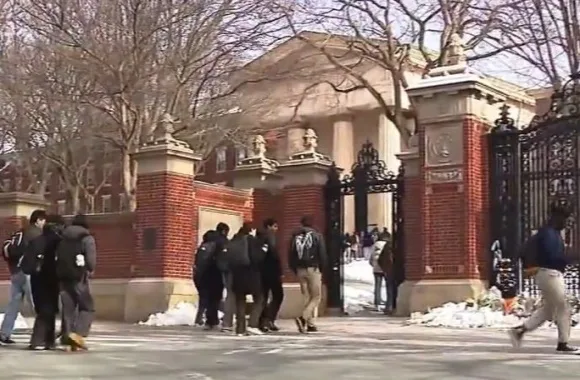
Students return with beefed up security as the investigation remains ongoing
Students returned to Brown University on Wednesday for the first time since the deadly shooting rocked the Ivy League university, with no clear motive for the gunman’s deadly attack that left two dead.
After killing students Ella Cook and MukhammadAziz Umurzokov and wounding nine others on Dec. 13, the gunman also allegedly killed MIT Professor Gomes Loureiro, an academic colleague.
The suspect, Claudio Manuel Neves Valente, remained on the loose until his dead body was discovered Dec. 18. Authorities reported he died by suicide.
In the intervening month, law enforcement has released few significant details as Brown officials have beefed up security measures and police presence on campus.
Additional security measures included the installation of key card access points and panic alarms.
“I thought I was going to die,” Brown student Spencer Yang, who was one of the wounded students, told the Boston Globe about his experience as he returned to campus this week.
“People start screaming from the pain. They had been trying to hold it in, I guess. People start praying,” Yang recalled about the mass shooting.
Today, he said, he hopes to “distance myself from just a title of gunshot survivor but not have that take up all my years at Brown.”
Motive remains unclear
On Jan. 6, the DOJ disclosed transcripts of four short videos the reported gunman, Neves Valente, recorded after the attacks.
In them, he confessed to the crimes, stated he had planned the Brown shooting “for a long time,” and expressed no remorse.
He claimed he was sane and not mentally ill, and denied seeking fame or leaving a manifesto.
Valente also dismissed the online rumors of his allegedly uttering Islamic exclamations during the shooting and instead blamed victims for their own deaths.
Despite these revelations, officials emphasize that Valente provided no explicit motive for targeting Brown students or an MIT professor he shot later.
The investigation continues, with federal prosecutors claiming Brown was his “intended target” but giving no clear reason for the attack.
A representative for the Justice Department told The Fix they “have no further comment and will release information as it is developed.”
In the absence of a motive released from local, state, or federal authorities, several theories have emerged.
Some acquaintances of Valente point to his past as showing a disordered temperament. Former classmate Scott Watson, now a physics professor at Syracuse University, described Valente as socially awkward, prone to “anger bursts,” and deeply dissatisfied during his time at Brown around 2000-01. Watson, who called himself Valente’s only friend there in an interview with CNN, recalled how Valente felt he had “wasted his time by coming to the U.S.”
Although Valente was always “kind and caring” toward Watson, he “hated living in Providence,” believing the classes were too easy and that he already knew more than needed for his doctoral degree.
Watson said he believed Valente was brilliant, and that as an undergraduate in Portugal, he solved every problem in a notoriously difficult physics book. At Brown, Valente grew estranged from his family after arriving and withdrew unhappily from the program, Watson said.
Other accounts from Portuguese classmates portray Valente as arrogant, confrontational, and bitter over failing to complete his PhD or achieve the elite academic career he envisioned—one comparable to Loureiro’s success at MIT.
After a month of investigations, the absence of a definitive motive leaves open a story that Valente himself tried to close in his videos, which remain unavailable to the public.
Professor Watson referred The Fix to his prior interviews. None of Valente’s known connections responded to requests for comment from The Fix.
MORE: Latest on Brown shooting: Custodian warned about shooter, police chief put on leave