New Posts (Home)
 ChatBox
 Popular Posts
  Game Zone
 Top PodCasts


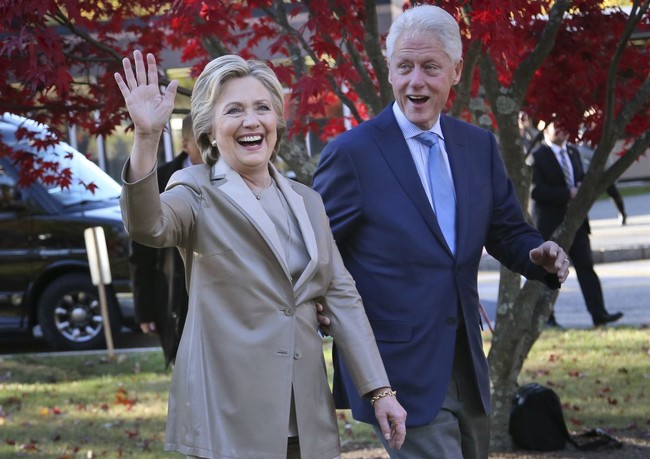
In what might be the least shocking news of the day, House Democrats recently moved to block contempt of Congress resolutions involving President Bill Clinton and Secretary of State Hillary Clinton, even after years of insisting that nobody stands above the law.
Advertisement
The loudest resistance, so far, comes from House Minority Leader Hakeem Jeffries (D-N.Y.), who has been opposing holding the Clintons in contempt over their failure to comply with congressional subpoenas tied to the Jeffrey Epstein investigation.
The Poorly Aged Slogan
Democratic leaders have repeated a simple phrase for years during hearings, speeches, and televised statements: "No one is above the law." Those words have echoed during impeachment fights, investigations, and contempt proceedings aimed at conservative leaders.
At first, the mantra carried some weight because it promised consistency: evenly applied law builds trust, while selectively applying it breeds cynicism.
Well, use bright colors to paint me as a cynic.
Then the subject shifted to Clinton, and unsurprisingly, the language suddenly softened, while accountability felt optional.
It's like the Democrats said the same standard applied to everybody, but no longer applies.
Why the Contempt Issue Matters
There’s a reason contempt of Congress exists, and it’s not to score political points; it’s to enforce cooperation. To properly conduct oversight, lawmakers rely on subpoena power, and ignoring lawful requests undermines that authority.
Bill Clinton decided to ignore requests related to testimony connected to the Epstein probe, instead relying on his lawyers to answer written questions instead. Republicans called that ridiculous and pursued contempt resolutions to compel either compliance or acknowledge defiance.
Advertisement
I would like to say that Jeffries stated his respect for due process of the law and the power of oversight. I’d like to, but I’d be lying.
“At this period of time, that sounds to me like contempt,” the New York Democrat said.
Jeffries said the Clintons were “working in good faith to try to reach an accommodation with the Oversight Committee.” Jeffries accused House Oversight Committee Chair James Comer (R-Ky.) of lacking “any credibility.”
“Because it has always been congressional practice that if someone’s under subpoena, you work to find reasonable accommodation in order to receive their testimony,” Jeffries said.
He opposed the effort, while framing it as a partisan escalation instead of the enforcement of congressional authority, an argument that sidestepped a central question: Should former presidents follow the same laws as everybody else?
Selective Enforcement Erodes Credibility
This isn’t solely a Bill or Hillary Clinton problem; it’s shifting standards. Democrats supported contempt charges against people tied to Republican administrations, and those officials faced penalties for delays, refusals, or incomplete cooperation. They weren’t given any allowances for past offices or status.
Whether they care to admit to it or not, blocking contempt for the Clintons sends a message that accountability applies when it’s only convenient.
Advertisement
Jeffries and the Politics of Protection
As the leader of House Democrats, Hakeem Jeffries shapes caucus messaging. His opposition signals more than his personal judgement; it reflects a strategic choice to protect his party.
But, at what cost?
Democrats built years of rhetoric around institutional integrity and equal justice. Defending the Clintons contradicts that posture.
I hope there will be a time when Democratic voters will notice inconsistency, even when politicians hope the attention goes away. Eventually, selective outrage should teach people on the left to stop believing official language.
Final Thoughts
Democrats tried building moral authority around equal justice. Blocking contempt for Bill and Hillary Clinton is cracking whatever foundation they generated.
Rules didn’t change; enforcement did. Whenever fairness depends on who commits the offense, then trust flies out the window.
Accountability sounds easy until allies face scrutiny. PJ Media VIP examines how selective enforcement corrodes institutions, weakens congressional authority, and trains voters to ignore political slogans entirely. Join the conversation.