New Posts (Home)
 ChatBox
 Popular Posts
  Game Zone
 Top PodCasts


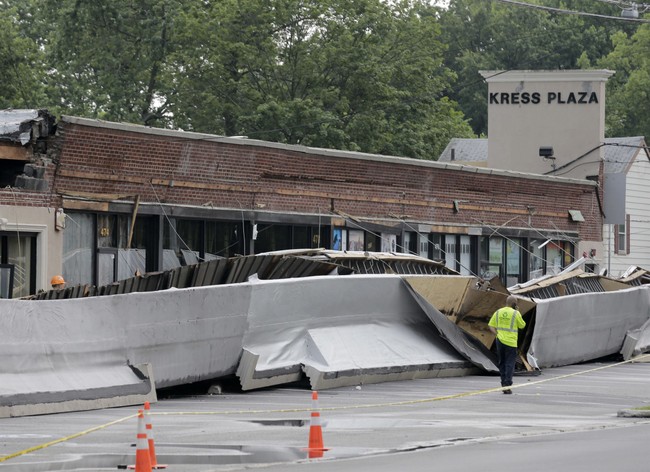
It's a question that I had not put too much thought into until recently, but in light of the revelations over the past year from DOGE, the current fraud investigations in Minnesota, Oregon, Maine, and California (and I hope that will soon expand to all 50 states), it really has struck me that a huge proportion of our economy is probably just money laudering.
Advertisement
Of course, we all understood at some vague level that there had to be a large amount of money laundering going on. The illegal drug trade alone is worth hundreds of billions of dollars, and that is just one portion of a large black market.
Most of that money has to be washed somehow, so it stood to reason that a lot of cash businesses were used to wash it.
But now that we are learning that hundreds of billions—at least—of government expenditures go to fake nonprofits and businesses, and that likely a similar amount is sent out in inflated costs attached to legitimate government contracts, it has been dawning on me and others that some significant fraction of our apparent economy amounts to storefronts that provide little to no actual goods and services.
I used to look at the dumpy exteriors of these businesses and naively think "They should clean this place up and make it charming and attract more customers!"
But, as it turns out, there's a point to the dumpy exteriors--they're intentionally repelling customers, because serving…
— Rambo Van Halen (@RamboVanHalen) January 28, 2026
I've written about this before, but I often wonder how much of our "economy" is fake.
Back in the day in Los Angeles there was a prevalence of "Cell Phone Accessory" stores. Sometimes several per block.
We'd film on these dumpy commercial streets, and be working in front of these shops for days. But we wouldn't see a single customer enter or exit.
The off duty cops we hired for traffic control explained that it's all money laundering. Same with the bodegas, the vape shops, and most of the restaurants.
In Los Angeles, and many other cities, there are miles and miles of streets full of businesses with no customers. And yes, most of them are owned by immigrants.
Another story, this time from San Francisco...
A new asian hotdog place opened in my neighborhood. It looked cute from the outside. Thought it might have good food (sometimes these places do). So I went in and ordered a hotdog....
The cute asian girl disappeared into the kitchen. Doesn't come out for a long time. After 15 minutes I walk to the counter and ask "How's it going in there?" but I got no answer.
So I peeked into the "kitchen". And to my surprise there was no kitchen--it was just an empty room. No fridge, no stove, no food.
And there was no cute asian girl.
She'd left.
She had my money so I stuck around to see what the fuck was going on. A few minutes later she returned with a hotdog. I have no idea where she got it from. (I asked but she pretended not to understand English?)
So this raises some questions, because in San Francisco the health department "grade" must be placed in the window of the restaurant. And the fake hotdog place had a legit 99% rating (probably because they had no food on the premises).
So somebody from the city of San Francisco inspected, and passed, a fake restaurant. The inspectors were probably on the take. At best, they looked the other way.
These "shops" take up a lot of retail space--it's a lot of real estate. And retail space--especially in San Francisco and Los Angeles--is expensive, mainly because the cheap space is taken up with fake businesses.
In the past I've looked into opening retail businesses. The biggest expense is rent. And it's so expensive that I abandoned the business ideas after running the numbers.
So how much of the commercial real estate market is propped up by these sham businesses?
And how many honest entrepreneurial Americans could be running their own small businesses but aren't doing so because the rent is too damn high?
Once you start looking for fake businesses you can't stop seeing them.
So the next time you're driving around your city, look at the dumpy commercial strips, and the dirty "store" windows. Then look at the crappy strip malls with peeling paint, cracked signs, and empty potholed parking lots.
Then ask yourself, "How much of this is fake?"
Advertisement
How much? God only knows, but it can't be a small percentage.
Ten percent of all employment in the US is in the NGO sector, and much of that money comes from local, state, and federal governments. The people who run these nonprofits are often, perhaps usually, tied in some way to government officials or even former government officials, and there sure are a lot more "service providers" than services provided.
As Nick Shirley showed, you only have to scratch the surface to discover that recipients of government largesse are frauds, and that many of the people who provide the funding are in on it.
The corruption goes so deep that the Democratic Party chose as its Vice Presidential candidate one of the key enablers of fraud, and did so knowingly. Barack Obama's former Attorney General himself "vetted" Tim Walz, and a significant chunk of the fraud had already been uncovered already.
They knew, and they APPROVED. No doubt it was a qualification, not a disqualification.
During the Biden administration, tens of billions of dollars were poured into a project that was supposed to provide broadband to people, yet nobody was connected. The program is still around, and Ron Wyden just bragged about getting a chunk for his constituents.
Oregon’s Senator is bragging about paying $689M for 104,654 rural broadband connections, or $6,854 per connection. Construction won’t start until end of year, let alone service.
You can buy Starlink for $350 retail with free two day shipping. https://t.co/dVveGU6p6a pic.twitter.com/B4QEMGSNgP
— Kane 謝凱堯 (@kane) February 6, 2026
Advertisement
That's $6500 of pure waste per connection, assuming it ever happens, and that money goes somewhere.
Look at the California High Speed Rail project. Gavin Newsom just bragged about it again, despite it having spent billions to accomplish absolutely nothing.
Hours after Gavin Newsom celebrated a major made up milestone for California’s criminally over budget and delayed high speed rail, it caught on fire…
Fortunately, no tracks were destroyed in the blaze, but that’s only because none have been laid in 16 years. https://t.co/8saGsfmzns pic.twitter.com/X2HqxMg7Bf
— Kevin Dalton (@TheKevinDalton) February 6, 2026
The goal is to waste as much money as possible for as long as possible.
Some of our fake economy is pure black market, but of course, much of it is straight from the government to fake businesses. Learing centers, hospices in junkyards, teachers' unions that do everything but help educate kids, and an academy that churns out fake scholarship.
Obviously, there is a sector of the economy that is fabulously productive that props up all this graft, and the federal government can borrow trillions of dollars to keep it all going. There is an America that works, even if the left is trying to kill it. The American entrepreneurial economy is still strong, but underneath that layer of actual productivity, how much of the rest is just...fake?
There is no accounting for all this for obvious reasons, but I wonder. How many of those run-down storefronts are the legal address for 5, 10, or 50 fake businesses?
Advertisement
- Editor's note: If we thought our job in pushing back against the Academia/media/Democrat censorship complex was over with the election, think again. This is going to be a long fight. If you want to join the conversation in the comments -- and support independent platforms -- why not join our VIP Membership program? Choose VIP to support Hot Air and access our premium content, VIP Gold to extend your access to all Townhall Media platforms and participate in this show, or VIP Platinum to get access to even more content and discounts on merchandise. Use the promo code FIGHT to join or to upgrade your existing membership level today, and get 60% off!