 New Posts (Home)
 ChatBox
 Popular Posts
  Game Zone
 Top PodCasts


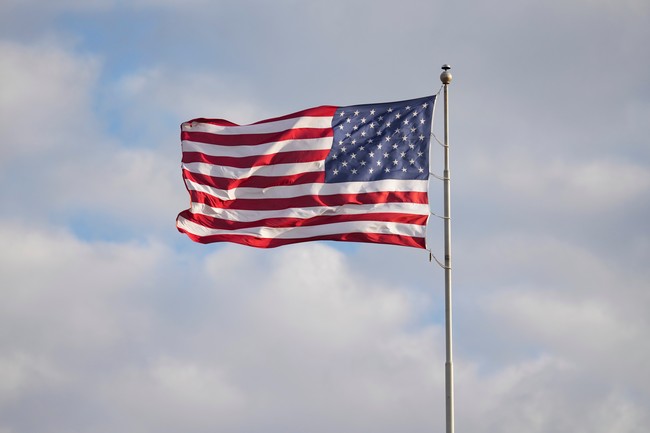
Respect is nothing more than an abstraction until somebody refuses to show it; that's when symbols clarify moments.
Flags matter because they represent authority, sacrifice, and ownership. The World Health Organization (WHO) crossed that line when it decided to keep the United States' flag after President Donald Trump withdrew from the organization. That decision led to a rare action on the world's political stage: Somebody acted.
Advertisement
President Trump pulled the U.S. out of the WHO because of decades of mismanagement, compliance with hostile governments, and repeated failures during global health scares. There are consequences resulting from the withdrawal: legal, diplomatic, and symbolic. At the WHO's headquarters, our flag was displayed; ownership never changed when we ended our membership, and when the organization refused to return it, then it became a straightforward matter.
Last year, President Trump withdrew the United States from the corrupt globalist institution, the World Health Organization (WHO). The WHO said we owed them more than $100 million. This is after they lied about the pandemic at the request of the Chinese Communist Party. President Trump made it clear that they owed us for what they did during the pandemic.
Since the WHO claimed it did not approve the U.S. withdrawal from the agency, it said the U.S. remains a member and that the U.S. can’t have its flag back. President Trump said in no uncertain terms, " We will take our flag back.
Property, Symbols, and National Authority
Ownership is something every society that fogs a mirror recognizes; nations don't abandon property when they exit agreements, while flags sit in a separate category.
A national flag represents sovereignty, military service, and the authority of a people governed by legitimate law. When an organization holds another country's flag without consent, the situation crosses over into provocation, an action sending a message, intended or not.
Advertisement
Secretary of State Marco Rubio addressed the situation with clarity, as diplomatic notes had run dry and polite requests met resistance.
A dispute over an American flag has become symbolic of the bitter public dispute between the U.S. and the World Health Organization (WHO) after the U.S. withdrew from the organization on 22 January.
In a joint statement by Secretary of State Marco Rubio and Secretary of Health and Human Services Robert F Kennedy Jr on the termination of U.S. membership in the WHO, they accused the organization of keeping the American flag that hung outside its Geneva headquarters captive.
“Even on our way out of the organization, the WHO tarnished and trashed everything that America has done for it. The WHO refuses to hand over the American flag that hung in front of it, arguing it has not approved our withdrawal and, in fact, claims that we owe it compensation. From our days as its primary founder, primary financial backer, and primary champion until now, our final day, the insults to America continue.
That's the point where Rubio authorized the United States Marines to retrieve American property. Marines follow orders: they arrived, asked politely, and left carrying the flag.
Leadership That Understands Final Authority
Strong leadership doesn't chase approval; it understands where it begins and ends. President Trump established a foreign policy grounded in sovereignty, not chasing consensus.
Advertisement
Rubio exercised that policy with precision; neither Rubio nor Trump escalated unnecessarily, shouted, or apologized for defending our national property.
There are times when distinctions matter, such as when the Marines didn't threaten or posture; they simply carried out a lawful order that civilian leadership issued.
When leadership uses authority sparingly and decisively, civilian control of the military works best. Sending Marines to retrieve a flag communicates seriousness without chaos.
Lessons for International Institutions
After decades of hesitation, delay, and procedural fogs, international organizations assumed American restraint as a sign of weakness. Actions such as retrieving our flag disrupt that expectation, when institutions quickly learn when boundaries become enforced.
That lesson wasn't taught through speeches or press conferences; a simple knock on the door did the job, and the flag returned home, because ownership was respected once again.
Why the Message Matters
Rubio's lesson extends far beyond a single building in Geneva; nations pay attention when leaders defend symbols, while adversaries study responses, and allies see consistency.
Trump's presidency restored clarity to moments that had become blurry, waking nations up as urgently as dumping ice water on someone who's sleeping, while Rubio's execution reinforced credibility.
Together, both men demonstrated how effective diplomacy can be when it's backed by resolve. Testicular fortitude rarely appears in policy memos, yet outcomes depend on it: Leaders who hesitate invite constant testing, while those who act reset expectations.
Advertisement
That truth works on so many levels because it applies in neighborhoods, workplaces, and geopolitics alike.
Final Thoughts
Our country's leaders didn't demand special treatment; they reclaimed property. The WHO re-learned a lesson older than modern diplomacy: Don't keep something that's not yours, don't disrespect national symbols, don't ignore a polite request from the United States Marines.
Leadership still matters — especially when no mashed potatoes are sitting behind the Resolute Desk — and the chain of command still works when adults occupy the top offices.
Moments like the flag retrieval rarely receive honest treatment because they expose how authority actually functions. PJ Media VIP members get deeper analysis, sharper context, and writing that refuses to soften reality for comfort.
If supporting that work matters to you, join today!









