 New Posts (Home)
 ChatBox
 Popular Posts
  Game Zone
 Top PodCasts


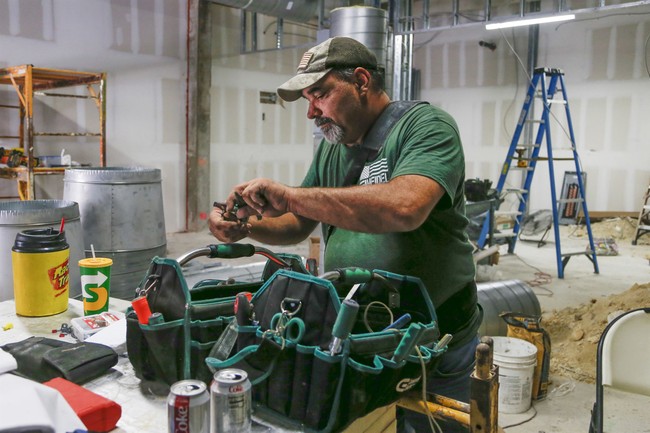
There's a quiet shift happening now, one that the dino-media will do its best to ignore: 60% of Gen Z plans to chase skilled trade jobs in 2026.
Young people are eyeing careers in welding, electrical work, heavy machinery, and HVAC rather than pursuing college degrees.
Advertisement
One driver may be the fear of AI, but most likely it's the steep, steady increase in tuition, leading to loan debt that turns people away.
A Generational Shift Toward Skilled Work
ResumeTemplates.com surveyed 1,250 Gen Z adults, and six in ten are considering blue-collar paths, with 42% already working or training in trades.
The results don't end there.
Thirty-seven percent of degree holders are switching over, driven by better job prospects, resulting in degrees mismatched with real jobs.
"Gen Z is facing one of the most uncertain job markets in decades, and many feel that traditional routes like college and corporate jobs no longer guarantee a stable future," said Jasmine Escalera, career expert at Zety. "Their interest in trade work and hands-on careers shows a desire for purpose, security, and control in an AI-driven world. I call this shift the 'AIxiety Pivot'—a growing movement of professionals who are proactively changing course because of AI-related fears and instability."
AI Threats Loom Large
Artificial intelligence is continuing to change how we live and work; from drafting marketing copy to reviewing contracts, it codes, replaces entry-level analysts and junior associates—all starting points for young college graduates.
Gen Z sees the math; 60% of respondents say fear of AI-driven job loss is pushing them toward skilled trades rather than traditional white-collar careers.
Construction companies, manufacturers, and infrastructure contractors continue reporting labor shortages across several states; hiring managers need welders, electricians, HVAC techs, and equipment operators now, not in four or five years.
Advertisement
Each year, the contrast grows sharper; software replaces paper-pushers, and robots automate warehouse floors; yet storms knock power out, pipes freeze, and bridges crack. AI might streamline reports, but it can't climb electrical poles while dealing with sleet.
Young workers easily recognize which job roles feel stable.
The Left's Influence on Young Minds
Universities didn't drift left accidentally. Over the decades, administrative staffing expanded while tuition climbed faster than inflation. Students absorbed language centered on systemic grievance, redistribution, and dependency models, while campus activism became a rite of passage rather than an exception.
Following close behind their growth to adulthood were loan balances; many entered a workforce where starting salaries struggled to justify the debt they had incurred.
"Many young adults are questioning whether college debt is worth it and are instead exploring blue-collar careers that offer solid income, skill development, and long-term security," says Julia Toothacre, chief career strategist at Resume Templates.
Growing up in a campus culture built around critique overlooks production; kids can analyze systems, but not how to build within them. Government solutions were prominently featured, while market mechanics were pretty much ignored, making the state look like the hero and private industry the suspect.
When fewer people enroll, the pipeline narrows; universities lose tuition revenue and influence, and shrinking political monocultures are leading to the expansion of trade schools and apprenticeships.
Advertisement
Money always talks: economic incentives matter. A 22-year-old earning solid wages as an apprentice electrician sees taxes deducted from each paycheck. Inflation immediately hits grocery bills. That's when policy stops feeling abstract; the connection between regulation, energy costs, and material prices becomes tangible.
The worldview changes because independence changes incentives.
Bills, Skills, and Real Experience
Enrollment numbers still hold below pre-pandemic highs; tuition keeps rising, and student debt still binds millions for decades.
Trades offer an alternative structure: apprentices earn while training, and electricians, plumbers, welders, and linemen often have the potential to earn six figures without taking on six-figure loans.
When a mechanic repairs a broken transmission, he doesn't have to debate theory; he diagnoses, adjusts, and repairs. An HVAC installer working through the July heat understands the fragility of infrastructure firsthand. A lineman restoring power after a tornado sees how quickly modern life collapses without their skilled hands.
Production disciplines the mind because deadlines matter, materials aren't free, and mistakes have consequences.
There are immediate results, generating an environment that produces a different kind of maturity.
A Cultural Rebalancing
For generations, higher education worked as a cultural gatekeeper, where credentials granted entry into influential networks, student loans tied graduates to federal systems, and ideology traveled through classrooms into corporations and bureaucracies.
Advertisement
When the tides shift toward trades, influence changes, too.
Young people earning income depend less on loan-forgiveness programs and on federal expansions to address their personal finances. They're given the chance to build equity through skill, not certification, opening the door to investing in trucks, tools, and homes rather than waiting for policy relief.
Show me a country that builds more than it debates, and I'll show you a strong foundation.
The need for universities isn't erased by Gen Z's choices of skilled labor; it rebalances the equation. Engineers design bridges, ironworkers erect them; both matter, but when the builder class shrinks too far, infrastructure erodes, weakening economic resilience.
If this momentum continues, we'll end up with a generation grounded in tangible work that may anchor politics in production rather than grievance.
Final Thoughts
Revivals aren't planned; they arrive with filled apprenticeships, busy job sites, and young people earning real pay early in their careers.
Realities suddenly change when protest movements, something that was fun while in college, end. The best example I can give is when I worked with a far-left social justice warrior. We truly balanced each other out: I'd call something plumb; she would say it's vertically aligned—you know the drill.
What made our friendship different, including our political views, was that she was the county's Democratic Party president.
As time does for all of us, our friendship drifted, and when Facebook sprang from Zuckerberg's forehead, we actually found each other and struck up a conversation. Of course, we talked politics, and she mentioned voting for a Republican candidate, which surprised me thoroughly. When I asked her what happened, why the change, she replied four words, never truer spoken: I bought a house.
Advertisement
It's those shifts that continue to define societies: one anchored in competence withstands technological shifts better than one anchored in credentials alone. Gen Z instinctively understands that learning the lessons that skilled hands still build nations.
AI can help, but it can't replace resolve, discipline, and responsibility.
Plus, it can't frame a window.
Become a VIP Member today and support our mission to expose media bias and deliver hard-hitting conservative commentary. VIPs get unlimited access to all content, ad-free browsing, and exclusive email newsletters.









