New Posts (Home)
 ChatBox
 Popular Posts
  Game Zone
 Top PodCasts


A Rare Break in Party Ranks
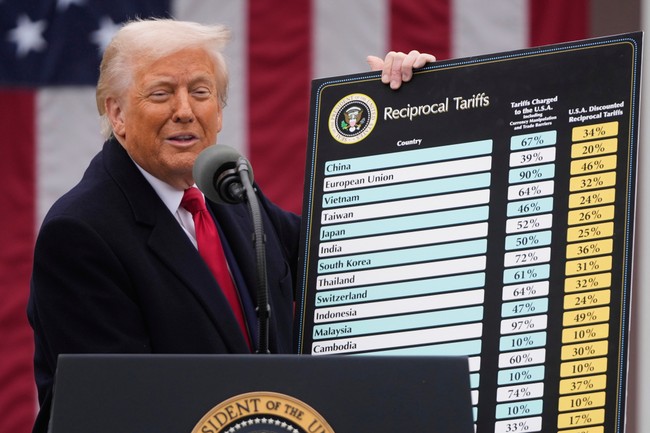
The House voted 218 to 210 to end President Donald Trump's national emergency tied to fentanyl flows from Canada and reverse tariffs imposed under that declaration. Democrats pushed the resolution, and six Republicans joined them, while House Speaker Mike Johnson opposed it.
Advertisement
Trump argued Canada needed stronger action against fentanyl precursors and trafficking routes harming American communities. As a result, he imposed the tariffs as leverage. The emergency declaration gave him the authority act quickly rather than wait on congressional gridlock.
House Foreign Affairs Committee Chairman Brian Mast (R-FL) condemned the reversal, citing roughly 100,000 fentanyl deaths annually across the country.
House Foreign Affairs Committee Chairman Brian Mast, R-Fla., argued that the resolution's text would end a national emergency related to fentanyl.
"The gentleman over here, 5,000 people per year die in his state alone from fentanyl," Mast said of Meeks. "So, if he wants to beg the question of who's going to pay the price of him trying to end an emergency, that actually, for the first time, has Canada dealing with fentanyl because of the pressure being put on them — who's going to pay the price? It's going to be 5,000 more of his state's residents. That's who's going to pay the price."
The vote marked a rare internal fracture during a security dispute.
Republicans Who Crossed the Line
The six Republicans who crossed the lines are Reps. Dan Newhouse (R-WA), Kevin Kiley (R-CA), Don Bacon (R-NE), Jeff Hurd (R-CO), and Brian Fitzpatrick (R-PA).
Resolution supporters argued that the tariffs strain a vital alliance and increase costs for American consumers, while opponents countered that without leverage, promises replace progress.
Advertisement
An Ally Under Pressure
The United States and Canada share a border that's over 5,500 miles long, keeping the two countries close allies. Annual trade exceeds $600 billion, with defense cooperation flowing through NATO commitments and joint security frameworks.
Prime Minister Mark Carney leads Canada's government, signaling a posture rooted in negotiation and diversification. He's criticized tariff escalation while emphasizing expanded global trade, with the stated goal of reducing dependence on U.S. pressure.
Carney has pledged enhanced border inspections and fentanyl monitoring while resisting what Ottawa views as unilateral economic coercion.
Canada's strategy is to seek balance, maintain the alliance, while protecting Canadian exporters that broaden trade partnerships, an approach that prioritizes economic stability at home, while pushing back on tariff-based leverage.
As fair as that sounds, fentanyl continues to devastate American families: synthetic opioids remain the leading cause of overdose deaths nationwide. Law enforcement agencies track precursor chemicals and cross-border trafficking networks tied to international supply chains.
All the measured diplomacy doesn't erase concerns about security and safety.
Senate Showdown Ahead
Although this vote seems significant, it's essentially symbolic as the fight shifts to the Senate. Senate Majority Leader John Thune has signaled resistance to efforts that undo Trump's strategy. White House Press Secretary Karoline Leavitt criticized the House vote and defended the continued pressure applied to Ottawa.
Advertisement
For his part, Trump has indicated he'd veto legislation if it reaches his desk.
Canada has increased inspections and enforcement pledges, and the U.S. could recalibrate duties if it sees measurable results. Whether pressure accelerates cooperation or hardens resistance remains an open question.
Both leverage and inaction carry costs.
Final Thoughts
Regardless of the games Congress plays, fentanyl remains a national emergency, and tariffs represent a single instrument in a broader security orchestra. Ending that leverage may ease trade friction, but the human toll of synthetic opioid demand requires sustained accountability.
Lawmakers now face a clear test of priorities: Diplomatic comfort offers stability, while strategic pressure seeks results.
The Senate will determine whether the fight truly fizzles or regains force.
Serious policy debates deserve serious coverage. If you value clear-eyed analysis that keeps the focus on security, sovereignty, and accountability, join PJ Media VIP today for full access to exclusive reporting and commentary.