New Posts (Home)
 ChatBox
 Popular Posts
  Game Zone
 Top PodCasts

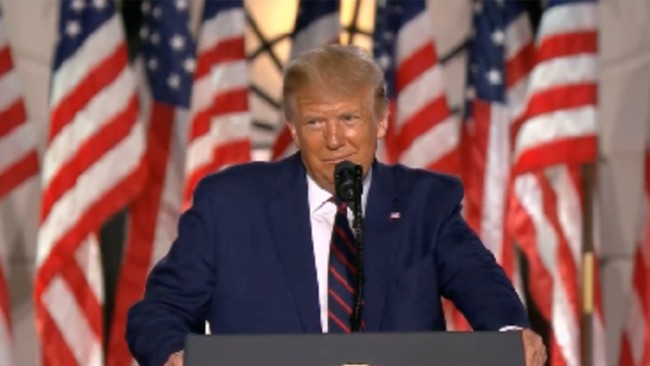
A caller using the name John Barron dialed into C-SPAN's Washington Journal and lit the internet up like a fireworks show on Jul. 4. The call followed this week's Supreme Court ruling against one of President Donald Trump's tariff tools.
Advertisement
Saying he was calling from Virginia, the man identified himself as a Republican, calling the decision one of the worst ever, practically. He labeled Rep. Hakeem Jeffries (D-N.J.) a dope, joking that Sen. Chuck Schumer (D-N.Y.) can't even grill a cheeseburger.
Listeners froze because the voice sounded exactly like President Trump, while clips spread faster than gossip in a small town.
Greta Brawner hosted the Feb. 20 show and took the call live, while cutting the man off after about 30 seconds. Social media users hit replay and started counting the ways the caller matched the president tone for tone and complaint for complaint.
Trump had already called the ruling deeply disappointing and said some justices lacked the courage to do right by the country. The overlap felt too perfect for some and too suspicious for others as the frenzy built all weekend.
C-SPAN quickly jumped in and shut down the call, then network officials posted on X that the call originated from a central Virginia phone number. Unfortunately for the tinfoil hat conspiracy theorists, at the exact minute, 10:51 a.m., Trump sat in a packed in-person White House meeting with governors, while two governors stepped out at 10:53 a.m. for a news conference with cameras rolling. C-SPAN told everybody to relax and tune in Tuesday night for the real president at the State of the Union Address.
Advertisement
The denial landed with the anticipated drama of a referee waving off a game-winning home run because time was called before the pitch was thrown.
Because so many of you are talking about Friday’s C-SPAN caller who identified himself as “John Barron,” we want to put this to rest: it was not the president. The call came from a central Virginia phone number and came while the president was in a widely covered, in-person…
— CSPAN (@cspan) Feb. 22, 2026
Pouring more gas on the fire was the name John Barron, an alias Trump used back in the 1980s whenever he wanted to talk to reporters as his own tough spokesman.
The callback felt like a wink to everybody who remembered, but the timeline held, and no proof surfaced that the president snuck away from the governors to make a quick call, which would've looked suspiciously like Sen. Adam Schiff (D-Calif.) during closed-door hearings with classified information on the agenda.
People laughed at the idea, yet they kept sharing the clip anyway because politics runs on spectacle these days.
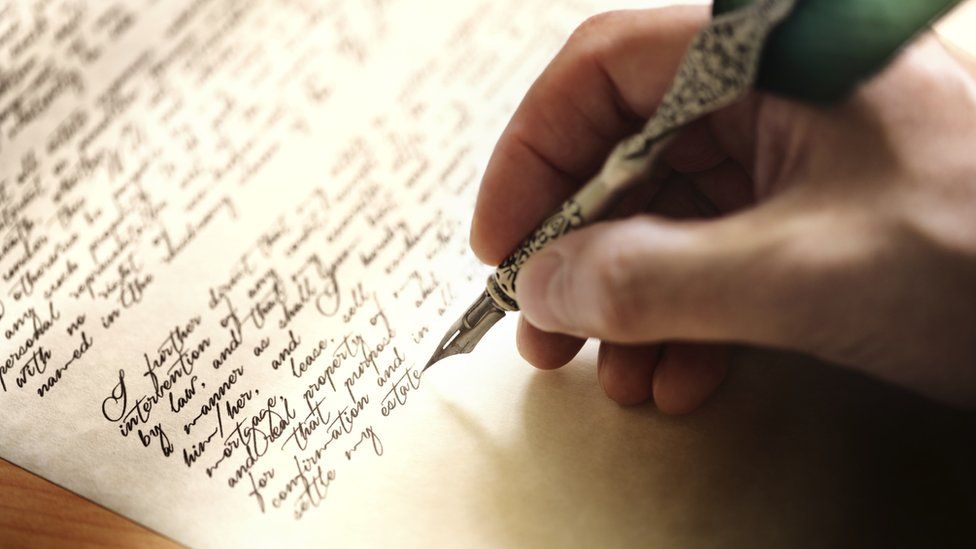
For centuries, leaders have played the name game, while not a single soul dislocated a shoulder clutching at pearls. Then, Alexander Hamilton, the country's first Treasury secretary; James Madison, the fourth president; and John Jay, the first chief justice, wrote the entire Federalist Papers under the shared pseudonym "Publius." The intent was to focus on the ideas, not the signatures.
Advertisement
Younger Ben Franklin used the pseudonym Silence Dogood to poke fun at Boston society without getting grounded. John Adams picked Humphrey Ploughjogger for the same reason.
Those weren't just average colonists; they helped build the country while hiding in plain sight, and nobody called it a scandal.
We can't talk about aliases without bringing up Pierre Delecto; for years, Mitt Romney ran a secret Twitter account using that name, while he lurked, read posts, liked some, and defended "Mitt Romney" while keeping out of the spotlight.
When reporters finally figured it out, Romney shrugged and said, "uh, yeah, that was me," calling himself a quiet observer who wanted to watch the conversation without the usual circus.
Nobody demanded hearings or late-night monologues; it was just politics doing what politics does.
Here's a list of other aliases used in these most modern of times.
Carlos Danger — Disgraced New York congressman Anthony Weiner used this name, which he said references an inside joke between him and one other person, to send illicit pictures to young women.
David Dennison — A pseudonym used to refer to Donald Trump in a 2016 NDA with Stormy Daniels, in which the adult-film star agreed not to reveal her affair with the soon-to-be president.
Diane Reynolds — Chelsea Clinton’s alias when checking into hotel rooms and the name attached to her email address on the Clinton family server.
Elizabeth Carlisle — Former attorney general Loretta Lynch’s email alias.
George Fox — When former New York governor Eliot Spitzer set up appointments with high-end escorts, he used this name, which also happened to be that of a friend and campaign donor.
John Miller — Another fake Trump spokesperson who was actually Trump himself.
Lew Alcindor — Former attorney general Eric Holder used basketball legend Kareem Abdul-Jabbar’s birth name in his email while in office.
Ron Vara — A fictional expert who appears in White House economic adviser Peter Navarro’s 2011 book Death by China. The name is an anagram of Navarro.
Wayne Tracker — The name former Secretary of State Rex Tillerson used to send emails about sensitive subjects, such as climate change, when he was the CEO of Exxon Mobil.
Advertisement
A major Supreme Court decision was drowned out by background noise while everybody debated a 30-second phone call. Treasury Secretary Scott Bessent keeps laying out the next steps for factories, and workers still get the protection they want. Trade partners stayed at the negotiating table while talks continued.
Related: Bessent Signals No Retreat After SCOTUS Tariff Ruling
And yet, for two days, the yuuge story was whether some Virginian really sounded that much like President Trump. Americans watched the media chase its own tail and had to laugh because the show never ends.
Pseudonyms let people say what they think without dealing with the instant pile-on; founders used them to shape a nation, and modern political creatures use them to scroll in peace or vent on life TV. C-SPAN swears it wasn't Trump, a claim backed up by his schedule.
Because so many of you are talking about Friday’s C-SPAN caller who identified himself as “John Barron,” we want to put this to rest: it was not the president. The call came from a central Virginia phone number and came while the president was in a widely covered, in-person…
— CSPAN (@cspan) February 22, 2026
However, the internet loves a good conspiracy, and kept hitting replay, chuckling because the voice, name, and timing lined up all too well.
Politics stays annoying and a little ridiculous, which is why people continue watching—that and having legacy media ram it down our throats.
Advertisement
The tariff fight continues, deals keep coming, and aliases keep popping up whenever anybody wants to speak freely.
Same as it ever was.
If you enjoy columns that cut through noise and spotlight the larger picture behind the viral moment, join PJ Media VIP and use promo code FIGHT to save 60% and gain full access to exclusive analysis and commentary.