 New Posts (Home)
 ChatBox
 Popular Posts
  Game Zone
 Top PodCasts


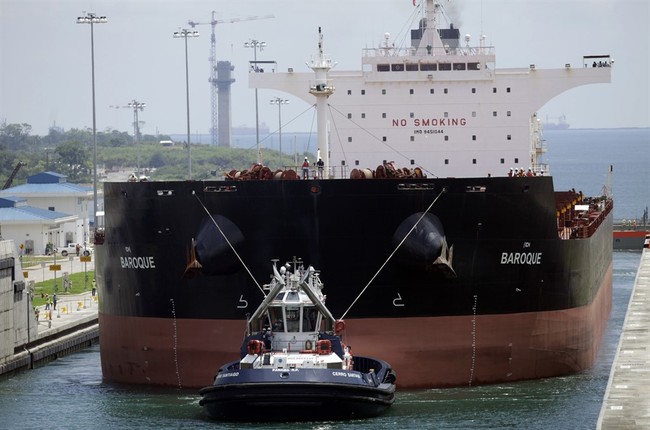
When there's war in the Middle East, oil markets aren't the only ones shaken; liquefied petroleum gas markets get rattled, too. LPG is the quieter fuel that keeps factories running, crops drying, and kitchens lit across Asia and Europe.
Advertisement
When conflict threatens the Strait of Hormuz, global energy flows shift fast; roughly 30% of the world's LPG exports originate in the Middle East.
QatarEnergy LNG halted: Qatar stopped operations at its LNG facilities on Monday, affecting some of the world's largest plants and a source that supplies about 20% of global LNG. QatarEnergy also suspended parts of its downstream output on Tuesday.
Qatar ranks among the largest suppliers, while Saudi Arabia moves massive volumes through Gulf terminals directly tied to that narrow shipping lane.
Buyers don't wait when tankers hesitate, insurers raise rates, or ports suffer damage.
They pivot and call Texas.
The United States now produces more LPG than it consumes. Annual output exceeds 10 billion gallons, propane exports hover near 1.8 million barrels per day, and butane approaches 500,000 barrels daily. Ports near Houston handle as much as 85% to 90% of total exports, with capacity reaching roughly 2.2 to 2.4 million barrels per day.
The expanded conflict, which has entered its third day, threatened Middle East LPG supply to the international market, potentially bolstering demand for US cargoes. The disruption to oil and gas production facilities in the region also led shipowners to avoid transit through the strait of Hormuz.
Roughly 30.5pc of world LPG exports came out of the Mideast Gulf region in 2025, at 1.48mn b/d, Kpler data show. The supply disruption led to a spike in delivered propane prices on the Argus Far East Index (AFEI) and in Europe.
Steeper gains in US propane Monday morning come alongside a rally in the wider natural gas liquids (NGLs) complex. EPC butane and natural gasoline at Mont Belvieu leapt by 9.1pc and 6.9pc as March began, respectively, lifting prices to 94.75¢/USG ($429.22/t) and 148.125¢/USG ($622/t), their highest levels since 23 June and 2 April 2025, respectively. US butane prices can be sensitive to disruptions to Middle East LPG flows, since the region exports a large amount of split propane-butane cargoes. Ethane prices at Mont Belvieu rose by 7.1pc from the prior session to 22.75¢/USG ($167.89/t) early Monday.
Prices for US propane, which is unseasonably abundant, still remain below year-ago levels, both outright and relative to the wider oil complex. Escalating tensions last week led April Nymex WTI to rise by $1.81/bl to $67.02/bl on 27 February, a level that would leave LST propane on Monday morning at 45.4pc of Nymex WTI, 9.8 percentage points lower than the start of last March, even if crude futures remain steady. LST propane sits 17.5¢/USG below its 3 March 2025 level.
Advertisement
That scale changes the equation.
I need to stop for a quick explanation: I am not suggesting President Donald Trump used this equation as the impetus for starting Operation Epic Fury; I'm only speculating on what may happen as a result of that.
If Middle Eastern supply drops even 15% to 25% for several months, American exporters can replace much of the lost volume. Domestic propane inventories recently stood above 60 million barrels, providing a buffer against sudden shocks. This cushion reduces the likelihood of immediate domestic shortages, even if overseas demand spikes.
The economic impact quickly becomes clear.
Mont Belvieu pricing is relatively weak relative to Saudi propane, keeping US LPG competitive on a delivered price basis. Freight costs to India are higher than from the Middle East, which compresses delivered margins.
East Daley expects near-term upside in US export volumes, particularly from terminals with open capacity such as ET – Nederland and EPD – EHT. If the Juaymah outage and Strait of Hormuz closure drag on, India and other Asian customers will need ready supply and flexibility. The US is the only supplier positioned to respond quickly.
The duration of the disruptions will determine whether this is a brief trade opportunity or a more durable shift in flows.
First, export revenue rises. LPG shipments generated around $29 billion in 2024. A temporary 10% bump in volume during a supply crunch could add billions more in annualized trade value. That strengthens the U.S. trade position with the possibility of economic contractions across many economies.
Advertisement
Second, geopolitical leverage grows. Energy exerts a quiet influence; when Chinese, Indian, Japanese, and South Korean buyers rely on American cargoes to keep petrochemical plants running, long-term contracts evolve. Diversification away from volatile regions turns from an emergency reaction into a structural strategy. Market share gained during instability often remains in place once tensions cool.
U.S. consumers and companies will be mostly unaffected by surging global LPG prices because domestic inventories of both propane and butane are at levels well above average for this time of year, said Eric Smith, associate director at the Tulane Energy Institute in New Orleans.
In the week ended Feb. 23, the energy department reported propane inventories were at a record-high 62.6 million barrels for this time of year.
Third, Gulf Coast infrastructure benefits from higher throughput that supports pipeline operators, storage terminals, dockworkers, and midstream companies. Increase usage improves margins, as the ripple effects reach local economies that need energy logistics and export services.
As in life, there's always risk.
If demand is higher during the winter heating season, rural households that rely on propane could see higher prices. Inventory levels and seasonal timing matter: Healthy storage dampens volatility, while thin storage amplifies it.
Another factor is shipping constraints: Tanker availability tightens during geopolitical stress, freight rates rise, and insurance premiums increase. Exporters benefit from higher benchmark prices, but transport costs narrow profit margins.
Advertisement
History gives us greater context. Energy disruptions to the Middle East conflict often generate price spikes that peak within weeks, then ease over three to six months unless infrastructure damage proves lasting. During past disruptions in the Gulf, markets sharply reacted before stabilizing once alternative supply routes were activated and inventories entered circulation.
LPG follows similar dynamics; it doesn't dominate political headlines the way gasoline does, yet it's critical as a fuel for plastics, chemicals, agricultural drying, heating, and cooking across developing economies. That makes it economically vital even if it doesn't steal the spotlight.
The central point holds.
A Middle East LPG shortage doesn't weaken the U.S.; it elevates our country into a stabilizing force.
Energy abundance changes perspectives; instead of scrambling for cargoes, American producers dispatch cargoes, and instead of absorbing disruption, U.S. exporters absorb the displaced demand.
America's shale boom reshaped more than domestic fuel prices; it quietly positioned the country as the world's swing LPG supplier. In moments of global stress, that role becomes ever-increasing. While conflict creates volatility, for American LPG exporters it translates into expanded influence, stronger trade flows, and strategic advantage.
Energy power doesn't present itself with fanfare; it shows up in who can deliver when the world tightens.
That leverage deserves serious scrutiny, not surface headlines.
Join PJ Media VIP today and get 60% off with promo code FIGHT.









