New Posts (Home)
 ChatBox
 Popular Posts
  Game Zone
 Top PodCasts


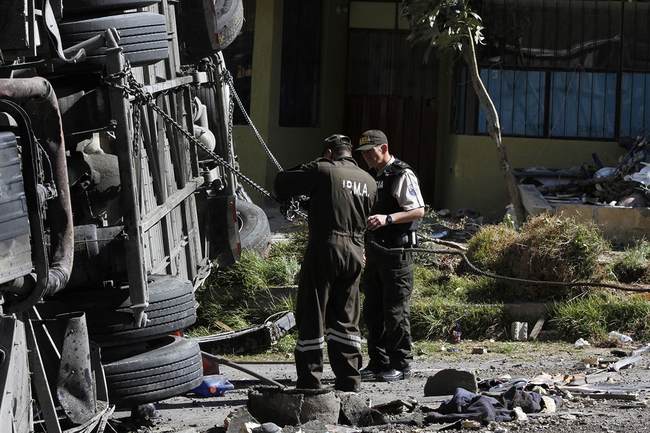
Ecuador has, for years, drifted from one of South America's safer nations into a major transit hub for global drug trafficking. Cartels exploited weak borders, corrupt port officials, and political hesitation.
Advertisement
That slide, finally, appears to have met resistance on March 3, when Ecuadorian security forces launched a large-scale ground operation targeting transnational drug networks tied to Los Lobos, with direct assistance from the United States. The operation dismantled a major trafficking cell; arrested 16 suspects; and seized cocaine, cash, and financial records tied to money laundering and public corruption.
President Donald Trump authorized support for the operation as part of a broader strategy to restore order in cartel-dominated regions of the Western Hemisphere. The U.S. provided intelligence, planning, and logistical support, while Ecuadorian forces conducted ground action.
The combined action also carried a message to cartels: Ecuador wouldn't fight alone, and cartels would no longer enjoy the comfort of operating beneath international hesitation.
On March 3, Ecuadorian and U.S. military forces launched operations against Designated Terrorist Organizations in Ecuador. The operations are a powerful example of the commitment of partners in Latin America and the Caribbean to combat the scourge of narco-terrorism.
Together,… pic.twitter.com/MrkKZcrDbs
— U.S. Southern Command (@Southcom) March 4, 2026
Ecuador's president, Daniel Noboa, framed the operation as a necessary step in reclaiming national sovereignty. Noboa took office at a time of surging violence linked to narco-terror groups, prison riots, and assassinations, as his administration labeled cartels terrorist organizations and expanded emergency powers to confront them.
Advertisement
Cooperation with the U.S. marked a turning point; Belgium, Italy, the Netherlands, Spain, and Europol also contributed to intelligence coordination, signaling a growing international alignment behind Ecuador's crackdown.
The operation followed months of mounting pressure on cartel logistics. Before the ground action, U.S. forces carried out 43 interdiction strikes on narco vessels operating in the Caribbean and Pacific corridors, actions that resulted in roughly 150 cartel-linked deaths and disrupted maritime supply routes feeding Ecuador's ports. The land operation built on that pressure by striking leadership and financial networks on shore.
About 70% of the drugs produced by Colombia and Peru, the world’s largest and second-largest cocaine producers, respectively, are shipped through neighbouring Ecuador.
The drug trade has unleashed a bloody turf war that has turned one of Latin America’s safest countries into one of its deadliest in the space of a few years.
The U.S. and Ecuador have boosted their security cooperation since the right-wing Noboa took office in 2023.
Noboa last year pushed for the reopening of a shuttered U.S. military base but was shot down by Ecuadorians who voted in a November referendum against overturning a ban on foreign bases.
In December, the U.S. announced a temporary deployment of air force personnel to the former U.S. base in the port city of Manta.
Oversight of U.S. involvement is handled by General Francis Donovan, commander of U.S. Southern Command, who met with President Noboa and Ecuadorian defense leaders ahead of the operation to coordinate security cooperation.
Advertisement
Southern Command oversees military activities across 31 countries in Central and South America and the Caribbean. In Ecuador, its role is centered on intelligence fusion, surveillance, and operational planning. Ecuadorian troops executed arrests and seizures on the ground.
One of the operation's targets was Hernán Ruilova Barzola, leader of a trafficking network linked to Los Lobos. His organization exploited Ecuador's ports to move cocaine to Europe and North America. Ecuador produces little cocaine domestically, but geography turned the country into a favored transit point for Colombian and Peruvian supply chains. Cartels filled the vacuum created by years of limited enforcement and political caution.
Violence followed the cartel expansion, homicide rates surged, and prison systems collapsed into gang-controlled battlegrounds. Entire neighborhoods fell under cartel influence. Confidence in institutions weakened as people watched organized crime outpace the state.
Noboa's decision to accept U.S. help acknowledged a hard reality: Sovereignty means little without the ability to enforce law within national borders.
The operation may signal a broader shift in regional drug policy. For decades, governments hesitated to directly confront cartels, often fearing backlash or diplomatic fallout, an environment where the cartels thrived. Ecuador's move shows a willingness to decisively act when support exists. The United States, under President Donald Trump's leadership, appears prepared to back allies willing to confront narco terror groups head-on.
Advertisement
Future implications extend beyond Ecuador: Nations such as Peru, Colombia, and parts of Central America face similar cartel pressure. Joint operations that combine local enforcement with U.S. intelligence and logistics could reshape the regional balance. When governments act together rather than in isolation, cartels finally lose their leverage.
Details of ongoing operations remain classified, but Ecuador's defense ministry confirmed additional actions remain under review. What stands clear is that hesitation no longer defines policy: Ecuador acted, the United States supported it, and cartels lost ground.
After years adrift, the region may finally be entering a phase where sovereignty is defended. Not surrendered.
Independent journalism only survives when readers choose to support it directly. PJ Media VIP offers deeper reporting, exclusive analysis, and commentary free from institutional pressure. Right now, members save 60% on a VIP membership by using promo code FIGHT. Join today and support an independent voice.