New Posts (Home)
 ChatBox
 Popular Posts
  Game Zone
 Top PodCasts
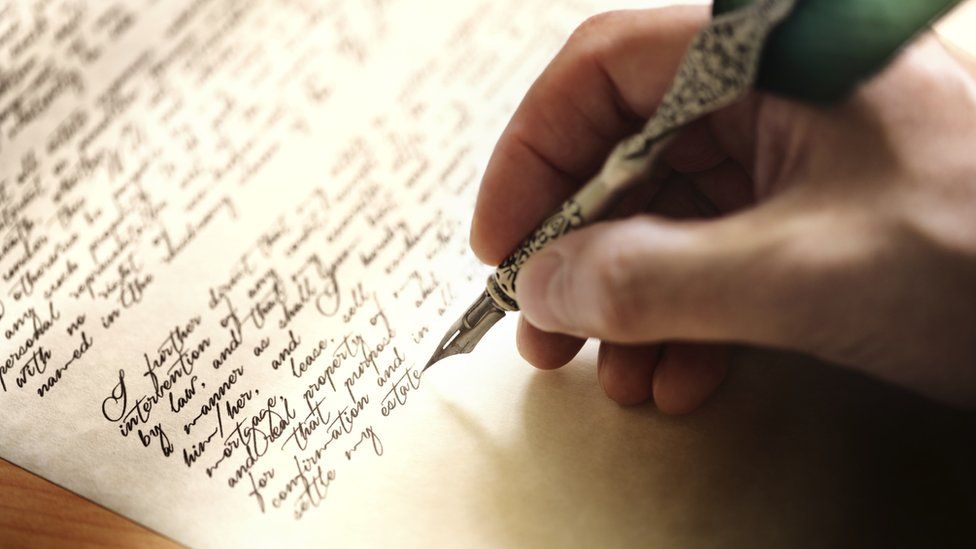
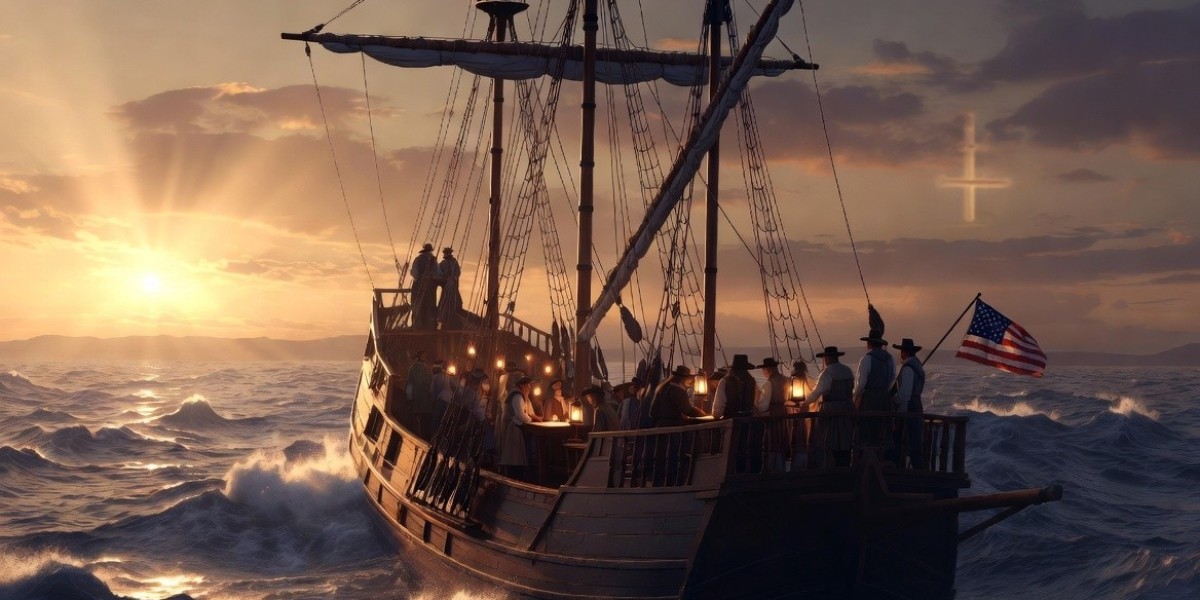
Picture this: November 1620, the Atlantic Ocean tossing a tiny wooden ship like it was a toy in a storm. Waves crash over the rails, families huddle below deck trying to keep their kids calm, and every creak of the hull sounds like it might be the last. Yet in the middle of that chaos, a group of ordinary folks (farmers, craftsmen, parents, and grandparents) did something extraordinary. They didn’t wait for a king to tell them what to do. They didn’t beg some far-off government for permission. They sat down, picked up a pen, and wrote the first framework for self-rule in what would become the United States of America.
That document, the Mayflower Compact, wasn’t some dusty footnote in a liberal textbook that tries to downplay faith. No, it was the spark. It was proof that real freedom starts when people trust God first, then each other, and build something solid from the ground up. As we head into America’s 250th birthday bash in 2026, dusting off this story feels right. It reminds us why the Judeo-Christian principles our founders lived by still beat every modern experiment in big-government control.
Let’s go back and walk through it the way it actually happened, not the watered-down version you sometimes hear. The people on that ship weren’t a bunch of joyless religious nuts, as some folks like to sneer. They were families chasing a better life. Many had already left England for Holland years earlier because the Church of England kept meddling in how they worshiped. They wanted to read the Bible themselves, raise their kids in faith, and live without a crown breathing down their necks. Holland was okay for a while, but the Dutch culture started pulling their children away from the old ways. So they scraped together every shilling, sold what they could, and booked passage on two ships (the Speedwell and the Mayflower). The Speedwell leaked like a sieve and turned back twice, leaving everyone crammed onto the Mayflower.

Sixty-six days at sea. Think about that for a second. No bathrooms worth the name, food that went bad fast, and sickness spreading through the cramped quarters. One baby was born right there on the waves (Oceanus Hopkins). Another passenger, a young servant named John Howland, got washed overboard in a storm and somehow grabbed a rope to climb back aboard. These weren’t superheroes in capes. They were regular people leaning hard on their faith. William Bradford, who would later become governor, later wrote that they saw God’s hand even in the worst moments. That belief kept them going when half the group didn’t make it through the first winter.
When they finally spotted land off Cape Cod, it wasn’t the lush paradise some had imagined. Cold, rocky shore. No welcoming committee. And here’s where the story gets really good. Their original patent from the Virginia Company didn’t cover where they actually landed. Legally, they were outside any government authority. Some of the non-Pilgrim passengers (the ones who had come for adventure or money) started grumbling. “We’re free agents now,” a few muttered. “Every man for himself.” That kind of talk could have ended the whole venture before it started. Instead of chaos, the leaders called everyone together right there on the ship.
On November 11, 1620, forty-one men signed a simple agreement. Women and children didn’t sign in those days, but the document spoke for the whole group (families included). They gathered in the main cabin, probably around a rough table, with the smell of salt and wet wool in the air. Bradford read the words aloud, and one by one they put their names down. That single page became the Mayflower Compact.

Here’s the heart of it, straight from the page: “In the name of God, Amen. We whose names are underwritten, the loyal subjects of our dread sovereign Lord King James... having undertaken, for the glory of God, and advancement of the Christian faith, and honor of our king and country, a voyage to plant the first colony in the northern parts of Virginia, do by these presents solemnly and mutually in the presence of God, and one of another, covenant and combine ourselves together into a civil body politic, for our better ordering and preservation and furtherance of the ends aforesaid.”
They covenanted with each other. They formed a “civil body politic.” They promised to make “just and equal laws” for the general good. And they did it all “in the name of God.” Not in the name of some distant monarch or committee. Not because a bureaucrat in London said so. They did it because they believed God had brought them there and that He expected them to govern themselves wisely.
That right there is the genius conservatives still cheer for today. Self-rule wasn’t some new idea cooked up by philosophers in powdered wigs. It grew straight out of the Bible they carried (the same scriptures that taught every person has dignity because they’re made in God’s image). The Pilgrims figured if individuals could govern their own souls with faith and responsibility, they could govern their community the same way. No kings needed. No fancy titles. Just ordinary families agreeing to live by rules they made together.
The signers weren’t all Pilgrims from the same church. There were “strangers” (people who came along for the ride but didn’t share every belief). Yet the Compact brought them in. It showed tolerance rooted in shared values, not the fake kind we see today where one side demands everyone cheer their latest cause. William Brewster, Myles Standish, John Carver, Edward Winslow (these names still echo in small-town squares and family Bibles across America). Carver became the first governor. Standish handled defense. Winslow helped keep peace with the Wampanoag. Bradford later wrote the history we still read. Every one of them had left comfort behind, betting everything on the idea that faith plus freedom equals strength.

The first winter was brutal. Half the company died. They buried folks at night so the Native Americans wouldn’t see how weak they were. Yet they stuck to the Compact. They held elections. They made decisions together. When spring came, they planted with help from Squanto and the Wampanoag. The first Thanksgiving wasn’t some politically correct feast, it was a grateful prayer meeting with new friends after God had carried them through hell. Families shared what little they had. Kids learned to fish and hunt. Parents taught the next generation the same faith that had kept them alive.
Fast-forward a bit and you see how the Compact planted seeds that grew into something huge. It wasn’t a full constitution, sure. It was short (barely 200 words). But it proved a group of free people could create order without waiting for permission from above. That idea traveled through the New England town meetings, showed up in the Fundamental Orders of Connecticut in 1639, and kept popping up in colonial charters. By the time 1776 rolled around, the men in Philadelphia had that same spirit in their bones when they signed the Declaration of Independence. Life, liberty, and the pursuit of happiness? Those words sound a lot like the Compact’s promise of “just and equal laws” for the general good.
John Adams, years later, called the Pilgrims “the first adventurers” who planted the seeds of liberty. Thomas Jefferson studied colonial covenants when he helped shape Virginia’s laws. Even the Constitution’s “We the People” carries the same heartbeat (ordinary citizens banding together under God to form a more perfect union). Liberals love to skip over the faith part, acting like the Compact was just some random contract. Give me a break. They signed it “in the name of God, Amen” for a reason. These folks weren’t embarrassed about their beliefs. They built a society on them.
Think about the families who lived this out. Priscilla Mullins lost her parents and brother that first winter, yet she married John Alden and raised a big family that spread across New England. Their descendants include presidents and everyday farmers who kept the work ethic alive. Elder William Brewster taught the kids from the Bible each Sunday. The women mended clothes, tended gardens, and whispered prayers over sick babies. These weren’t abstract ideas on paper. This was real life. Moms and dads passing down values that said hard work matters, family comes first, and God expects you to stand on your own two feet.
Contrast that with today. We’ve got politicians who act like self-rule is outdated. They push programs that treat citizens like children who can’t make decisions without Washington holding their hands. They rewrite school lessons to make the Pilgrims sound like invaders instead of pioneers. Some even claim the Compact was just about obeying the king. Funny how they never mention the part where the signers created their own government because the king’s rules didn’t reach that far. It’s almost as if admitting faith-driven self-rule worked too well would mess up their narrative.
But here’s the thing that keeps me optimistic: the principles never really died. They’re baked into the American DNA. Look at any small town Fourth of July parade (the flags, the veterans, the families cheering together). That spirit started on the Mayflower. Or the way neighbors still show up with casseroles when someone’s sick, no government order required. Or the homeschool moms teaching kids that character and responsibility beat every handout. Those are the same Judeo-Christian roots the Compact drew from.
As we celebrate 250 years since 1776, let’s remember 1620 came first. The Mayflower Compact wasn’t flashy. It didn’t have fireworks or fancy speeches. It was just people doing what Americans have always done best (rolling up their sleeves, trusting God, and building something that lasts). William Bradford later wrote that the colony grew “like a young tree” because of that covenant. That tree became a forest that shaded the whole continent.
The signers couldn’t have imagined airplanes, interstates, or the internet, but they would recognize the core of who we are. They’d see families still praying at dinner tables, kids learning to hunt and fish on weekends, and communities voting with the same seriousness they brought to that ship’s cabin. They’d probably shake their heads at the debt and the drama in Washington, then remind us that real change starts at home, in churches, and in town halls (just like they did).
So here’s my challenge to you as we head toward America’s big birthday: read the Compact with your family. Talk about it over supper. Teach your kids that freedom isn’t free and it sure isn’t handed out by bureaucrats. Those forty-one men signed their names knowing failure could mean death, yet they believed in something bigger. Their faith and courage set the course for the freest, most generous nation the world has ever seen.
Liberals can keep trying to erase the Christian foundation. They can mock traditional values and push their top-down control. But history shows those ideas always run out of steam. The Mayflower Compact proves the opposite works. Self-rule under God produces strong families, thriving communities, and a country that lifts the world instead of dragging it down.
That’s the real story. That’s the nostalgia worth holding onto. And that’s why I’m betting those same Judeo-Christian principles that got us started will carry us through the next 250 years even stronger. America didn’t begin with a king’s decree. It began with ordinary people on a leaky ship saying, “With God’s help, we’ll govern ourselves.” And they did. So can we.
There you have it (the full story, straight from the deck of the Mayflower to your heart). Grab your kids, read the Compact together, and let’s keep that fire burning bright. God bless the Pilgrims, and God bless the United States of America.