Entertainment News
Entertainment News

Entertainment News

@entertainmentnews

YouTube
Daniel and the Fiery Furnace | Mena Massoud Interview

Favicon 
www.pluggedin.com

Accessing Everything, Owning Nothing: Teens and Physical Media

There’s a paradox of living within a culture that has moved towards a digital media model: While consumers have access to more content than they could ever hope to consume, they don’t own any of it. The idea of a subscription service is that you pay a certain amount each month to essentially rent any song Spotify has the rights to, or any movie Netflix offers that month. However, licenses change, artists take their content elsewhere, and then your stable monthly fee may not get you access to the media you signed up for in the first place. As it turns out, “buying” digital media doesn’t provide any sense of true ownership either. Only a few months ago, Sony announced that they would be removing more than 500 movies from their customers’ digital libraries—simply because the company opted not to renew a license with European distribution company Studio Canal. If you live in Europe or the U.K. and “bought” a large collection of digital films, you’re out of luck. No refund, digital credit or compensation of any kind is being provided. Teens are taking notice of the slippery rules of the streaming world—and they may be pushing against it. Gen Z seems to be going backward in time by purchasing CDs, DVDs and even vinyl records. They’re reverting to an era of tangible, collectible physical media. Trend, or Truth? Parents may be skeptical of their teen sprinting to them, begging to switch back to cassettes, CDs and DVDs. Trends like these can be cyclical, so why wouldn’t the allure of a retro collection of vinyls fade as fast as the latest social media trend? However, if your teen requests a switchover to physical media, you don’t necessarily have to write off their desire outright. Instead, ask them why they feel strongly about collecting these items. Their answer could be a combination of the following: The idea of physical ownership can be appealing simply because you know you’ll always have access to it. You won’t have to subscribe to multiple streaming services to access your family’s favorite films each month because you’ll be able to whip out your Blu-ray copy instead. Many people, teens included, also feel a very personal attachment to their favorite pieces of media. Your teen’s interest in a vinyl record, for instance, may be both a practical way to permanently own an album they enjoy and to display a piece of art that signifies a heightened level of connection with the artist. These sorts of tangible items can also lock in their enjoyment of a record more than streaming ever could: Anyone can listen to an album on Spotify, skipping around to the songs they prefer, but letting a record play in its entirety is a different experience altogether. Owning physical copies of media also forgoes the illusion that streaming services provide: a seemingly endless selection of choices. Have you ever opened your Netflix account to find something to watch, only to wind up endlessly scrolling through options while the streamer begs you to give its newest content a try? Rather than going in blind, hoping to be entertained and inevitably scrolling on phones instead, owning a set number of physical films can make the movie-selection process feel more personal. The various streaming apps will guide you into watching a buzzy movie that may be culturally obsolete in a week. However, choosing from a collection of curated films (especially one that parents have had a say in) can make the act of watching a movie more intentional. Having limitations to what you can watch can help form a personal connection to that media—one where you chose the film, put the disc in a player and watch it without an ad break every other scene. The Heart Behind the Switch Trends come and go—and that could be a factor in this recent push for physical media—but for many teens, collecting physical media may speak to something deeper, something worth having a conversation about. What makes retro media so appealing? Is it the personal statement that owning and displaying a movie or album makes? Is it a desire to interact with art in a more tangible sense—and limit the overwhelming number of options that streamers force consumers to endure? Or is it truly just a sense of actual ownership, as opposed to the notion of temporarily borrowing something from a streaming site? Teens often feel as though movies and music help them understand the complicated emotions of their age, so finding ways to help them express their changing tastes in art—perhaps in the form of purchasing physical media—may be worth a conversation. The post Accessing Everything, Owning Nothing: Teens and Physical Media appeared first on Plugged In.

’60 Minutes’ suffers season debut ratings slump under new CBS leadership
Favicon 
www.washingtonexaminer.com

’60 Minutes’ suffers season debut ratings slump under new CBS leadership

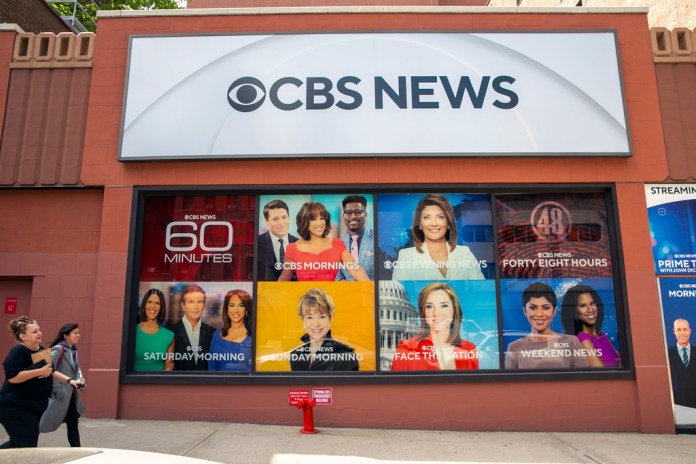
CBS News’s 60 Minutes suffered a sharp decline in ratings for its season premiere, with the first episode under new leadership drawing roughly 2 million fewer viewers than last year’s debut. The CBS staple drew about 7.94 million viewers for its 59th season premiere Sunday, according to data released by the network. The audience was down more than 20% from the roughly 10 million viewers who tuned in for the previous season’s premiere. The decline came during the first season under CBS News Editor-in-Chief Bari Weiss and new executive producer Nick Bilton, who took over the program following a sweeping shake-up this summer. Bilton, a longtime technology journalist, was tapped in May to be the fifth executive producer in the show’s history. Despite the year-over-year drop, CBS emphasized that 60 Minutes remained the week’s No. 1 nonsports primetime program among total viewers and adults aged 18 and older, as well as those aged 25 to 54. It was also the top-rated news program in those categories on Sunday, according to the network’s release. The newsmagazine also pointed to strong digital numbers, saying clips from the premiere generated 116.7 million video views across the program’s social media platforms, and YouTube watch time increased 115%. Sunday’s episode included an interview with a U.S. Air Force weapons system officer who survived after his F-15E was shot down over Iran, a profile of Los Angeles Rams coach Sean McVay, and an investigation into people seeking money to facilitate presidential pardons. The premiere followed months of upheaval at the long-running program. Weiss installed Bilton to replace Tanya Simon as part of what was described as a “new approach” intended to expand 60 Minutes beyond its traditional Sunday broadcast. CONGRESS IS WRESTLING WITH AI DEVELOPMENT. HERE ARE FIVE BILLS TO WATCH Longtime correspondent Scott Pelley was fired days later after confronting Bilton during a staff meeting and accusing Weiss of “murdering” the program. Bilton said in Pelley’s termination letter that the veteran correspondent had shown hostility toward the new leadership and was unwilling to work collaboratively. Pelley had been with the show since 2004. Correspondents Sharyn Alfonsi and Cecilia Vega also departed amid the restructuring. Former 60 Minutes executive producer Bill Owens and other network veterans have also publicly raised concerns about the program’s direction and editorial independence.

Several opening acts pull from Ed Sheeran’s tour after Macklemore dropped
Favicon 
www.washingtonexaminer.com

Several opening acts pull from Ed Sheeran’s tour after Macklemore dropped

Several opening acts have left singer Ed Sheeran’s tour, announcing their withdrawal, in solidarity with rapper Macklemore after he was removed from the tour following Pro-Palestine comments.  Macklemore was dropped from the remaining U.S. dates of Sheeran’s Loop tour after saying “free Palestine” onstage at MetLife Stadium in New Jersey. Macklemore stated he was dropped after pushback from New England Patriots owner Robert Kraft. Since the decision, all remaining opening acts, Finneas, Aaron Rowe, Lukas Graham, Beoga, and the touring band, have pulled themselves from the tour. “It’s hard to watch families in other parts of the world burying the people they love,” Graham said on Instagram. “We should be able to speak about war, about civilians being killed, about children who deserve to grow up. Wherever they live. Whatever flag flies over them.” Graham reflected on growing up in a small community in Denmark, and said: “Speaking your mind was a part of everyday life.” The lead vocalist of the Danish pop band still spoke fondly of the British singer. “I love Ed, and I’m grateful for everything we’ve shared,” Graham said. “That hasn’t changed. But I can’t put these words out into the world and carry on with this tour as things stand. We are withdrawing from the remaining dates.” Finneas expressed a similar sentiment, posting on Instagram explaining his decision. “Artists must not be silenced when they speak up for the oppressed,” Finneas said. “I have decided to withdraw from my upcoming tour dates with Ed Sheeran. I stand with Palestine and its people.” Rowe, an Irish musician, said that the Irish community knew “all too well about genocide, forced famine and violent occupation.” JOE CONCHA CALLS MACKLEMORE AN ANTISEMITE FOR PRO-PALESTINIAN REMARKS DURING ED SHEERAN TOUR “I have made the decision to withdraw as a support act for Ed Sheeran’s ‘The Loop of North America Tour,’” Rowe said. “I don’t take this decision lightly. Ed has been a friend to me and has changed my life; I could never thank him enough for this.” Rowe made a dig at Kraft as well, stating, “I cannot stand by and allow billionaires to use their position of power to silence the rightful voices of those who speak up against Israeli genocide.” Sheeran, for his part, posted a statement on Instagram saying he was “appalled by the conflict between Israel and Palestine,” ultimately blaming promoters and venues for the rapper being dropped.

A Paris court awards Kim Kardashian 1 euro after her 2016 robbery
Favicon 
www.washingtontimes.com

A Paris court awards Kim Kardashian 1 euro after her 2016 robbery

A Paris court on Tuesday awarded 1 euro ($1.15) to Kim Kardashian for having been the victim of an armed robbery in the French capital in 2016, the amount of compensation she had asked for, according to a lawyer involved in the case.