www.theorganicprepper.com
Harvest Tales from an Old Timer: Lessons from America’s Past (PART TWO)
In honor of the Fourth of July, I shared some lessons from America’s past that came about in this way: As I chatted with one of my friends, born in 1941, I was struck by how valuable his stories were and how they harkened back to some days in which Americans faced challenges with remarkable resiliency. I got his permission to share some of these stories with you, in the hopes that they will inspire you to look back to your own ancestors and the elders in your own communities for lessons on how to be prepared.
This is the second part in this series. In the first part of the series, which you can find here, I shared how George learned about these values from a young age: Waste Nothing, A Hard Day’s Work, and Improvise. These are values highly relevant to preparedness.
A bit about George these days: In his early eighties, George lives alone independently and tends a small garden. A year or two ago, he built the entire front deck on his house by himself. A year before that, he built a good-sized pump house for his well, also on his own. He is out at least twice a week enjoying social card games with his friends, and has many visitors from his children, grandchildren, and great-grandchildren.
Neighborly Bartering
As described in the previous installment, George worked many jobs of responsibility on the farm from the time he was a young child, just as my mother did on the dairy farm she was raised on. As he traveled to all the farms to do relief milking and other work, such as sheep shearing, George rarely received cash. Instead, he would be offered small livestock or other things around the farm that were not being used. For a weekend of milking, George might earn three geese. As George was the youngest of ten children, these small livestock could be used to help feed the family.
When George was 14 years old, he milked 50 cows every day for an entire week while a farmer was away on a trip. When he returned, the farmer offered him a 1932 Chevy that was sitting in the yard as pay. George got it going and was able to sell it when he no longer needed it for the princely sum of $35 to a farmer who wanted to use it to rake hay.
George recalled a neighbour, Mr. Watson, who never owned a bailer. George’s father told him that Mr. Watson had come by the farm, asking, “Can I work with you?” He would trade his labour with George’s father for the use of his bailer. George also recalled that Mr. Watson had a brand new 8N Ford Tractor. It was a small tractor that was perfect for raking. Mr. Watson let George’s father use it for raking as part of the exchange. George recalled that raking and baling were considered small jobs that two of the family’s children could manage: one on the tractor raking and another on the baler.
When it was time for Mr. Watson to get his wood done, the neighbours all pitched in. To prepare for what was called the “Wood Bee,” Mr. Watson would cut full-length ironwood logs that did not need to be split and haul them all to the barnyard. He liked this size, as it was easy to load into the stove. With a circular saw in the yard, 10 neighbours would arrive and cut all the logs, bringing them right down into the basement. In this way, all the wood was prepared by the group in only a day or two at most.
A Harvest Excursion
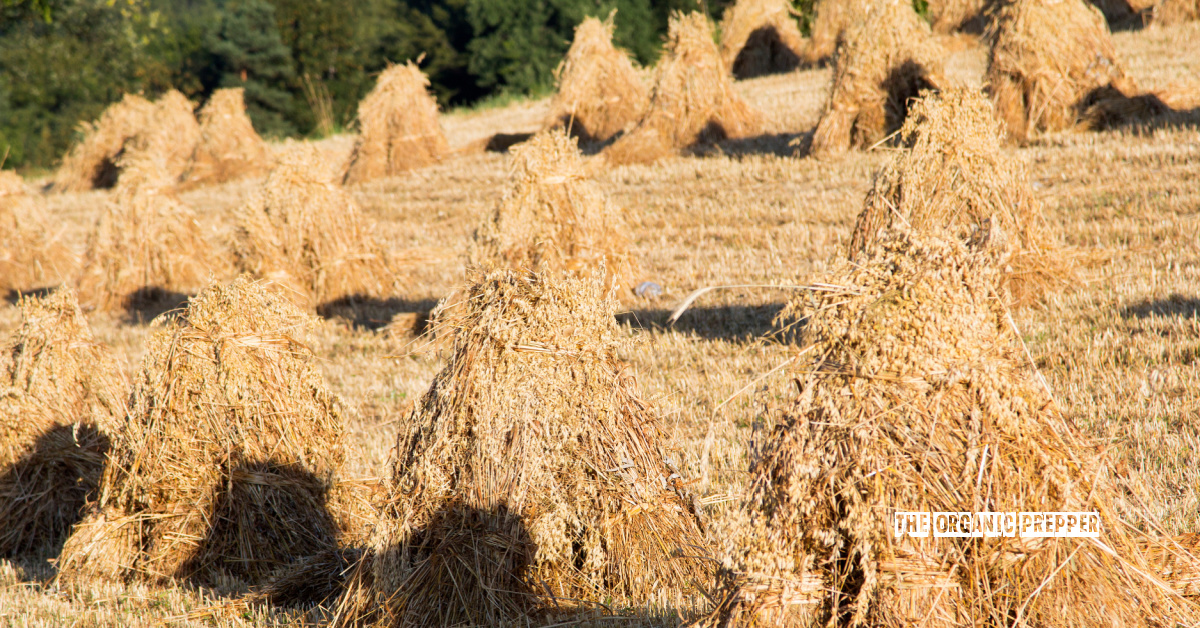
Another communal activity was the harvest excursion. George’s father owned one of the only threshers in the entire area. His 1948 threshing mill was the first that ever sat on rubber wheels. Most often, the harvest excursion was to thresh the oats grown on a farm, which were used to feed the cattle, horses, and pigs. To prepare for the excursion, first, the family needed to cut and bind the sheaves in the field. As the sheaves were bound, they would be set up in piles to dry by at least two people in the field. This was because the sheaves needed to lean against each other just right. After a week or so of the right weather, the grain would be ready for threshing, and the harvest excursion would arrive.
Most often, George said, the field team would consist of 22 men, from the farm itself and virtually all of the local neighbors. Inside the kitchen on the farm, at least 8 or 9 women would be cooking all day long. Most often, a cow had been killed to feed the crew, who would eat four square meals that day, at 10am, 1pm, 3pm, and 7pm. All of the men were chewing tobacco to keep the dust out of their lungs. The women would bring lemonade in a calf pail and all the men would drink from a single metal cup. George smiled as he remembered how the lemonade would have a kind of tobacco tinge to it.
The mill would sit in the yard, powered by a 1944 tractor using a 50-foot belt. The sheaves would be gathered onto a wagon from the field and brought to the thresher. George said that the talent to pile the sheaves well was widely respected. Some men could pile the sheaves high, and they would never fall; others would lose a small pile, and all would have to be reloaded. As this led to the loss of grain, it was frowned upon.
The day ended with the grand 7pm roast beef meal. Every one of the 22 men was given an entire full-size pie for dessert, and it was insisted that they finish it!
No Measurement Taken
Through his entire childhood and youth, George did not recall a single instance in which there was any counting of what was shared back and forth, or any gossip on that topic. If there was any injury on a farm or illness, neighbours would pitch in until no longer needed. There was never any pay and no questions asked. Neighbours loved each other and respected each other, he recalled.
Days of Ingenuity and Hard Work
I find the values of neighborly bartering and collective labor, such as the harvest excursion, are relevant to my own approach to preparedness. I found these stories to be hopeful in how communities can support each other through difficult times and with tasks too great for one family to manage.
Have you heard stories from America’s past that inspire you in your preparations? Do you have a story from an ancestor or someone else or yourself that you can share with us? Please tell us in the comments section.
About Rowan
Rowan O’Malley is a fourth-generation Irish American who loves all things green: plants (especially shamrocks), trees, herbs, and weeds! She challenges herself daily to live her best life and to be as fit, healthy, and prepared as possible.
The post Harvest Tales from an Old Timer: Lessons from America’s Past (PART TWO) appeared first on The Organic Prepper.








 New Posts (Home)
 ChatBox
 Popular Posts
  Game Zone
 Top PodCasts