www.thecollector.com
What Were the Strategic Advantages of Medieval Castles in Wars?
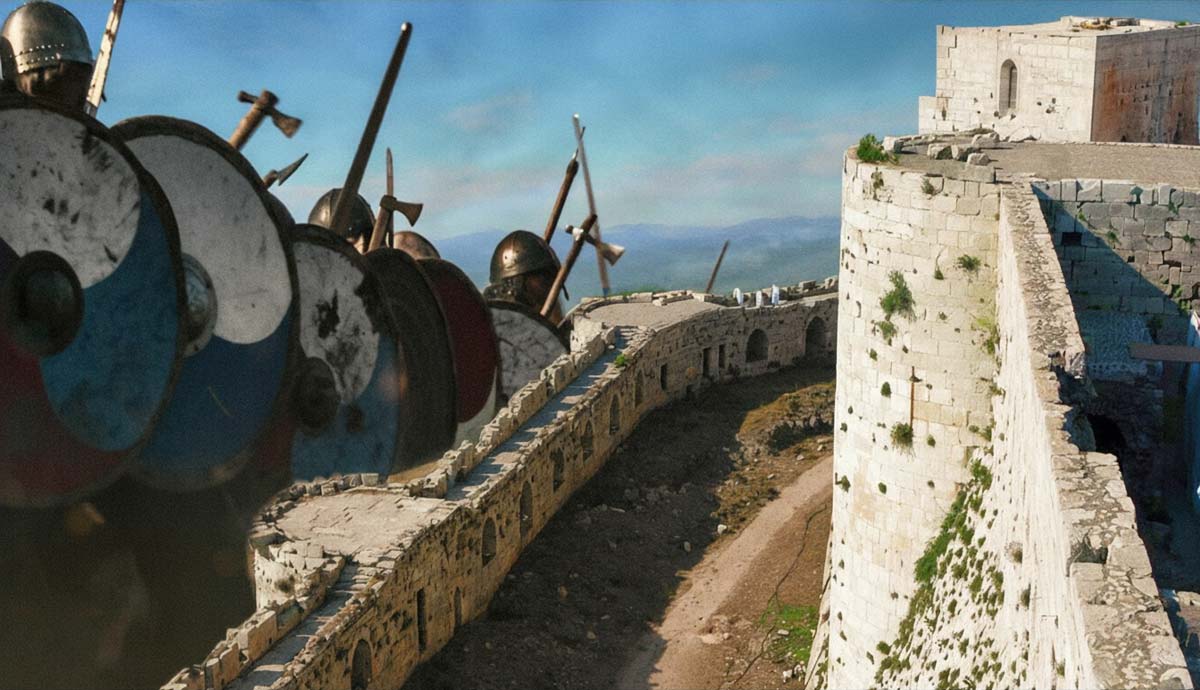
View from the walls of Krak des Chevaliers. Source: Wikimedia Commons
Medieval castles were essentially fortresses, and military defensive strategies. They were especially prevalent from the 11th to the 15th centuries. For many centuries, they provided immense strategic advantages in conflicts. While they were mostly used as the homes of leaders, they also allowed kings, counts, and lords to effectively control territories. Because the primary purpose of a castle was for defense, the location of a castle had to be selected with extreme care.
Medieval Castle Design
The Edinburgh Castle view from the North. Source: Wikipedia
Castle architects typically built castles on high ground such as a hill or a cliff which offered a natural advantage. Edinburgh Castle in Scotland, for example, sits on a dormant volcano. Its positioning made a direct assault nearly impossible as attackers had to fight while moving uphill, which exhausted them before they reached its walls. Water was another key defensive element to consider when building castles. Many castles were built by waterbodies such as rivers and lakes. Some were also surrounded by man-made lakes called moats.
Image of Bodiam Castle, England. Wikipedia
The Bodiam Castle in England which was built in 1385, is a perfect example of this. It is surrounded by a wide artificial moat, which meant that an attacking army could not simply walk up to the walls. Instead, they had to cross the water under fire, a dangerous undertaking. In many instances, a moat would be over 39 feet wide and 13 feet deep. The design helped to counter siege fighting strategies such as towers and battering rams.
Medieval Castle Walls
Photo of Harlech Castle. Source: Wikipedia
Castle walls also featured incredible feats of engineering. Early Norman castles, for example, were built using wood and were called motte-and-bailey castles. Many of them were built after the Norman conquest of 1066 when William the Conqueror sought to control England. Later castles were made of stone and offered far greater protection as the walls could at times be 3 to 6 metres thick. The walls of Harlech Castle, built between 1283 and 1289 during Edward I’s conquest of Wales are a prime example.
Some castle designers also added some features to the stone walls to allow archers to fire down on enemies at the base of the wall. The strategy was largely effective in slowing down invaders. However, early square towers had a weakness because they had blind spots at the corners. By the 12th century, round towers became more common as they offered a 360-degree view. They allowed defenders to shoot arrows through the gaps in the walls.
Murder holes at Bodiam Castle. Source: Wikipedia
The entrance was a castle’s weakest point and therefore heavily fortified. The entrances to High and Late Medieval castles were a complex structure of their own and often had multiple iron gates called portcullises. They had thick wooden doors and above the passage were holes called murder holes where defenders could drop projectiles like rocks at attackers. They also had arrowslits which were narrow vertical windows in the walls that allowed archers to shoot with great safety.
Medieval Castles and Offensive Strategies
Edinburgh Castle, Scotland
That said, castles were not just passive forts but offensive bases. They allowed a ruler to project his power across the surrounding land from his castle. The surrounding area was known as a castellany. Because castles were a permanent base for a garrison of soldiers, they would be used to control the local population. The setup also allowed leaders to collect taxes and enforce the law. Castles also allowed rulers to control strategic routes including river crossings.
Krak des Chevaliers. Source: Wikimedia Commons
The Crusader castle, Krak des Chevaliers, in modern Syria is a famous example. Built by the Knights Hospitaller, it was used to control the Homs Gap, a vital passage that connected the Mediterranean coast to the Syrian interior. Its garrison of up to 2,000 soldiers could raid enemy territory for miles. As such, enemies were wary of the fortress because if they went past it, the castle’s garrison could attack and block their supply lines. Such an attempt could easily lead to sieges.
The ability to raid was another major strategic advantage provided by castles. A small force of mounted knights could leave the castle and attack enemy lines, burn villages loyal to the enemy, and disrupt the enemy army’s movements. The constant attacks would easily wear down enemies. The protection provided by castles also made it difficult for the enemies to launch large-scale counter-attacks.








 New Posts (Home)
 ChatBox
 Popular Posts
  Game Zone
 Top PodCasts