www.dailywire.com
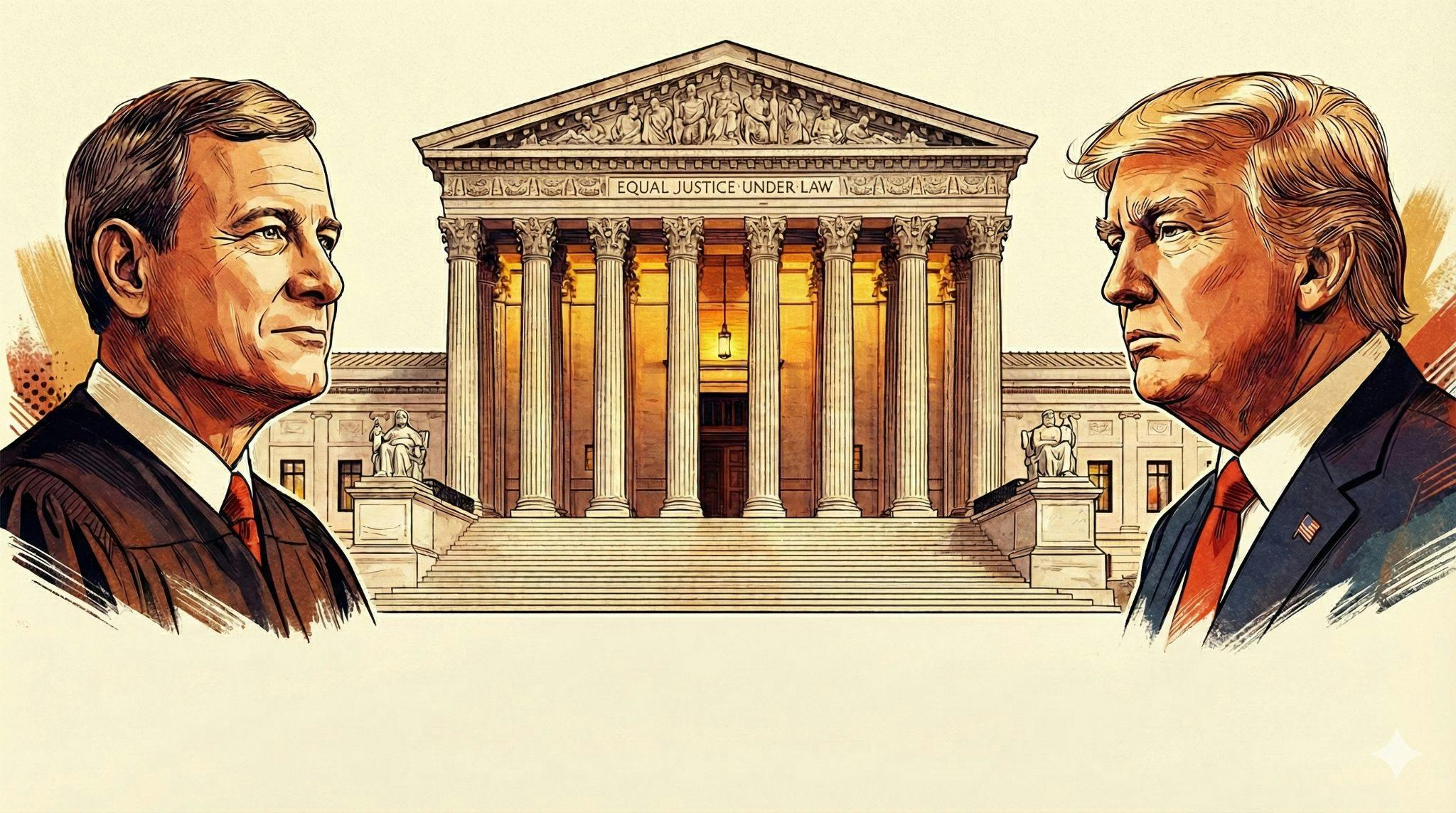
Supreme Court Poised To Rein In ‘Fourth Branch,’ Restore Unitary Executive
The Supreme Court is looking at the possibility of ensuring that the federal executive branch is a unitary executive.
The New York Times reports:
As a young staff member in the Reagan administration, John G. Roberts Jr. was part of a group of lawyers who pushed for more White House control over independent government agencies.
The “time may be ripe to reconsider the existence of such entities, and take action to bring them back within the executive branch,” the future chief justice of the United States advised the White House counsel in a 1983 memo. Independent agencies, he wrote, were a “constitutional anomaly.”
Once he ascended to the Supreme Court, Chief Justice Roberts joined other conservatives on the bench in a series of rulings that have chipped away at Congress’s power to constrain the president’s authority to fire independent regulators.
The real question here is this: Where in the Constitution do you find the idea of independent regulators? It does not exist. We have three branches of government, and, in order of power, it’s supposed to be: legislative, executive, and judicial.
With that said, all of these are unitary powers. The president is not supposed to implement legislative power, which is why many of the regulatory agencies that currently exist should be ruled unconstitutional. If there are unelected agencies writing laws — which is what regulations are — there is no mode for that under the Constitution of the United States.
Simultaneously, there is no independent fourth branch of government set up by Congress that is not answerable to the executive branch, but only answerable to Congress. There’s nothing like that contemplated by the Constitution.
There will be a case argued in the Supreme Court over whether President Trump can fire people across the federal government in defiance of laws meant to protect their jobs and shield them from politics.
The Court’s majority will likely side with Trump, which makes perfect sense because there is nowhere in the Constitution where it says Congress has the power to set up an agency inside the executive branch that the president of the United States cannot run.
This case revolves around whether President Trump can fire Rebecca Slaughter, a Democratic member of the Federal Trade Commission, simply because he says she does not align with his agenda. That firing would be despite a law that says the president can only remove commissioners for inefficiency, neglect of duty, or malfeasance in office.
The administration is asking the justices to toss out a 90-year-old precedent that said the Constitution allowed laws like that one and put limits on the president’s authority to dismiss some quasi-independent government officials.
There are two dozen other agencies charged with protecting consumers, workers, the environment, or nuclear safety. They have been insulated from complete presidential control by similar laws.
One of the points Trump makes is that he’s doing the obvious thing. Democrats have been firing these people by ginning up cases against them for a very, very long time. This is also how they manage to maintain control of the regulatory state even after they lost an election. This is what Trump would label the so-called “deep state.”
Trump has repeatedly ousted Democratic leaders — including at the National Labor Relations Board, the Merit Systems Protection Board, and the Consumer Product Safety Commission — to make way for replacements who share his policy priorities. That makes perfect sense. When you elect a president, you’re supposed to be able to shift regulatory policy along those lines.
It is why the Constitution was written the way that it was. Once you have a gigantic regulatory authority wedded to the executive branch, either the executive branch itself, run by the president, gains significant power, or you have to set up a fourth unregulated branch of government that is the regulatory state that actually runs the place.
Neither of those two solutions is good. Thus, the Constitution states that no lawmaking power lies with Congress. Executive power lies with the president.
We should hope that we return to the idea of a functional unitary executive, meaning everything that happens under the executive branch is run by the president.
If we go back to that, maybe Congress would actually legislate instead of kicking the can over to the regulatory branches of government to avoid responsibility.
The theory of the unitary executive is an idea that dates back to the Reagan administration. In a 2010 decision, Chief Justice Roberts said that the president’s power generally includes the authority to remove those assisting him in carrying out his duties. Without such power, the president could not be fully held accountable for discharging his own responsibilities.
That is exactly right, and I hope that the Supreme Court carries through on all of that. That would be a genuinely positive development.








 New Posts (Home)
 ChatBox
 Popular Posts
  Game Zone
 Top PodCasts