www.optimistdaily.com
India’s social experiment: how paying women directly reshapes welfare, autonomy, & politics
BY THE OPTIMIST DAILY EDITORIAL TEAM
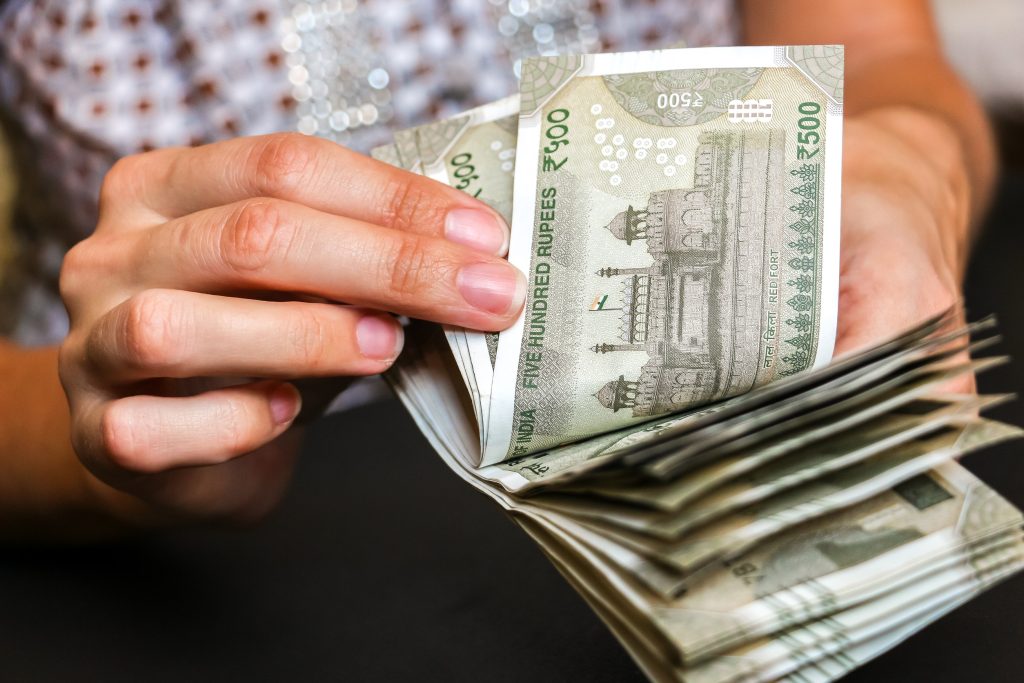
Across India, millions of women now receive a modest but unwavering deposit each month into their bank accounts. The money is not tied to a job, a poverty line, or a performance requirement. It arrives because state governments have decided that women’s unpaid labor keeps households functioning and deserves recognition.
For women like Premila Bhalavi in Madhya Pradesh, the regular payment of 1,500 rupees covers essentials such as vegetables, medicines, and school fees. The amount is small, yet the predictable income, personal decision-making, and a measure of autonomy bring with them a sense of stability that feels significant. Her story mirrors that of a much larger movement: 118 million adult women across 12 states now receive unconditional cash transfers, forming one of the largest experiments in direct support for women anywhere in the world.
According to Prabha Kotiswaran, professor of law and social justice at King’s College London, “The unconditional cash transfers signal a significant expansion of Indian states’ welfare regimes in favour of women.”
Eligibility varies by region, with filters such as income cutoffs or exclusions for families with cars or government jobholders. But the underlying idea remains consistent: payments acknowledge the invisible labor that sustains households and represent a political demographic too large to overlook.
How India landed on unconditional support
India has long relied on subsidized food, fuel, and rural jobs to support poor households. The shift toward paying women directly began more gradually. Goa introduced the first such program in 2013. Assam followed with support for vulnerable women just before the pandemic. Then, as political parties tested women-focused cash transfers in their manifestos, the idea gained force.
Today, monthly payments range from 1,000 to 2,500 rupees. This represents a small share of the average household budget, but it is dependable in a way many women have never experienced. With more than 300 million women now holding bank accounts, transferring funds has become straightforward for states eager to reach voters quickly.
Some governments frame the payments explicitly as a recognition of unpaid household and care work. Tamil Nadu calls its scheme a “rights grant,” and West Bengal uses similar language. Others emphasize welfare benefits without naming the work behind them, but the implication remains: cash is intended to support household well-being.
Politics has responded accordingly. Campaign promises tied to cash transfers helped shape election results in multiple states between 2021 and 2024. In Bihar, the strategy was especially prominent. Ahead of a major election, the state transferred 10,000 rupees to 7.5 million women through a livelihood scheme. Women ultimately voted in higher numbers than men, helping the governing coalition secure a sweeping victory. Critics called the move transactional, but the outcome underscored one reality: direct financial support carries immense political weight.
What the money actually means inside households
The debate surrounding these programs is often fiery. Some analysts cast them as fiscally unsustainable or accuse states of doling out freebies to win elections. Twelve states are expected to spend roughly 18 billion dollars on such schemes this year, and half face revenue deficits. Yet advocates argue the transfers address a long-ignored truth about India’s labor landscape.
The most recent Time Use Survey shows women spend nearly five hours a day on unpaid domestic and care work in 2024. This is more than seven times the time men spend. This imbalance helps explain India’s low female labor-force participation and why millions of women drop out of paid work altogether.
Early studies show that cash rarely transforms household economics but consistently improves women’s agency. In Maharashtra, a 2025 study found that 30 percent of eligible women never signed up, often for documentation reasons. Those who did tended to control their own accounts. In West Bengal, 90 percent of surveyed women managed their bank accounts themselves, and 86 percent decided independently how to use the funds.
Many spent the money on food, schooling, medical bills, or debts. The amounts were small, but women described a feeling of security knowing they could cover costs without depending entirely on husbands or relatives.
More detailed research by Prof. Kotiswaran and her colleagues paints a nuanced picture. In Assam, women valued the dignity the payments offered but said they still preferred paid work. In Tamil Nadu, beneficiaries described calmer households, fewer conflicts, and “peace of mind.” Women in Karnataka reported eating better, feeling more confident in household decisions, and wanting higher payments.
Across regions, few women saw the cash as formal recognition of unpaid labor; in many places, that message simply hadn’t reached them. Even so, they used the money to assert themselves in subtle but meaningful ways. They began questioning politicians, managing emergencies, and making independent choices.
As Prof. Kotiswaran notes, “The evidence shows that the cash transfers are tremendously useful for women to meet their own immediate needs and those of their households. They also restore dignity to women who are otherwise financially dependent on their husbands for every minor expense.”
Importantly, her team found no evidence that the payments discourage women from pursuing paid work or reinforce gender roles. Nor do the transfers reduce the volume of unpaid tasks women shoulder. What they do offer is slightly stronger bargaining power and improved financial autonomy.
What needs to change next
Researchers say the early outcomes hint at several next steps. First, eligibility rules need simplification, particularly for women with heavy caregiving responsibilities who cannot navigate complex paperwork. Second, the payments must remain unconditional and independent of marital status to avoid reinforcing household hierarchies.
More importantly, scholars argue that messaging should explicitly communicate the value of unpaid domestic and care work. Financial-literacy support should grow alongside the payments to help women manage accounts confidently. And crucially, cash transfers should not replace but complement efforts to expand employment opportunities for women.
As Prof. Kotiswaran explains, “If the transfers are coupled with messaging on the recognition of women’s unpaid work, they could potentially disrupt the gendered division of labour when paid employment opportunities become available.”
India’s move toward unconditional transfers is still evolving, but one thing is already clear. When money is placed directly into women’s hands, the effects ripple into households, communities, and political movements. Whether the program becomes a tool for genuine empowerment or merely a new currency in electoral politics will depend on how states build on the momentum already underway.The post India’s social experiment: how paying women directly reshapes welfare, autonomy, & politics first appeared on The Optimist Daily: Making Solutions the News.








 New Posts (Home)
 ChatBox
 Popular Posts
  Game Zone
 Top PodCasts