www.thecollector.com
Cinchona, the Malaria Cure that Transformed Global Medicine
For centuries, malaria, a mosquito-borne illness, has relentlessly sickened populations around the globe, causing millions of deaths. However, it was not until the 17th century that a cure was discovered in the Andes. The bark of a flowering tree contained a powerful substance that could defeat the disease. The news about the miraculous cure was spread across Europe, becoming a powerful tool for imperial expansion as colonizers were now better equipped to take up residence in tropical areas where the disease-carrying mosquitoes bred.
Overview of Cinchona
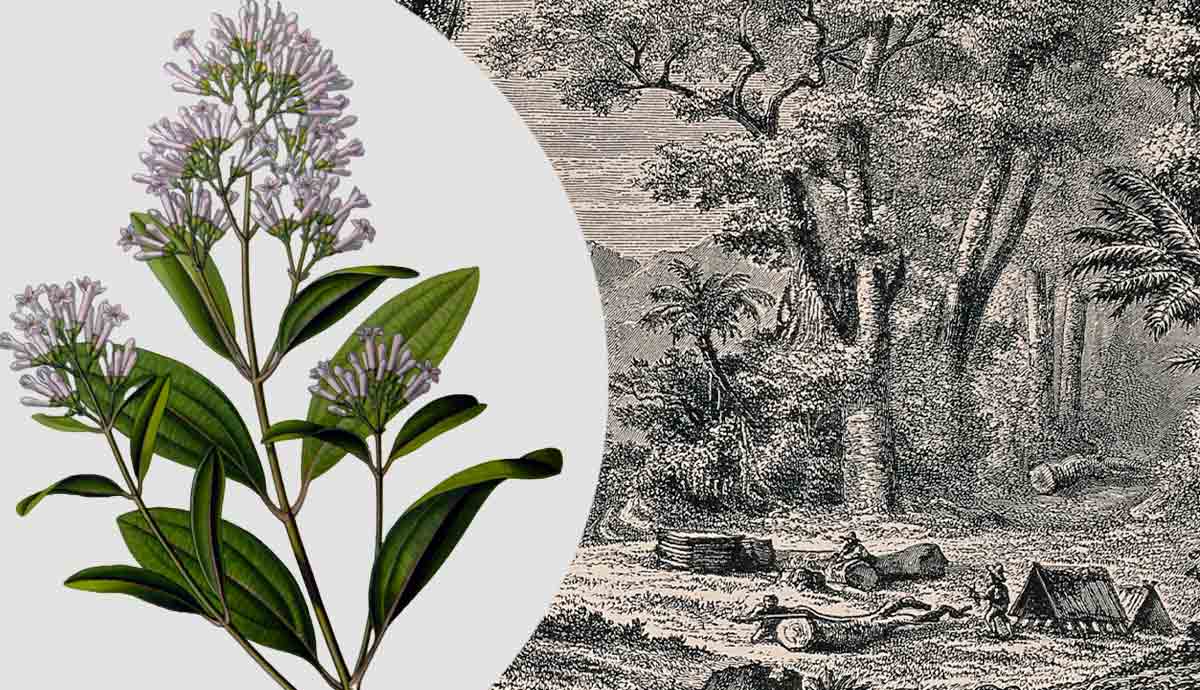
Illustration of Cinchona calisaya by Franz Eugen Köhler, 19th century. Source: Wikimedia Commons
Cinchona, or sometimes chinchona, also known as “quina tree” or “fever tree,” is a flowering tree typical of the Andean forests in South America. It is the national tree of Ecuador, locally called El Árbol de la Vida (The Tree of Life). The plant is well known for containing medicinal alkaloids such as quinine, which is effective against a mosquito-transmitted disease called malaria. Quinine can be found in the plant’s bark, which is also known as Jesuit’s Bark or Peruvian Bark.
During the age of European colonialism, in the 17th century, Europeans found that the plant could cure malaria, a disease that even today kills more than 600,000 people annually, as estimated by the World Health Organization in 2022.
Treating Malaria
Illustration of malaria mosquito Anopheles maculipennis by E. Wilson, undated. Source: Wellcome Collection
The origins of malaria can be traced back to Neolithic dwellers, Vedic India, and the early Chinese and Greeks. The disease arrived in Europe through the Romans in the first century CE. In the 20th century, it took the lives of at least 160 million people worldwide.
Malaria is a life-threatening disease primarily found in tropical regions. Its name comes from medieval Italian mal aria (bad air), as it was originally believed that the disease was transmitted by contaminated air from swamps. Malaria is caused by a protozoa parasite, carried by females of some species of mosquitoes, that grows in stagnant waters. The parasite targets the red blood cells it uses to replicate. Malaria symptoms can range from fevers and headaches to seizures and breathing difficulties.
Quinine is an effective drug for curing malaria because it can interfere with the reproduction of malaria parasites in red blood cells. However, the alkaloid itself cannot attack the parasites living in other cell types. Because of this, many “cured” patients have new episodes of malaria weeks after taking the antidote. However, during World War II, medical research developed more effective antimalarial drugs that replaced quinine, such as chloroquine or primaquine. However, the parasites developed a resistance to the new drugs but remained sensitive to quinine, which led to the usage of quinine again despite its strong side effects.
Original historical poster “Malaria—How Long Will This War Last?” 1944. Source: Poster Group
Today, malaria is preventable and curable. However, of the five parasite species that cause malaria, two of them are primarily found on the African continent, where the disease still causes the highest number of deaths in the world, accounting for 94% of cases, 78% of which are in children under five years of age, as estimated by the World Health Organization.
“Discovering” Quina
Monument to Francisca Enríquez de Rivera, countess of Chinchón, unknown artist. Source: Wikimedia Commons
It is believed that the name cinchona has its origins in a historical event of dubious authenticity wherein the wife of the Spanish Viceroy of Peru, Countess of Chinchón Francisca Henríquez de Rivera, contracted a fever while visiting Peru in 1630. The local Jesuit priests cured her with a beverage made of the bark of the plant. After being “miraculously” cured, the countess spread the news locally and distributed the bark powder among the poor. Because of her actions, the life-saving cinchona powder was also known as “the countess’s powders.”
Though the “discovery” of cinchona is attributed to the countess, the medicinal properties of the plant were already known by the Quechuas and other Indigenous communities of the Andes long before the arrival of Spanish colonizers. The plant was known as yarachuccu or ccarachucchu, referencing what comes from the bark (ccara) and the curing of chills and fever (chucchu). However, it is believed that prior to the arrival of Spanish conquistadors, Indigenous communities did not use the bark to treat malaria, as it was the Europeans and the Africans they enslaved who brought the deadliest form of the disease to the Americas.
Cinchona as a Tool of Colonialism
Engraving: “Peru offers a branch of cinchona to science,” unknown artist, 17th century. Source: Wikimedia Commons
The Jesuits spread the news about the plant in Europe and took the opportunity to include it along the trade routes used to exchange different crops and goods during the 1640s, a historical process also known as the Columbian Exchange. Because of the priests, the powder was also known as los polvos jesuíticos (the Jesuit powders) or los polvos de los padres (the priests’ powders).
The plant became tremendously popular in Europe, becoming part of the medicinal beverages enjoyed by King Louis XIV in Versailles, reaching the Vatican and the Pope, and becoming an official medicine in England in 1677.
The spread of scientific knowledge on the plant significantly increased international interest in it, and the frenzy for the plant pushed hired extractors to travel to the Andes, collect it, and ship it back to Europe. Biologist Carl Linnaeus gave the plant its scientific name, honoring the story about the Countess of Chinchón.
Other important naturalists, such as La Condamine, José Celestino Mutis, and Francisco José de Caldas, also contributed to the spread of scientific information about cinchona. However, the tree almost disappeared after the Andes were declared “The Pharmacy of the World” and intensive extraction was forced on Indigenous lands.
Portrait of Carl Linnaeus by Alexander Roslin, 1775. Source: National Museum, Sweden
Throughout the 19th century, the malaria cure became an important tool for British, Dutch, and French colonial expansion projects, as it allowed troops to fight the disease, which commonly caused deaths among soldiers. However, after realizing the trees were disappearing, the British smuggled seeds from the Andes and established cinchona plantations in India during the 19th century. It is also known that the British would mix the cinchona extract with gin to improve its taste, resulting in today’s popular gin and tonic.
In 1852, cinchona seeds were taken to Java and later spread to India and Sri Lanka, where a new variety with higher amounts of quinine was developed. This led the local plantations to become the world’s main supplier until the beginning of World War II. It was at that point that, due to Japanese invasions of the plantations coupled with the considerable demand for malaria medicine during the war, efforts to extract the plant were redirected to the Andes once again.
In 1820, French chemists Pierre-Joseph Pelletier and Joseph-Bienaimé Caventou discovered quinine, the active component found in cinchona bark that is responsible for curing malaria. This discovery ultimately led to ground cinchona bark being replaced by synthesized quinine to cure malaria. It wasn’t until decades later, in 1883, that US doctor Albert Freeman Africanus King finally determined that it was mosquitoes that transmitted malaria. Years later, British doctor Ronald Ross tested and confirmed this theory by injecting the disease into his body and using quinine as a cure.
The Social and Ecological Impacts of Cinchona Exploitation
Engraving “Gathering and drying chinchona bark in a Peruvian forest” by Charles Laplante, 1867. Source: National Library of Medicine
The abrupt demand for the cinchona plant set an important precedent for the history of extractivism in the Andes and the neighboring Amazon rainforest because of their international recognition as sources of important materials for industry and medicine in Europe and the US. While fevers were being cured and new tires were developed in Europe and the US, extracting cinchona and later rubber had a severe negative impact on local areas, especially for local Indigenous communities in Peru, Bolivia, Ecuador, and Colombia. On the one hand, global economic interests were stealing their lands. On the other, the people themselves were used, and often forced, to extract these natural resources. Moreover, some harvesters would eventually die of malaria while collecting the bark that would cure people elsewhere.
Since the initial extraction periods for cinchona and rubber in the 19th century, the exploitation of lands in the Americas has continued through more systematized exploitation of natural resources, such as oil, wood, soya, and animal skins. The legacy of cinchona demonstrates precisely how extracting natural resources often benefits faraway places while leaving profound negative marks on the local lands where extraction occurs.
These “fevers” for the extraction of natural resources and the imposition of global market logic on Indigenous lands and communities initiated social and ecological transformations that are still present. Many multinational companies still own contested lands and often displace communities through deforestation and mining.








 New Posts (Home)
 ChatBox
 Popular Posts
  Game Zone
 Top PodCasts