www.thegospelcoalition.org
Holiness Not in Holidays: Why Calvin Preferred the Lord’s Day to Christmas
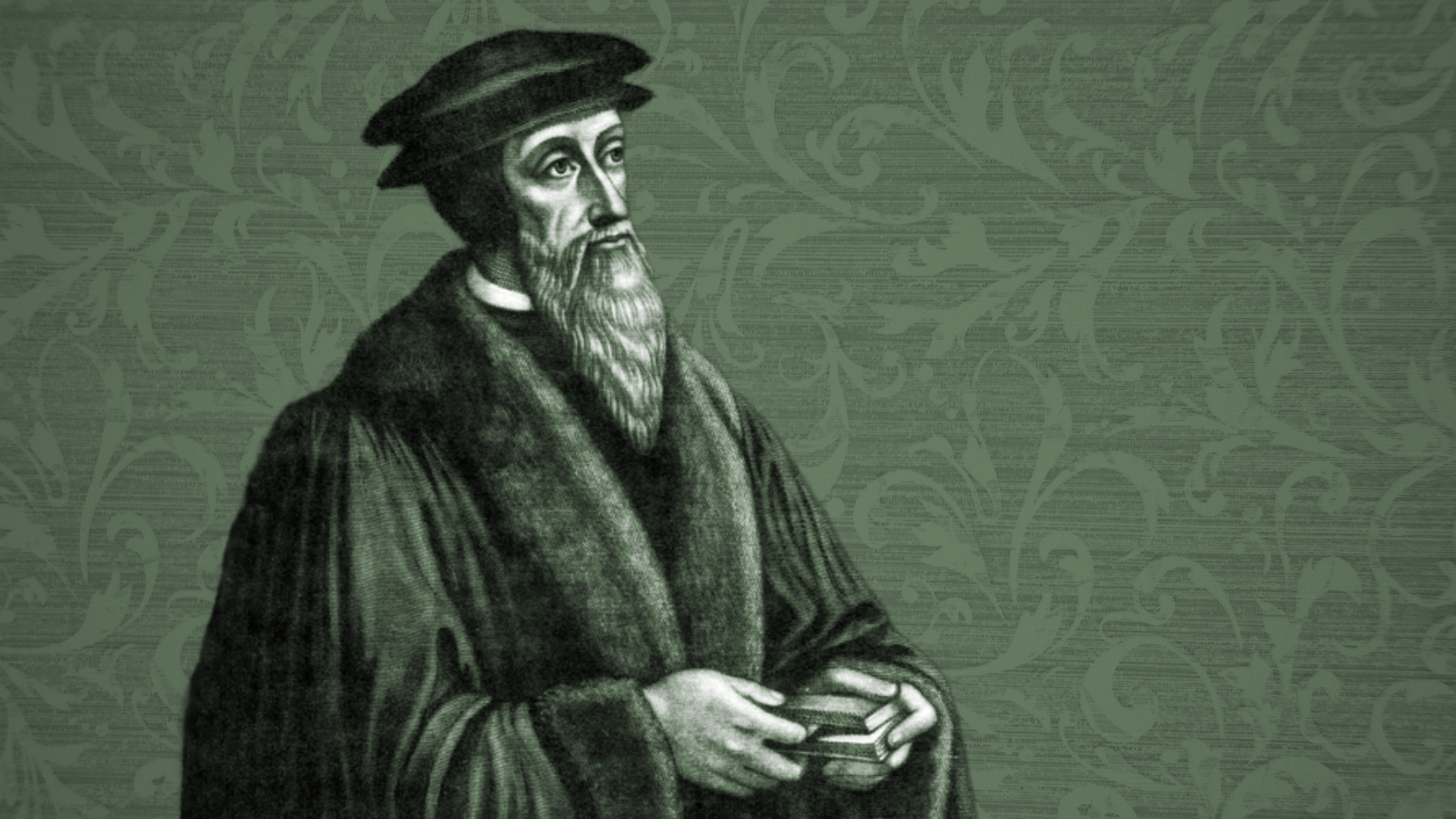
John Calvin (1509–64) was committed to preaching from the Scriptures. He referred to the Bible as “the school of the Holy Spirit” and was so committed to expository preaching that after a three-year exile in Strasbourg, France, he returned to Geneva in 1541 and resumed preaching where he’d left off in the Psalms. The French theologian practiced lectio continua: preaching continually through books of the Bible.
But during the Christmas season, Calvin made an exception. Instead of his typical exposition through a book, Calvin sometimes broke from tradition and delivered sermons on Jesus Christ’s birth. He did the same for the resurrection on Easter. Though the seasons of Advent and Lent were no longer formally recognized in Geneva, Calvin didn’t mind preaching a “topical” sermon or two.
Still, no one in Geneva would’ve dared accuse Calvin of being a sentimentalist or a cultural Christian. From the time he arrived in Geneva in 1536, the reformer was wary of holding church services on Christmas Day. His reason, ironically, was Christ’s centrality. Across western Europe, Protestant leaders like Calvin had become convinced that the carousel of festivals and “holy days” on the Catholic liturgical calendar had injected superstition and idolatry into the church, replacing worship of Christ with legalism, ritualism, drunkenness, and idleness.
Danger of Feast Days
The reformers certainly had a point. While Christmas itself marked something good, in medieval Catholic Europe, it was part of a litany of other “religious” holidays that filled the calendar with false gods and false teachings.
No one in Geneva would’ve dared accuse Calvin of being a sentimentalist or a cultural Christian.
Alongside Christmas and Easter, there were four days of Advent, Epiphany, Ash Wednesday, 40 days of Lent, Ascension, Pentecost, and Corpus Christi. There were also saints’ days, All Saints’ Day, All Souls’ Day, seven major feasts to the Virgin Mary, and days commemorating each of the 12 apostles and the 14 auxiliary saints. In Geneva, there were even celebrations to commemorate minor saints. Almost 60 of these “holy days” could fill the schedule, distracting Christians from the simple, daily worship of Christ. As Calvin preached in one of his first sermons on Galatians:
They worship both the apostles and the martyrs to such a degree that they rob God of his worship and service. It seems as if all that rightly belongs to God and that should be reserved for him is put on offer among them. For what distinction do they make between him and his creatures? They virtually dispose of the Lord Jesus Christ, by robbing him of the office that he has been given. For instead of acknowledging him as the Advocate who grants us access to God the Father, and applying to him to have their prayers and applications answered, they have an infinite multitude of advocates, patrons, and intercessors! Jesus Christ is no longer anything to them.
Protestants were beginning to ground their faith in their attendance at feasts and their veneration of saints, not in the Lord. The church needed reformation.
In Zurich, Huldrych Zwingli had attempted to lower the number of feast days to five (Christmas, Annunciation, martyrs, evangelists, prophets) but to no avail. In Strasbourg, Martin Bucer proposed to eliminate all religious holidays, with the exception of the Lord’s Day.
When the Genevan magistrates mandated yearly observance of the four festivals of Christmas, the Circumcision of Christ, Annunciation, and Ascension, Calvin wasn’t opposed to celebrating Christmas in principle, but he feared that Genevans were still superstitious in their hearts, thinking somehow one day was more sacred than another.
Putting Aside Superstition
Finally, when Calvin returned from Strasbourg in 1541, he and his company of pastors worked to eliminate feast days from Geneva’s religious calendar. By 1545, Geneva’s magistrates expunged the feasts of the Circumcision of Christ, Annunciation, and Ascension. Five years later, the Consistory (the civil government over the laity) outlawed all religious holidays in the city, including the feast of Christmas. Geneva’s citizens were to treat Christmas like any other workday.
Calvin wasn’t opposed to celebrating Christmas in principle, but he feared that Genevans were still superstitious.
As one might imagine, the response wasn’t altogether positive. Among the outcry and complaining, some citizens even tried to argue that observance of Christmas was mandated in the Bible.
Though these souls were reprimanded, change came slowly. As historian Bruce Gordon describes, “During Calvin’s time in Geneva he encountered a people who held hybrid religious beliefs derived from the new and old faiths, as well as from lore and popular traditions.” Not unlike 21st-century America, during Christmastime the sacred and the secular, faith and idolatry, were laced together in 16th-century Geneva.
For this reason, Calvin preached to his congregants that the Sabbath, the Lord’s Day, was the true “holiday” for the church. This was the real sacred day. Instead of toiling, the church rested in Christ. Sunday was to be made holy by gathering under God’s Word with God’s people.
Holiness Not in Holidays
Yet even when Christmas was erased from the official religious calendar, Geneva never managed to completely wrest itself away from the holiday, unlike many Puritans in England. (In Scotland, they wouldn’t celebrate an official Christmas from 1560 to 1958).
On Christmas Day of 1551, Calvin wasn’t thrilled to see that an unusually large number of people were present for the regular Tuesday service. He then pressed his hearers to consider Christ’s supremacy rather than the importance of days, warning them of the dangers of elevating one over another. Preaching from the book of Micah, Calvin rebuked his congregation for their superstition. Calling them “poor beasts,” he charged,
In truth, as you have often been admonished, it is good to set aside one day out of the year in which we are reminded of all the good that has occurred because of Christ’s birth in the world, and in which we hear the story of his birth retold, which will be done Sunday. But if you think Jesus Christ was born today, you are crazed as wild beasts. For when you elevate one day alone for the purpose of worshiping God, you have just turned it into an idol. True, you insist that you have done so for the honor of God, but it is more for the honor of the devil.
Calvin added, “For no day is superior to another. It matters not whether we recall our Lord’s nativity on a Wednesday, Thursday, or some other day.” If we come to church simply because it’s Christmas and not to extol the incarnate Son of God, Calvin reasoned, we’ve lost Christ himself. May we find our holiness not in holy days but in the Holy One of God.








 New Posts (Home)
 ChatBox
 Popular Posts
  Game Zone
 Top PodCasts