www.thecollector.com
Buffalo Bill Cody, the Showman Who Turned the Wild West Into a Legend
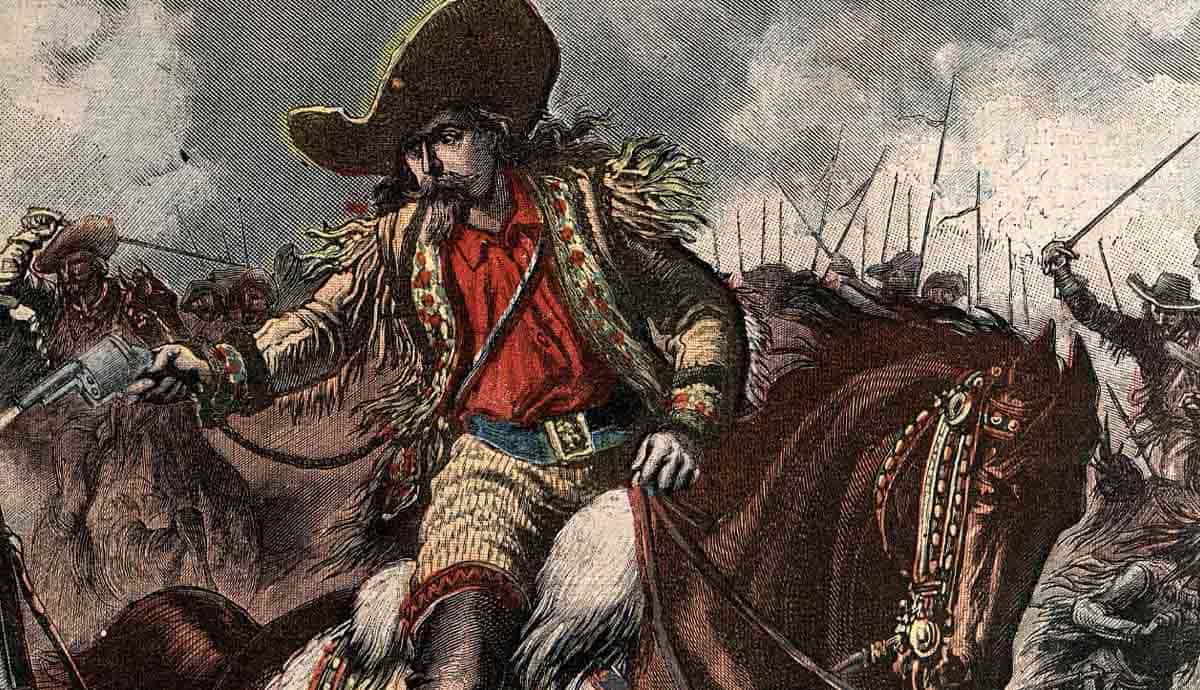
Buffalo Bill Cody led an untamed life, even by the standards of the 19th century. The “Wild West” was in its heyday, and Cody was in the thick of it. From a young age, he was wrangling cattle and proving himself a crack shot. He served in the army and even found time to start a family. He is most remembered for crafting an image of the American West in the minds of US citizens with his famed Wild West show. His legacy captured the hearts and minds of Americans and memorialized the western frontier.
A Worker From the Beginning
Cody with his sisters Julia, Helen, Eliza, and Mary, circa 1890s. Source: Illinois State University/Wikimedia Commons
William F. Cody threw himself into adventure when he was just a boy. He was born near LeClaire, Iowa, on February 24, 1846, and his family moved several times when he was a child, eventually ending up in Fort Leavenworth, Kansas. Isaac and Mary Cody’s moves were prompted by strife, including the death of their eldest son, Samuel, and conflict arising from the Free Soil movement.
More tragedy struck when William was just 10. His father was killed during a riot between those who wanted Kansas to be a free state and those who wanted legalized slavery. With the deaths of his father and older brother, William found himself the de facto man of the house. He immediately went to work. At age 11, he joined a wagon train, where he had jobs passing correspondence and herding cattle. Cody was recruited by an early form of the Pony Express and participated in a gold rush in Colorado.
A Civil War Scout
An 1884 illustration shows Cody taking a scalp in revenge for the death of George Custer at Little Bighorn. Source: The William F. Cody Archive/Wikimedia Commons
In the later years of the Civil War, 17-year-old Cody signed on with the Union Army’s 7th Kansas Cavalry. He served as a scout from 1863, and after the conclusion of the Civil War, he took a break from the military and worked for the Kansas Pacific Railroad. Cody’s job on the railroad was to hunt to provide the workers with a supply of meat for their rations. His target was often bison, of which he killed over 4,200 in 18 months to feed the men. In 1868, he re-joined the army, this time as a civilian scout. He was credited as an excellent hunter, tracker, and fighter for the United States in conflicts against Mormons and Indigenous peoples in the latter half of the 19th century. He became one of only four civilian scouts to ever be awarded the Congressional Medal of Honor for demonstrating valor in action.
Making Time for a Family
Cody, his wife, seated to the right, and two of their daughters, Arta and Orra, in 1882. Source: Buffalo Bill Center of the West/Wikimedia Commons
Amidst his exploits, William found time to settle down and start a family. In 1866, he married Louisa Frederici. The couple had four children: Arta Lucille, Kit Carson (not the Kit Carson), Orra Maude, and Irma Louise. Though William and Louisa remained married until his death, they had a rocky relationship over their 51 years together. Cody sued his wife for divorce more than once, including one occasion in 1905 in which he accused her of attempting to poison him. However, the couple remained married and, by all accounts, were reconciled at the time of Cody’s passing in 1917. Unfortunately, William outlived three of his children. Kit died in 1876 at the age of five. 11-year-old Orra died in 1883, and Arta died at 38 after surgery. Irma died the year after her father.
Earning His Name
Buffalo Bill poses with a rifle and saddle circa 1892. Source: Buffalo Bill Center of the West/Wikimedia Commons
Cody’s prolific success hunting buffalo along the Kansas Pacific Railway soon became a topic of legend. It resulted in him being challenged to a contest with Billy Comstock, a guide and well-known scout in his own right. In the eight-hour contest, the men proved their hunting and marksmanship skills by seeing which of them could kill the most buffalo. Cody won handily, shooting 69 bison to his competitor’s 46. He won five hundred dollars in prize money, and his reputation as “Buffalo Bill” was born. In 1872, General Philip Sheridan assigned Cody to guide Grand Duke Alexis of Russia on a hunt, further bolstering his reputation as a skilled man of the western frontier and gaining him a great deal of publicity.
The Great Wild West Show
A poster advertising Buffalo Bill’s Wild West Show and Congress of Rough Riders of the World from 1899. Source: Library of Congress/Wikimedia Commons
In 1872, Cody became an actor when he starred in “Scouts of the Prairie” by dime-novel author Ned Buntline. The show opened in Chicago to rave reviews, and Cody found he had been bitten by the acting bug. He formed his own “combination” show the following year. He would briefly return to scouting, but in 1883, he created the entertainment experience that he is most remembered for. Buffalo Bill’s Wild West Show would take stages throughout the United States, Canada, and even Europe for the next thirty years.
The show featured cowboys and cowgirls demonstrating skills of the West, including roping and bronc riding. Gunslingers such as Annie Oakley wowed audiences with their marksmanship. Native American performers, especially those from the Lakota tribe, acted in the shows, dramatizing famous battles and demonstrating aspects of their cultural history. The recreation of the Battle of Little Bighorn was a popular feature and was even praised by Libby Custer, the wife of George Armstrong Custer. Exotic and wild animals were a centerpiece of the Wild West Show, including staged buffalo “hunts.”
Cowboy performers from the Wild West Show in 1886 or 1887. Source: Illinois State University/Wikimedia Commons
Cody’s show visited hundreds of cities, performing at places such as Madison Square Garden and in London for Queen Victoria. It was a large yet well-organized production, employing over 500 cast members at times. They traveled by train, impressively covering thousands of miles a year, setting up and striking the show with incredible efficiency. For example, in 1899, the show covered over 11,000 miles in 200 days, performing 341 times in 132 cities.
However, as time went on, public interest in variety shows faltered. Motion pictures became a new fascination, and the popularity of athletics soared. The “Wild West” was old news as America moved further into industry and technology. Despite adding new features such as elephants, Buffalo Bill’s show began to experience plummeting profits. The show went bankrupt and closed in 1913.
Bill Was an Advocate
Sitting Bull and Buffalo Bill posing in Montreal during the Wild West Show in 1885. Source: Library of Congress/Wikimedia Commons
Despite his role as an army scout engaged against Indigenous peoples in the late 19th century, Bill remained sympathetic to the plight of the American Indians. While he did America’s native peoples no favors in how he portrayed them onstage, he became an advocate for native rights later in his life and he worked to connect tribal representatives with politicians to improve reservation situations. The Wild West Show, though inherently biased in favor of a white American perspective, gave Indigenous peoples a platform from which to demonstrate their cultural traditions and attempt to educate America at large about their ways of life.
An 1890 German photo purported to be Annie Oakley. Source: 5,000 Masterpieces of Photography/Wikimedia Commons
Though he and his wife did not always see eye to eye, Bill was also an advocate for women. He employed a number of women in his shows throughout the years and fought to ensure fair wages. He was known to argue that if a woman can do the same job as a man, she should be paid the same wage for it. Women in Cody’s shows were groundbreaking in that they were shown doing things that were traditionally for men only. Annie Oakley proved that some women could handle a gun better than a man and that she could do so while preserving a feminine persona. Though it was generally considered “proper” for women to ride sidesaddle, by 1890, the cowgirls in Bill’s show were riding just like any other cowboy and even participating in bucking bronc shows.
The End of an Era
Cody in 1911, six years before his death. Source: Library of Congress/Wikimedia Commons
When Buffalo Bill passed away in Denver on January 10, 1917, from kidney failure, the press called his passing the death “of the Great West.” Buffalo Bill had become a symbol of the American West to thousands, bringing the undomesticated world right to their doorsteps. He was a man of contradictions, embodying the untamed wilderness yet playing an instrumental role in the progression of Manifest Destiny. A household name at the time of his death, Cody’s impact on American history is a perpetual one.








 New Posts (Home)
 ChatBox
 Popular Posts
  Game Zone
 Top PodCasts