homesteadandchill.com
Homemade Elderberry Tincture Recipe with Dried or Fresh Berries
Come learn how to make homemade elderberry tincture for natural immune support! This easy recipe only requires two ingredients: elderberries and alcohol…plus a little patience while it steeps.
For safety and potency, it’s best to use dried berries but I’ve also included tips on how to safely use frozen or fresh elderberries. It requires an extra step or two, but is still quite simple to do!
I’ve also included a few optional ingredients I like to add to our elderberry tincture recipe to enhance the flavor and medicinal benefits. We try to start a batch every fall (along with homemade fire cider) to have ready for the cold and flu season ahead!
Elderberry Tincture Benefits
Elderberry tincture is made by steeping elderberries (usually dried) in an alcohol base* for several weeks or longer. As it soaks, the alcohol extracts valuable nutritional compounds from the berries including antioxidants, vitamins, and minerals. After straining away the berries, you’re left with a highly concentrated tincture that offers amazing natural immune system support!
Studies show that elderberries have antiviral and antimicrobial properties that can help prevent illness, fight inflammation, support gut health, as well as shorten and alleviate cold and flu symptoms.
*NOTE: We prefer to make our elderberry tincture recipe with alcohol since it’s the most efficient and effective for extraction, resulting in the most potent tincture possible. However, you can also make tincture using a glycerine or vinegar base – though they aren’t as strong and have a shorter shelf life.
Elderberry Tincture vs Elderberry Syrup
We’ve also been making homemade elderberry syrup for many years and love it too! If you’re debating which one is the best for you, here are some pros/cons and differences between the two:
Elderberry tincture is easier to make, but does require patience since it needs to steep for at least a month. Making elderberry syrup is a bit more involved but is ready to use the same day.
Elderberry tincture is more concentrated (so you don’t need to take as much per serving) and has a significantly longer shelf life (several years) compared to syrup (a few months).
Made with honey, elderberry syrup is thick and sweet. In contrast, elderberry tincture is made with alcohol, has a more sharp flavor, and is naturally sugar-free. (This is a big perk for me since I have Type 1 diabetes.)
RELATED: If you like this elderberry tincture recipe, don’t miss our easy homemade cough drops, fermented honey garlic, or adorable elderberry gummies recipe!
Supplies Needed
Glass jar or container with a tight leak-proof lid. You can use any size jar to make as much or little as you desire. In my experience, I’ve found you’ll get about half the volume of finished tincture as the size jar you start with (e.g. I get about 8 ounces of tincture when using a pint jar).
Fine mesh strainer and/or organic cheesecloth. I like to use both so I can squeeze out every last drop!
Final storage containers such as one or two-ounce amber dropper bottles
Ingredients
Dried elderberries (preferred for potency, safety, and shelf life) though you can also use frozen or fresh elderberries if they’re cooked or dried first. See cooking and safety tips below. You’ll need enough berries to fill your chosen jar about halfway to two-thirds full. We love these organic dried elderberries and use about 1 cup for a pint-sized batch of tincture.
Alcohol – it’s best to use a neutral, unflavored spirit (such as vodka or grain alcohol) that’s at least 80-proof or 40% alcohol minimum, up to 100 proof like Everclear or this 200-proof food grade organic ethyl alcohol for even better extraction (what we use to make homemade hemp tincture too!).
You may find other elderberry tincture recipes online that say you can use raw fresh berries, but I say proceed with caution! You know me (a retired health inspector and science/research nerd) and I couldn’t find a credible source or study to confirm that is safe. Most experts advise on cooking raw elderberries before consumption.
Optional Ingredients
Ginger is a welcome addition to homemade elderberry tincture, offering delicious flavor as well as anti-inflammatory and digestive benefits. I like to add a few slices of fresh ginger to the jar, though you could also use 1/2 to 1 tsp of ground ginger powder per pint jar.
Cinnamon is also rich in antioxidants and can help fight inflammation, infections, and support heart health. It also makes the tincture taste better (IMHO – I love cinnamon). Add 1 to 2 whole cinnamon sticks or up to 1 tsp ground powder per pint jar.
Echinacea and elderberry are a powerful dynamic duo for cold and flu prevention, so feel free to add dried echinacea root to your tincture too! Simply swap a portion of the elderberries with echinacea, still only filling the jar about halfway full in total (or just over).
I like to add one or two whole star anise to the jar, which also helps support the immune system with antiviral and antibacterial benefits. (I don’t mind the flavor of black licorice, though some folks don’t love this addition.)
Free free to get creative and add any combination of dried, edible, medicinal herbs that you desire. Dried rose hips, astragalus, and reishi mushroom are excellent tincture additions for immune support.
Safely Using Fresh Elderberries
The most simple and safe way to make this elderberry tincture recipe is using dried berries.
Raw elderberries, stems, and leaves contain cyanogenic glycosides that release toxic cyanide and can cause severe gastrointestinal issues when consumed – or worse. Therefore, it’s best to fully cook fresh berries (raw or frozen) before making tincture.
I suggest to dry or bake them in the oven or in a food dehydrator, which neutralizes the toxins and is best for making tincture since it doesn’t add extra moisture. Food safety experts recommend drying elderberries at 135 to 140°F or greater until completely dry.
OR cook fresh elderberries on the stovetop in a saucepan with a tiny splash of water (just enough to prevent scorching) and simmer for 20 to 30 minutes over medium heat. However, the added moisture can dilute your tincture and reduce the shelf life.
Once they’re dried or cooked, you can follow the rest of the steps in this recipe.
Instructions
1) Fill The Jar
Fill a clean jar about halfway to two-thirds full of dried elderberries.
If you’re using fresh berries, I highly recommend cooking or drying them first (see notes above) and ensure you remove all stems and leaves. If you chose to cook fresh berries on the stovetop, only fill the jar halfway or just under.
Add other optional ingredients such as cinnamon sticks, ginger, or other dried edible herbs or spices of choice.
Pour the alcohol over the elderberries until the jar is nearly full, leaving about 1/2 to 1 inch of headspace on top.
2) Infuse
Add a tight-fitting lid and shake the jar to combine the ingredients. If you’re using a standard metal mason jar lid, I recommend placing a piece of parchment paper or wax paper below the lid to prevent corrosion.
Set the jar in a dark location such as kitchen cupboard or pantry to infuse (macerate) for at least 4 to 6 weeks, up to several months. I usually let elderberry tinctures soak for at least two months.
If possible, try to remember to gently shake the jar every few days to help it mix and infuse – especially during the first week or two.
3) Strain and Bottle
After the steeping period is up, it’s time to separate and strain the elderberries and spices from the finished tincture!
Place a fine mesh strainer over a bowl or large measuring cup. I like to line the strainer with organic cheesecloth for extra filtration, and so I can better squeeze all of the liquid out of the elderberries.
Dump the contents of the jar into the strainer and/or cheesecloth, and allow it to drip drain for a couple minutes. Then firmly press and squeeze the elderberries to extract as much liquid as possible. (Based on personal experience, I recommend wearing gloves here – unless you want your hands stained purple for a couple days!)
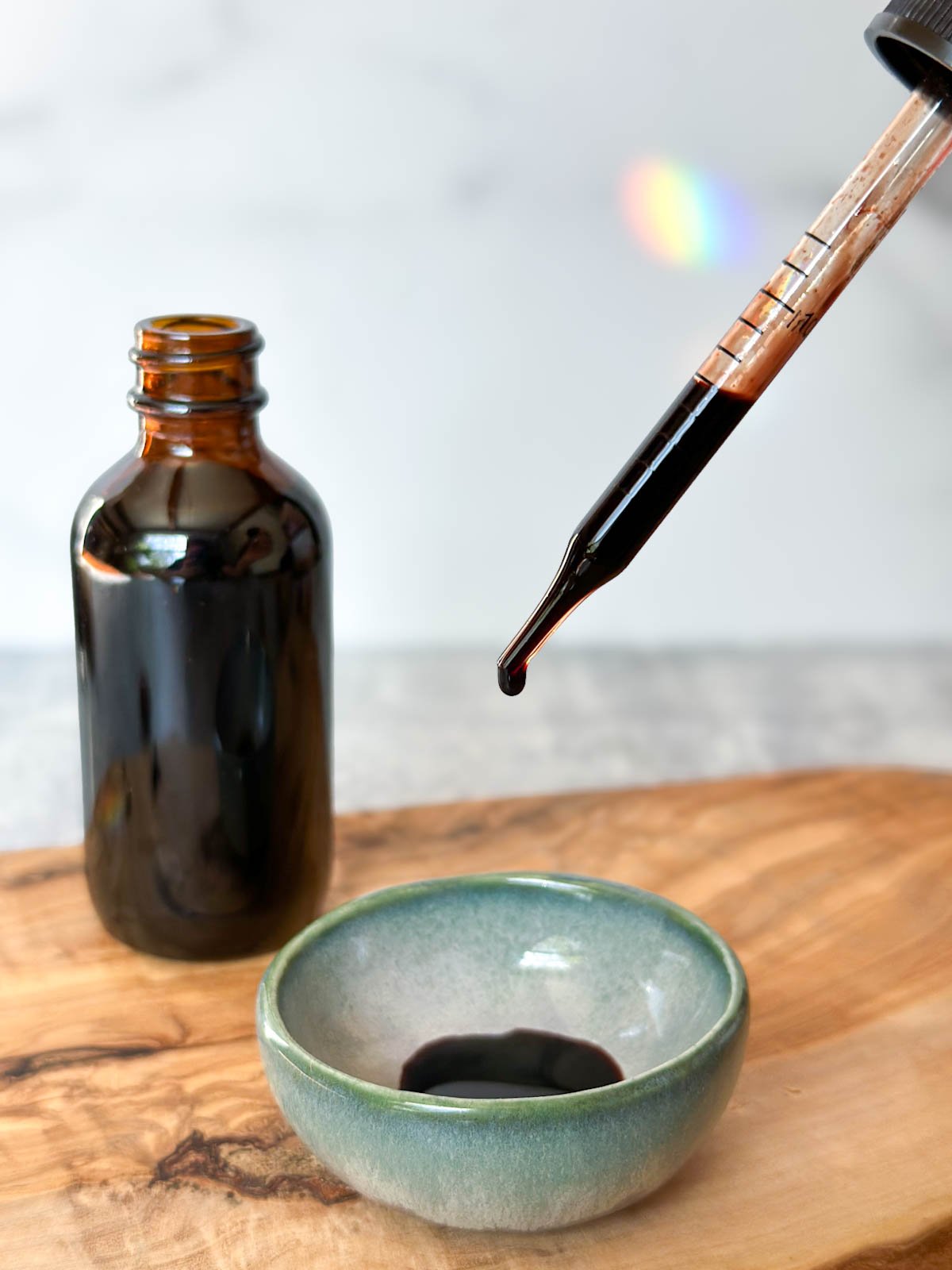
Finally, use a small funnel to help transfer the finished elderberry tincture into final storage containers. I like to fill at least one amber glass dropper bottle for easy use, and store leftovers in a separate jar to refill the dropper bottle as needed.
Don’t forget to add a label and date!
Storage and Shelf Life
Store homemade elderberry tincture in a cool, dark place away from direct sunlight. A properly made alcohol-based tincture should stay good for several years – especially one made with baked or dried berries – though we always use it up before then!
A tincture made with cooked elderberries (stovetop) will contain more fruit juice, which dilutes the alcohol and will likely shorten the shelf life.
Watch for signs of spoilage including mold or off flavor/odors. Refrigeration can help extend the shelf life.
How to Take Elderberry Tincture
According to WebMD, there is no standard dose for elderberry products – especially since the strength can vary so much between brands or formulas, and even more so when homemade.
However, a common recommended serving size for adults is about 10 drops of elderberry tincture (1/2 mL or 1/2 a dropper full) for maintenance or preventative measures, and up to 20 drops or 1 dropper full (1 mL) when experiencing cold or flu symptoms. Repeat up to four times per day as needed.
Children over 5 years old should take half the adult serving. Alcohol-based tincture is not recommended for babies or toddlers. Consider our homemade elderberry gummies or elderberry syrup recipe for younger kids (over 1 year old).
I recommend diluting the tincture with a little water or juice to make it more palatable if needed. (I usually just fill my mouth with water, and then carefully squirt some tincture in and swallow.)
DISCLAIMER: This information is for general knowledge and should not be considered medical advice; consult with your doctor or naturopath as needed.
Frequently Asked Questions
Is elderberry tincture made with alcohol safe for kids? Given the very small amount of alcohol in a child-size serving of tincture (5-10 drops), many sources consider alcohol-based elderberry tincture generally safe for children over 5 years old, particularly when diluted and only taken for a short duration (e.g. a few days). However, that decision is ultimately up to the parents and/or advising pediatrician.
Can I make elderberry tincture without alcohol? Yes, you can also make elderberry tincture by soaking the berries in food-grade vegetable glycerin or edible vinegar, resulting in an alcohol-free tincture that is suitable for kids or those avoiding alcohol. However, vinegar and glycerine are not nearly as effective at extracting herbal constituents (e.g. alkaloids, flavonoids, resins, and essential oils) so the final tincture is considered less potent or therapeutic, and usually has a shorter shelf-life than traditional alcohol-based tinctures.
In closing, I hope you enjoy this easy elderberry tincture recipe as much we do – and that it can help you stay strong and healthy! Let me know if you have any questions in the comments below, and please leave a review once you give it a try.
You may also enjoy:
Easy Fire Cider Recipe: How to Make Homemade Fire Cider
How to Make Elderberry Syrup with Fresh or Dried Berries
Homemade Cough Drops with Honey, Lemon and Ginger
Fermented Garlic Honey Recipe + Benefits and Uses
Elderberry Gummies Recipe (How to Make Elderberry Gummies)
Did you enjoy this article? Want to hear more? Stay in touch! Sign up below to receive weekly updates on new posts from Homestead and Chill.
Print
Homemade Elderberry Tincture Recipe (Dried or Fresh Berries)
An easy homemade elderberry tincture recipe for natural immune support. For potency and safety, it's best to use dried berries but I've also included tips on how to safely use fresh elderberries (including frozen raw) as well as optional ingredients to enhance the flavor or medicinal benefits.
Keyword elderberry tincture recipe, homemade elderberry tincture
Prep Time 10 minutes minutesInfusion Time 30 days days
Servings 8 ounces
Equipment1 Glass jar with a tight leak-proof lid. You can use any size jar to make as little or as much as you desire. The yield of finished tincture will be about about half the volume of the jar (e.g. I get about 8 ounces of tincture when using a 16-oz pint jar)Fine mesh strainer and/or organic cheesecloth. I like to use cheesecloth so I can squeeze out every last drop!Final storage containers such as one or two-ounce amber dropper bottles
IngredientsKey IngredientsDried elderberries (preferred for potency, safety, and shelf life) though you can also use frozen or fresh elderberries if they’re cooked or dried first. See cooking and safety tips below. You’ll need enough berries to fill your chosen jar about halfway to two-thirds full. We love these organic dried elderberries and use about 1 cup for a pint-sized batch of tincture.Alcohol – neutral, unflavored spirit (such as vodka or grain alcohol) that’s at least 80-proof or 40% alcohol minimum, up to 100 proof like Everclear or 200-proof food grade organic ethyl alcohol for even better extraction.Optional ingredientsGinger – I like to add a few slices of fresh ginger to the jar, though you could also use 1/2 to 1 tsp of ground ginger powder per pint jar.Cinnamon – 1 to 2 whole cinnamon sticks or up to 1 tsp ground powder per pint jar.Echinacea – simply swap a portion of the elderberries with dried echinacea root, still only filling the jar about halfway full in total (or just over).Whole star anise – one or two per pint jar. Keep in mind it tastes like black licorice!You can add any combination of dried, edible, medicinal herbs such as dried rose hips, astragalus, reishi mushroom and more.
InstructionsFill JarFill a clean jar about halfway to two-thirds full of dried elderberries.If you’re using fresh berries, I highly recommend cooking or drying them first (see instructions below) and ensure you remove all stems and leaves. If you chose to cook your fresh berries on the stovetop, only fill the jar halfway or just under.Add other optional ingredients such as cinnamon sticks, ginger, or other dried edible herbs or spices of choice. Pour the alcohol over the elderberries until the jar is nearly full, leaving about 1/2 to 1 inch of headspace on top. InfuseAdd a tight-fitting lid and shake to mix the contents of the jar. If you’re using a standard metal mason jar lid, I recommend placing a piece of parchment paper or wax paper below the lid to prevent corrosion. Set the jar in a dark location such as kitchen cupboard or pantry to infuse for at least 4 to 6 weeks, up to several months.If possible, try to remember to gently shake the jar every few days to help it mix and infuse – especially during the first week or two.Strain and BottlePlace a fine mesh strainer over a bowl or large measuring cup. I like to line the strainer with organic cheesecloth for extra filtration, and so I can better squeeze all of the liquid out of the elderberries. Dump the contents of the jar into the strainer and/or cheesecloth, and allow it to drip drain for a couple minutes. Then firmly press and squeeze the elderberries to extract as much liquid as possible. (You may want to wear gloves as elderberries can stain your hands) Finally, use a small funnel to help transfer the finished elderberry tincture into final storage bottles (I fill at least one dropper bottle and then store extras in a glass jar) Add a date and label Storage and Shelf LifeStore your homemade elderberry tincture in a cool, dark place away from direct sunlight. A properly made alcohol-based tincture will stay good for several years .A tincture made with cooked elderberries (stovetop) will contain more fruit juice, which dilutes the alcohol and will likely shorten the shelf life.Watch for signs of spoilage including mold or off flavor/odors. Refrigeration can help extend the shelf life.Dosing and UseA common recommended serving size for adults is about 10 drops of elderberry tincture (1/2 mL or 1/2 a dropper full) for maintenance or preventative measures, and up to 20 drops or 1 dropper full (1 mL) when experiencing cold or flu symptoms. Repeat up to four times per day as needed.Children over 5 years old should take half the adult serving. Alcohol-based elderberry tincture is not recommended for babies or toddlers.I recommend diluting the tincture with a little water or juice to make the taste more palatable if needed. To Use Fresh Berries (Cook or Dry First)Raw elderberries, stems, and leaves contain cyanogenic glycosides that release toxic cyanide and can cause severe gastrointestinal issues – so it's best to fully dehydrate or cook fresh berries (raw or frozen) first. On the stovetop: place fresh elderberries in a saucepan with a tiny splash of water (just enough to prevent scorching) and simmer for 20 to 30 minutes over medium heat. However, the added moisture can dilute your tincture and reduce the shelf life.Recommended: dry or bake them in the oven or in a food dehydrator at 135 to 140F or greater until completely dry. This neutralizes the toxins and is better for making tincture since it doesn’t add extra moisture.Once they’re dried or cooked, you can follow the steps above.
The post Homemade Elderberry Tincture Recipe with Dried or Fresh Berries appeared first on Homestead and Chill.








 New Posts (Home)
 ChatBox
 Popular Posts
  Game Zone
 Top PodCasts