www.thegospelcoalition.org
How Politics Hijacked Nonprofits
Nonprofits have a long and storied history in the United States. When Alexis de Tocqueville visited this country in the 19th century, he intended to study its prisons. Instead, he wrote one of the most perceptive analyses of American political life. Among his many insights was an observation about what we now sometimes call “the third sector.” In France, citizens who encountered social problems tended to look to the government for solutions. Americans, Tocqueville noticed, were different. Rather than waiting for official action, they organized themselves. They had a talent for self-government.
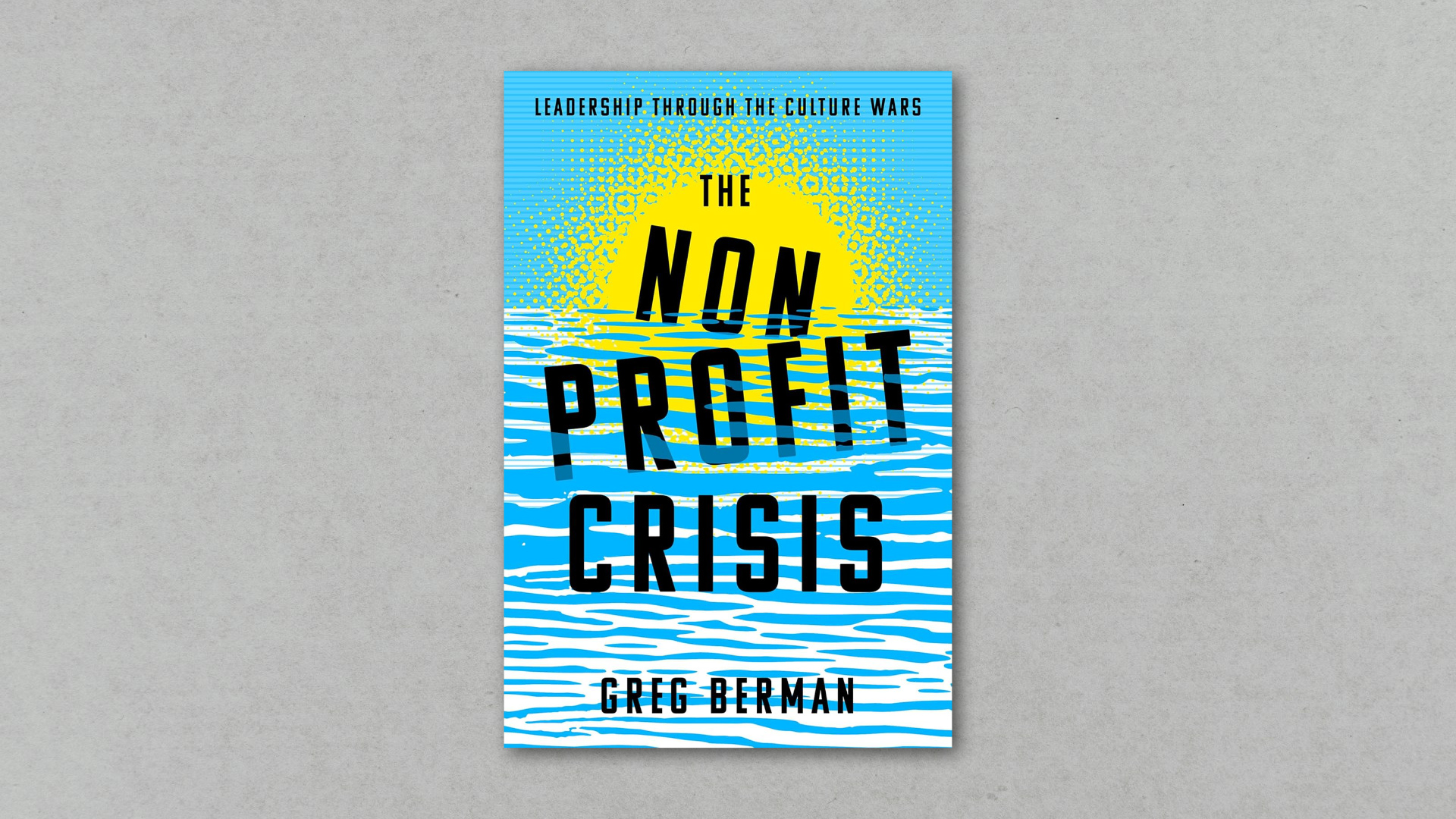
What Tocqueville observed has implications for the nonprofit sector today. Greg Berman warns about the evolution (or devolution) of the nonprofit sector from those Tocquevillian beginnings in The Nonprofit Crisis: Leadership Through the Culture Wars. But it’s also a book about liberalism, the political philosophy developed alongside the American republic. Liberalism here doesn’t mean left-wing politics; it refers to the pursuit of liberty itself. Limited government, consent of the governed, and freedoms of religion, speech, and the press are core liberal commitments. For Americans, these principles have been as invisible as water to a fish.
Nonprofits play a straightforward role in such a system. Because liberal governments restrain themselves in the name of freedom, space opens for voluntary institutions to meet social needs in entrepreneurial and creative ways. That space has historically been filled by nonprofits in local communities, many born out of local churches.
Berman, a longtime nonprofit executive with the Center for Court Innovation, shows that this role is now threatened. Writing from within the liberal tradition, he observes the weakening consensus, which has shifted the nonprofit sector’s center of gravity. In America’s past, nonprofits belonged to what sociologist William Swatos called the community “lifeworld.” Now, they increasingly resemble the bureaucratic “system” of government and corporations—a change with serious implications for society and potentially churches too.
Changing Culture
Berman highlights a generational change in the people who serve nonprofits. Nonprofits have always attracted young people who hope to bring change and prepare for leadership. Berman observes that over time, younger employees were arriving with less willingness to defer to age and experience.
More importantly, perhaps, many young people also want to see the organizations of which they’re part reflecting a strong, left-wing social and political agenda. As one newly graduated and recently hired nonprofit worker declared, “There’s only one thing wrong with the criminal justice system and that’s systematic racism” (36). Such simplistic perspectives often lead to intolerance toward other views, which makes cooperation toward a common goal difficult.
Simplistic perspectives often lead to intolerance toward other views, which makes cooperation toward a common goal difficult.
This intolerance is illustrated in Berman’s story of a 90-year-old woman, who had served for decades with a multiple sclerosis charity, being forced out as a volunteer because she asked questions about the use of pronouns in the organization’s materials. No amount of faithful history could compensate for heterodoxy on an unrelated cultural issue. The story is a one-off, but it shows how the clear and distinct purposes that once animated such work have sometimes been subsumed beneath broader social movements.
Mission Drift
The heart of Berman’s worry is that nonprofits are becoming overpoliticized. He argues this shift erodes public support and distracts organizations from their core missions. As groups become coded as left or right, they lose touch with experts and donors motivated to solve the problems the nonprofits were created to address.
He illustrates this concern well with an episode from his time as executive director at the Center for Court Innovation, when he invited a high-ranking NYPD official for a conversation. Some staff objected, with one worker asking why the “Center [was] partnering with a racist institution” (53). The idea of “platforming” such a figure was treated as unacceptable.
Polarization also creates difficulties when issues defy clear ideological alignment, a scenario likely familiar to many within mission-driven institutions. The recent conflict in Gaza, for example, has effectively divided supporters and staff from each other within many nonprofits, particularly on the left. For Berman, it’s a sign of dysfunction that division over Gaza and Israel could distract his organization, which focuses on domestic criminal justice reform.
Berman makes it clear he’s no conservative. He writes with greater familiarity about the influence of progressive politics on nonprofits, but he’s equally concerned that conservative politics is beginning to dominate the groups within that orbit.
Find a Way Back
The pressure to adopt stronger political identities is moving nonprofits toward a more conventional political mission. The kind of wholesome activism Tocqueville observed is an endangered species. Nonprofits, once dominated by membership associations and small donors, are increasingly driven by major donors and foundations.
“Many of the most influential nonprofits,” Berman notes, “do not have significant membership rolls” (63). As a consequence, they become less of an independent force to address the problems the government isn’t handling or can’t handle well. Unfortunately, they’re also becoming more deeply embroiled in the field of politics.
As groups become coded as left or right, they lose touch with experts and donors motivated to solve the problems the nonprofits were created to address.
These shifts parallel those in other fields, such as journalism. There’s less interest in the work itself and more interest in scoring points for a side. The value of the activities that fall below the ideological confrontation seems to diminish.
Bearman’s analysis highlights the value of sociopolitical views advanced by figures like Abraham Kuyper and Jacques Maritain, though he does not write with those sources in view. Kuyper kept politics in its place by reserving space for the many other “spheres” of human life, such as church, family, the arts, the sciences, and schools. He warned against allowing politics to turn government into a kind of octopus ensnaring everything around it.
Similarly, Maritain imagined a “body politic” that encompasses the rich variety of life activities and institutions with only a thin overseeing layer, the state. In both cases, the Christian thinkers (one Protestant and one Catholic) sought to hold the temptations of politics at bay. Both Kuyper and Maritain offer a potential pathway for a more organic nonprofit sector.
The voluntary sector occupied by nonprofit organizations used to be a real American distinctive. Once a major asset to American life, the independence of nonprofits is being eroded by politics. Their effectiveness is ebbing. There may be a lesson for the church in that story as well. The Nonprofit Crisis offers valuable insight into what we’re losing as polarized politics takes over our culture.








 New Posts (Home)
 ChatBox
 Popular Posts
  Game Zone
 Top PodCasts