www.theamericanconservative.com
The Ugly Ironies in Trump’s Venezuela Press Conference
Foreign Affairs
The Ugly Ironies in Trump’s Venezuela Press Conference
Washington could have accomplished its aims without military intervention.
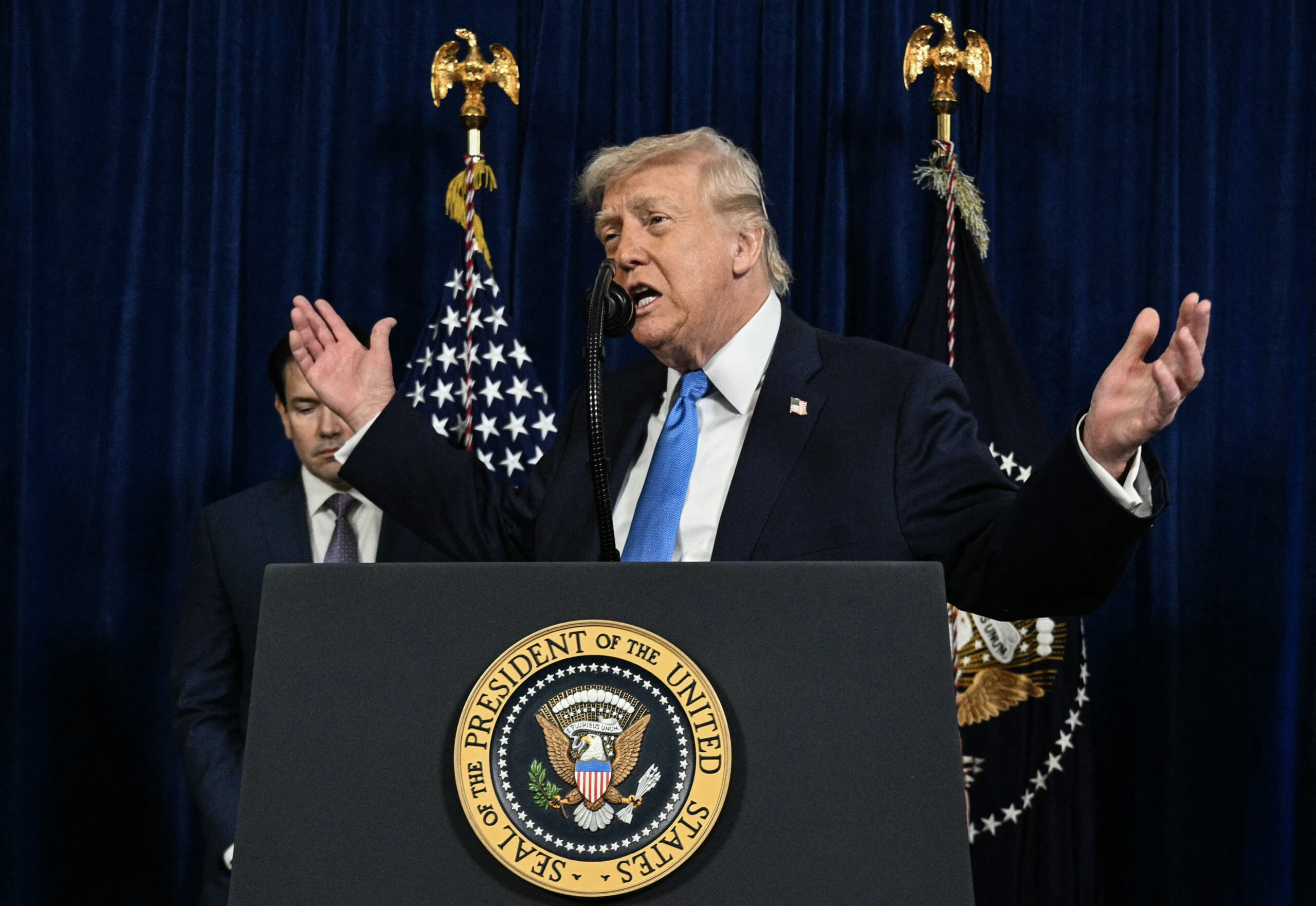
Donald Trump held a press conference last Saturday following the military operation that led to the capture of Venezuela’s President Nicolás Maduro. Trump explained, with help from Secretary of State Marco Rubio and Chairman of the Joint Chiefs of Staff Dan Caine, that Maduro was an illegitimate leader who had lost the last election and who had stayed in power as the head of the Cartel de los Soles drug cartel. Trump boasted of the success of the operation and promised that, unlike past presidents who “ousted dictators without… a plan for what comes afterwards,” he would ensure this regime change would go smoothly.
Over the last week, we’ve learned that claims made during the press conference were tinged with very ugly ironies.
During the Q&A, Rubio told the press that “Nicolás Maduro had multiple opportunities to avoid this. He was provided multiple very, very, very generous offers” for leaving Venezuela that he turned down. “He could’ve been living somewhere else right now very happy,” Rubio said. Indeed, The New York Times reports that, in late December, Maduro “rejected an ultimatum from President Trump to leave office and go into a gilded exile in Turkey.” Since he refused to leave on his own, the soft coup became a hard coup, and the U.S. removed him by military force. Power would now transition to Vice President Delcy Rodríguez.
The very ugly irony here is that the counteroffer made by Maduro to the ultimatum he was offered is not far off from the situation that has been inflicted by force on Venezuela. The world seems to have been closer to resolving the standoff and avoiding the military operation than presented. The Miami Herald and Reuters have reported that, in late November, Trump offered Maduro safe passage for him, his wife, and his son if he agreed to resign right away and flee Venezuela for the destination of his choice.
According to the reporting, Maduro told Trump he was willing to leave under three conditions: He and his family had to have complete legal amnesty. Sanctions on over a hundred Venezuelan officials had to be dropped. And Rodríguez needed to become head of an interim government until elections could be held. Trump rejected these conditions, yet he authorized a risky military intervention that has brought about a similar outcome, and perhaps a riskier one if Maduro loyalists suspect Rodríguez made a secret deal with the Americans, betraying the ousted president.
That Rodríguez is the leader the Trump team has settled on to work with is also revealingly ironic. In his press conference, Trump repeated the often-made American claim that Maduro is an “illegitimate dictator” because he stole the last election, holding onto power for “many years after his term as president of Venezuela expired.” Yet the military operation left the regime in place, plucking only the president from its structure.
As the White House has noted, Maduro stole an election won by the opposition. “He is not the legitimate president of Venezuela,” Rubio said. But Trump declined to work with the leader of the opposition that he said won the last election: Nobel Peace Prize winner María Corina Machado.
Following the removal of Maduro, Machado declared, “Today we are prepared to assert our mandate and seize power.” But Trump spurned that offer, saying instead that “it would be very tough for her to be the leader if she doesn’t have the support within, or the respect within the country. She’s a very nice woman, but she doesn’t have the respect within [Venezuela].” Instead, the U.S. would work, at least temporarily, with Rodríguez.
For all the complaints about Maduro’s lack of democratic legitimacy, the operation does not enhance the democratic legitimacy of Venezuela’s government. Trump turned his back on democracy in Venezuela, putting aside the opposition his team insists won the election, and working, instead, with the vice president of the administration they claim stole the election.
Two days after the military operation, Trump made clear that there would be no democracy in the country anytime soon. He said that he is in charge in Venezuela and that “we have to fix the country first. You can’t have an election. There’s no way the people could even vote. No, it’s going to take a period of time,” though it’s not clear why. Trump thinks that even war-torn Ukraine is capable of holding an election.
Two key points were made about the plan for Venezuela’s leadership going forward. The first was that there was a compliant leader; the second was that Venezuela’s oil would pay for the U.S. “running” Venezuela, reimburse the U.S. oil companies that had the oil stolen from them, and improve the lives of Venezuelans who had suffered under Maduro. Both claims are questionable and ironic.
Rodríguez initially appeared to remain loyal to Maduro and defiant. She maintained that “there is only one president in Venezuela, and his name is Nicolás Maduro.” She called America’s actions “barbarity.” And she insisted that they “will never return to being the colony of another empire.”
In response, Trump warned that “if she doesn’t do what’s right, she is going to pay a very big price, probably bigger than Maduro.” On January 5, Rodríguez issued a statement that sounded more conciliatory but, in fact, preserved her main points. She continued to say, as both she and Maduro previously had, that Venezuela “consider[s] it a priority to move toward a balanced and respectful international relationship between the United States and Venezuela” and “to work together on a cooperation agenda aimed at shared development” but added that this must be done “within the framework of international law” and “based on sovereign equality and non-interference.” She insisted that there can be no “external threats,” and she continued to refer to Maduro as president.
More strikingly for a Trump administration that evaluated Rodríguez to be compliant, at her January 5 swearing-in as the interim President of Venezuela, Rodríguez called Maduro and his wife “two heroes” and said she was accepting office “with pain because of the suffering that has been caused to the Venezuelan people after an illegitimate military aggression against our homeland.” After the swearing-in, she greeted representatives from America’s leading adversaries: China, Russia, and Iran.
And the promise of oil is no more certain. Trump claimed that the “socialist regime” of Maduro and his predecessor, Hugo Chávez, “stole” America’s oil “through force.” He said, “Venezuela unilaterally seized and sold American oil, American assets, and American platforms costing us billions and billions of dollars.” He then promised that, with Maduro removed from power, “We’re going to have our very large United States oil companies, the biggest anywhere in the world, go in, spend billions of dollars, fix the badly broken infrastructure, the oil infrastructure, and start making money for the country.”
Trump claimed that the U.S. oil companies would “invest billions of dollars” to get oil production running. But U.S. oil companies seem less willing to rush back into Venezuela than Trump believes. Prior to the military operation, the Trump administration was “asking U.S. oil companies if they’re interested in returning to Venezuela once leader Nicolás Maduro is gone.” The answer they got was “no.”
Low oil prices are dampening the temptation to risk huge investments into a Venezuelan oil infrastructure in bad need of maintenance. The increasingly uncertain political environment in Venezuela is also giving oil executives pause, as is the concern that Washington doesn’t have a fully developed plan for the country’s political future. The Trump administration is pressuring American oil companies to get on board. The military intervention for oil, in other words, has spooked the companies needed to extract and process the oil.
Trump’s framing of the oil question when it comes to Venezuelans is also ironic. He promised that once American oil companies “get the oil flowing the way it should be… we’re gonna make sure the people of Venezuela are taken care of.” Trump said that his message to the people of Venezuela is that they’re going to have “some of the riches that you should have had for a long period of time that was stolen from you.”
But that was the promise that Chávez made to his people. Chávez promised that his “government is here to protect the people, not the bourgeoisie or the rich.” With that promise, he nationalized the electricity, telecommunications, and steel industries to divert the profits from Venezuelan resources into social programs for Venezuela’s people. Most importantly, Chávez strengthened the terms of the oil and natural gas partnerships the Venezuelan state oil company PDVSA had made with American corporations.
Before Venezuela’s oil profits were decimated, in large part, by U.S. sanctions, its economy was improving, with both poverty and income inequality in decline. Trump is promising to restore what Venezuela already had—oil revenues improving the lives of the people—before U.S. sanctions immiserated the Venezuelan people and helped destroy the energy sector.
But the greatest irony of all was not revealed until the updated indictment against Maduro was unsealed. The greatest part of the case against Maduro, and the justification for the bombing of alleged drug boats, the embargo on oil ships, and the military operation against Maduro, was that he was the leader of a “narco-terrorist” state and was the “kingpin,” Trump said in his press conference that Maduro headed “the vicious cartel known as Cartel de los Soles, which flooded our nation with lethal poison responsible for the deaths of countless Americans.”
But when the rewritten indictment against Maduro was revealed on the day Maduro was captured, the claim that the Cartel de los Soles was an actual organization and that Maduro was its leader was gone, replaced with the weaker claim of a “patronage system” and a “culture of corruption.”
Coupled with the U.S. intelligence conclusion that “the Maduro regime probably does not have a policy of cooperating with [the Tren de Aragua] TDA crime syndicate and is not directing TDA movement to and operations in the United States,” the principal case against Maduro disappears.
Despite Maduro offering something close to what the Trump administration imposed, and despite the main justification of the operation being apparently bogus, the operation went ahead. The long-term plan depends on a compliant transitional government whose compliance threatens its domestic credibility, and on the cooperation of American oil companies who don’t seem eager to produce the oil that Trump claims to have secured for them. If America is entering a darker phase of international politics, it is doing so in a darkly ironic way.
The post The Ugly Ironies in Trump’s Venezuela Press Conference appeared first on The American Conservative.








 New Posts (Home)
 ChatBox
 Popular Posts
  Game Zone
 Top PodCasts