www.dailysignal.com
The Minnesota Incident: A Case Study in Media Narrative Versus Reality
A woman is dead in Minnesota. An ICE officer killed her. Those two facts are undisputed.
Everything else has become a Rorschach test for American politics.
Within hours of the incident, the narrative crystallized: federal agents had become death squads hunting immigrants.
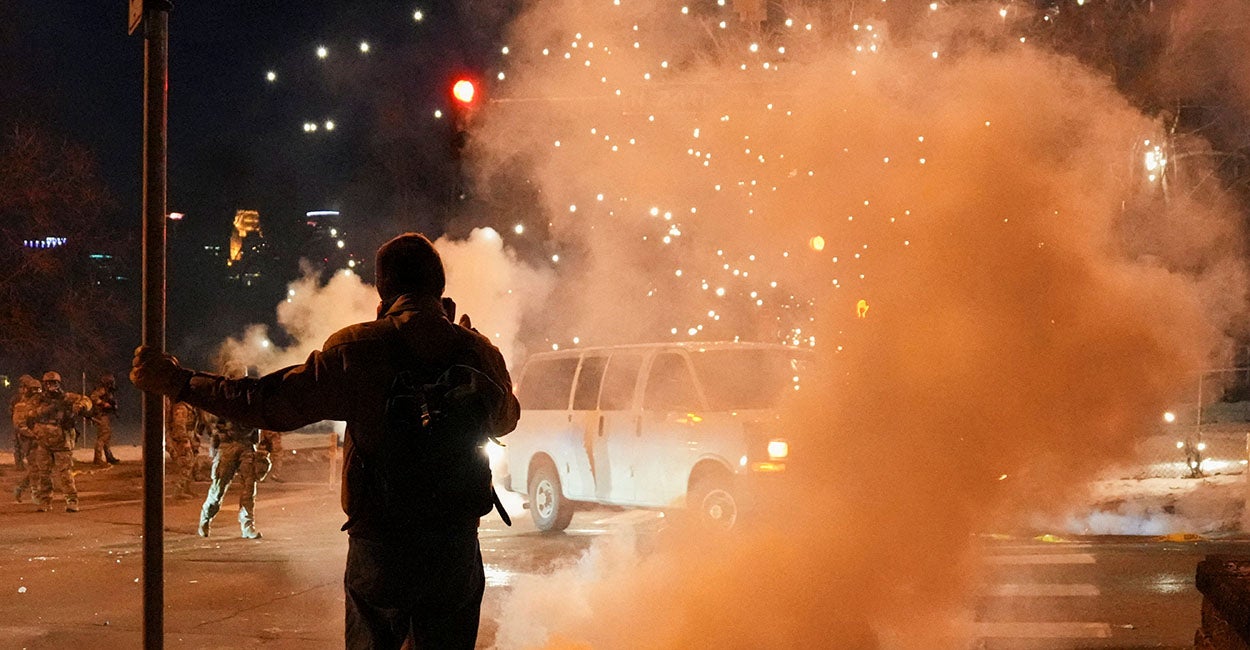
Protests erupted. Politicians demanded accountability. Mainstream news ran wall-to-wall coverage of a deportation regime “gone too far.”
But here’s the question nobody’s asking: If the video evidence shows a woman repeatedly breaking the law before being shot, why hasn’t the story changed? Why did public perception form in minutes and calcify into certainty, impervious to new information?
The answer reveals something far more troubling than one tragic incident. It exposes the machinery of how Americans now form opinions and why we can no longer agree on basic facts.
The Numbers Don’t Match What They’re Telling You
Let me walk you through what Cygnal’s polling actually shows, because it contradicts nearly everything you’ve heard.
In July 2025, we found 61% of voters supported deportation efforts. But 48% opposed using ICE raids as the mechanism, with 50% in support. That’s a statistical tie, not a complete lopsided opposition like the mainstream narrative has been pumping.
Fast forward to last week. Our latest poll showed 50% believed Trump’s deportation efforts were going “too far.”
Headlines screamed about massive opposition to ICE tactics. Pundits proclaimed a turning point.
But look at the actual numbers: 48% opposition in July. 50% “too far” in January. That’s a two-point movement over six months, well within any poll’s margin of error. In polling terms, that’s noise, not a signal.
More importantly, this January poll was conducted immediately after an ICE officer killed a woman who had broken multiple laws and attempted to harm him. If there were ever a moment when opposition might spike dramatically, that was it. And the needle barely moved.
So, where’s all this “growing opposition” coming from?
The composition of who opposes tells the story: 91% of liberals say Trump’s deportation efforts go too far. Ninety-one percent.
Now ask yourself: What ideology dominates mainstream newsrooms? What worldview shapes editorial decisions at major networks and newspapers?
When 91% of one ideological group believes something, and that group overwhelmingly controls media institutions, their perspective becomes “the” perspective. Their concerns become national crises. Their interpretation becomes the default frame.
The numbers haven’t changed. The megaphone amplifying one side of those numbers has.
The Radicalization of ‘Resistance’
Here’s a statistic that should alarm everyone, regardless of where you stand on immigration: 61% of white liberal women ages 18-44 believe it’s acceptable to go “beyond peaceful protests in response to immigration raids.”
Cygnal asked this question in October. Nationally, 70% of Americans disagreed. Only 24% said yes, effectively endorsing lawbreaking when you disagree with enforcement.
But within that specific demographic, nearly two-thirds said yes.
Think about what “beyond peaceful protests” means. Blocking traffic. Interfering with law enforcement operations. Physical confrontation. These aren’t abstract concepts. They’re the exact sequence of events that led to a woman’s death in Minnesota.
I’ve spent my career studying how emotions drive political behavior.
What we’re seeing here goes beyond passionate disagreement. One demographic slice has convinced itself that laws become optional when enforcement conflicts with their values.
And the media ecosystem they consume reinforces this belief daily. They’re the “oppressed”, and they must rise up against the oppressor.
When two-thirds of any group believes lawbreaking is justified, that belief will eventually manifest in action. Minnesota wasn’t random. It was inevitable.
The woman who died wasn’t acting irrationally by her own moral framework.
Renee Good absorbed years of messaging that Trump is a dictator, ICE agents are villains, that resistance is heroic, that “by any means necessary” had become literal rather than rhetorical. She blocked traffic. She interfered with a federal operation. She assaulted an officer. At each step, she was doing what her political tribe had told her was not just acceptable but righteous.
She believed she was the hero of the story. That belief killed her.
What Actually Happened in Minnesota
Let’s talk about the incident itself, because the sequence mentioned above matters.
Multiple videos exist showing how things went down. They’ve been available for days. And they have changed precisely nothing about the dominant narrative.
Why?
Because most Americans never saw the full videos. Major networks showed the shooting. They did not show the preceding minutes of escalating confrontation. They did not provide context about the legal violations that preceded the fatal moment. The edit determined the story.
And this is the harder truth: even complete video evidence might not have mattered.
The Deeper Crisis: Truth in the Age of Confirmation
Cygnal found this month that 73% of voters say they “very often” or “somewhat often” encounter information they later discover is false or misleading.
Three-quarters of Americans believe they’re regularly being lied to. And they’re right.
But here’s the paradox: everyone thinks they’re the one sorting fact from fiction. Everyone believes their sources are reliable and the other side’s sources are propaganda. My truth is your misinformation and vice versa.
Once someone forms an initial opinion, contradicting evidence doesn’t change their mind. It hardens their position.
Studies on motivated reasoning show that partisans presented with facts that contradict their beliefs actually become more confident in their original view. The brain treats the contradicting information as an attack and the existing belief as identity to be defended.
By the time the full Minnesota videos emerged, millions had already decided what happened.
The officer was a murderer or the woman was a criminal. No footage would change that because the footage wasn’t being evaluated as evidence. It was being processed as ammunition for the conclusion already reached.
We’ve built information systems optimized for speed and engagement, not accuracy and deliberation. Hot takes within minutes. Viral clips within hours. Cemented narratives by the end of the day. And corrections, retractions, and context arrive weeks later to an audience that stopped listening.
The Real Consequences
Here’s what happens when media narratives diverge from reality and nobody can agree on basic facts.
ICE officers now work under a target. When major media outlets frame enforcement actions as atrocities and significant portions of the population believe “going beyond peaceful protests” is acceptable, every agent conducting a lawful operation faces elevated risk. The Minnesota incident will not be the last.
Rule of law becomes optional. If laws can be violated without consequence when the cause is deemed sufficiently righteous, law becomes merely a suggestion to be weighed against ideology. Today it’s immigration enforcement. Tomorrow it’s something else. The principle, once breached, has no natural stopping point.
Media credibility continues its collapse.
I’ve polled media trust for years. It’s cratered. Not because Americans reject journalism as a concept but because they’ve watched outlets function as political actors while claiming neutral observer status. Every misleading frame, every selective edit, every story that doesn’t match the available evidence accelerates institutional delegitimization.
We lose the ability to solve shared problems. Democracy requires some baseline agreement about facts. Not values, not policy preferences, but basic factual reality. When we cannot agree that a video shows what it shows, we cannot deliberate about what to do about it. We’re just two populations shouting past each other, each convinced the other is either evil or deluded.
Where This Leaves Us
I started with a question: If video evidence shows a woman repeatedly breaking the law before being shot, why hasn’t the story changed?
The answer is that stories don’t change anymore. They’re chosen.
Ninety-one percent of liberals were always going to oppose these deportation efforts. That opposition was always going to dominate media coverage because of who controls media institutions. And young liberal women were always going to be disproportionately represented in “resistance” narratives because they’re the demographic most likely to believe lawbreaking is justified.
Minnesota wasn’t a turning point. It was a preview.
The machinery that produced this incident, emotional polarization amplified by ideological media driving radicalized behavior, remains fully operational. Another confrontation will come. Another narrative will crystallize before facts emerge. Another set of Americans will conclude their countrymen are either fascists or anarchists.
The stakes extend far beyond immigration policy. We’re testing whether law enforcement can function when media narratives and activist movements collaborate to obstruct it. We’re testing whether shared truth is even possible anymore.
So far, we’re failing that test.
We publish a variety of perspectives. Nothing written here is to be construed as representing the views of The Daily Signal.
The post The Minnesota Incident: A Case Study in Media Narrative Versus Reality appeared first on The Daily Signal.








 New Posts (Home)
 ChatBox
 Popular Posts
  Game Zone
 Top PodCasts