www.thegospelcoalition.org
Stoic Virtues Are Trending, but Can They Truly Transform?
Stoicism may not be a household topic for many people, but it’s gaining momentum in our culture. An online event, “Stoic Week,” which began in 2012, has drawn more than 40,000 people from around the world to deepen their knowledge and practice of Stoicism. The philosophy is growing online and is especially attractive to young men looking for meaning in life.
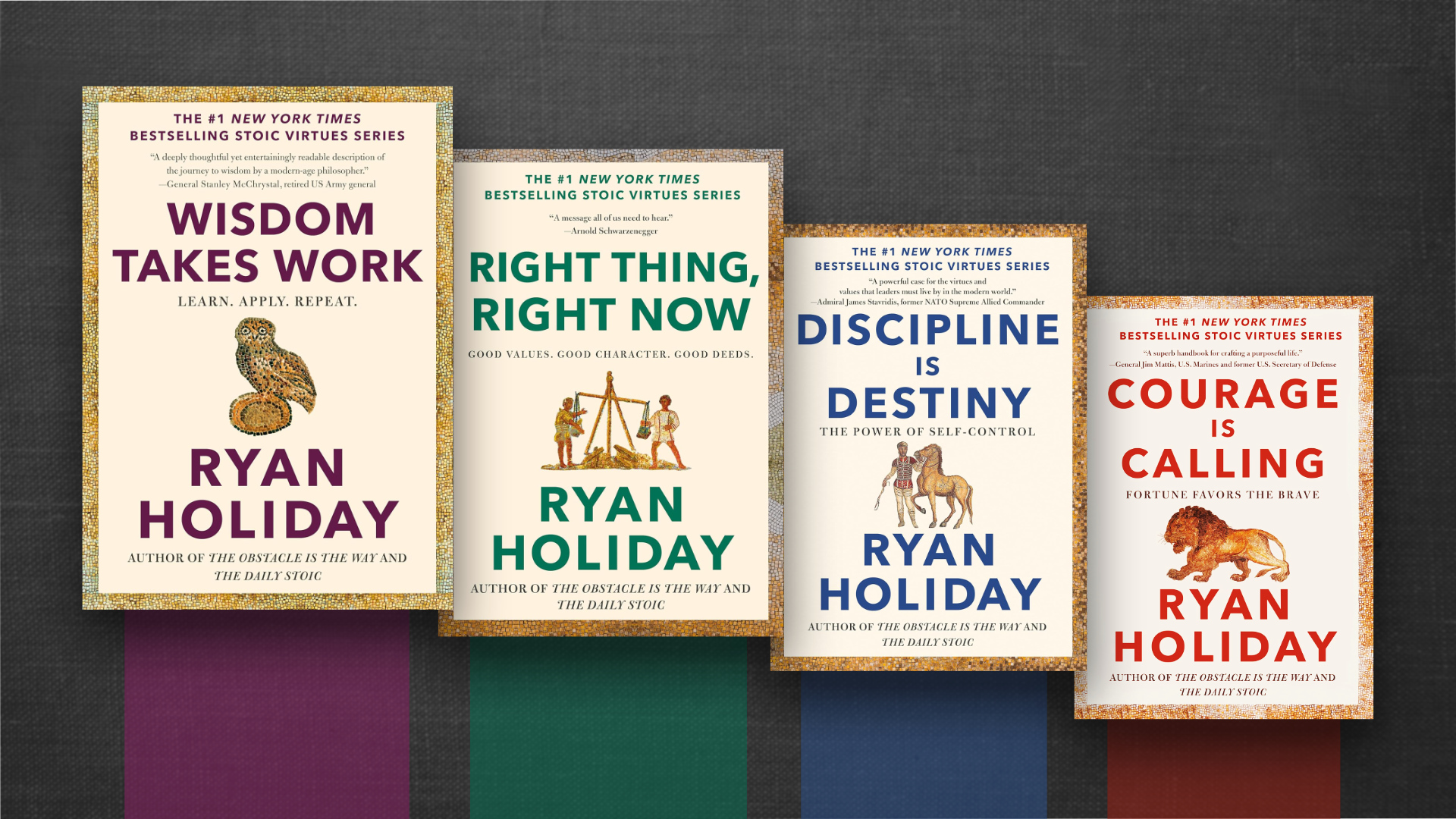
One popular proponent of Stoicism, Ryan Holiday, a media strategist and influencer, recently published the final installment in his Stoic Virtue Series, which includes Courage Is Calling (2021), Discipline Is Destiny (2022), Right Thing, Right Now (2024), and Wisdom Takes Work (2025). Holiday’s goal is to convince readers to adopt the cardinal virtues: courage, temperance, justice, and wisdom.
Modern Stoicism prescribes a way of life rooted in self-sufficiency. If you’re suffering, chalk it up to your perspective on events rather than the events themselves. And change your perspective. If you’re anxious, cast out your anxieties with your own power. If you’re seeking a life of purpose, live life according to the virtues found in Nature. Stoic virtue is better than many approaches to living in the modern world, but it falls short of the Christian ideal for the virtuous life.
Ancient Virtues
The cardinal virtues aren’t unique to Stoicism and other ancient philosophies; they have a rich history in Christian theology. As C. S. Lewis observes, the cardinal virtues are called such after the Latin word cardo, meaning “hinge.” They’re pivotal to moral life. Lewis argues that practicing the virtues trains our reflexes toward goodness, which befits those who have received eternal life. Yet the way the virtues are defined makes all the difference.
One reason why Holiday’s books are so popular is his use of concrete images for abstract concepts. He illustrates the virtues with examples, even as he offers succinct definitions of each. For example, “courage is the management of and the triumph over fear.” Temperance, or discipline, is maintaining command over one’s physical, mental, and spiritual self. Justice is “holding the line. . . . That is, the line between good and evil, right and wrong, ethical and unethical, fair and unfair.” Wisdom is knowing what, when, and how to do the right thing.
The arguments of the books are made clearer by the concise definitions, but those definitions rely on undefined cultural assumptions about concepts like evil and fairness.
Holiday draws his examples of virtue wherever he finds them, without consideration of theological system or metaphysic. Thus, he references the Bible alongside the Bhagavad Gita, without noting how those books might conflict. He’s also as likely to reference Mahatma Gandhi, Harvey Milk, or Muhammad Ali as examples of virtuous individuals.
The cultural range of these examples makes sense because of Holiday’s assumption that shared human reason enables people to intuit right and wrong regardless of their worldview, upbringing, or habits. This aligns Holiday with the Stoic tradition, which teaches that Nature gives humans reason that enables us enact the virtues.
For Holiday, the pathway into flourishing and happiness is contained within a holistic approach to the cardinal virtues. The most prominent aspect of individual flourishing is freedom, and “discipline is how we free ourselves.” Concerning societal flourishing, Holiday states that justice “is not a me virtue but a we virtue.” Discipline and justice promote individual and societal flourishing, and wisdom and courage help enact these virtues.
Common Ground
In one sense, it’s encouraging that Holiday’s books are popular. Our hedonistic culture is beginning to recognize that it needs something more than pleasure. Readers who seek a way of life beyond hedonism will find such a way in the pages of the Stoic Virtue Series. Holiday offers pragmatic advice that encourages selflessness and growth in resilience.
Our hedonistic culture is beginning to recognize that it needs something more than pleasure.
As Christians, we should celebrate the fruit of common grace, which drives many people to live upright and just lives, even though they’re outside the faith. The practical wisdom of imitating Lou Gehrig’s restraint and discipline rather than Babe Ruth’s indulgence is nothing to scoff at. Moreover, Holiday’s encouragement toward living justly rather than merely debating the nature of justice is welcome, given the way social media often encourages virtue signaling over action.
Though some of Holiday’s interpretations of Scripture are questionable, such as understanding the Ten Commandments as suggestions rather than commands, his use of the Bible may provide opportunities for meaningful dialogue with modern Stoics.
For example, he champions the mercy demonstrated by the titular character in the parable of the Good Samaritan, following a common moralistic interpretation of the story. Yet, when considered in context, that story is about more than neighborliness; it’s about the gospel. As virtue language becomes more popular in culture due to teachers like Holiday, Christians have the opportunity to talk about the need for a righteousness that exceeds anything a mere human can embody.
Philosophical Confusion
Though Holiday draws some language and ideas from ancient Stoicism, many of his examples reflect the post-Christian context in which he lives. For example, he argues that the virtues, particularly justice, are valuable for giving people hope. That “we must reject all forms of nihilism, unseriousness, and despair” is good advice, but an appeal to hope is inconsistent with ancient Stoicism.
In contrast, according to Seneca, people should disdain hope for the same reason they should disdain fear. Both hope and fear speak to a future outside one’s control. Or, as the Stoic philosopher Epictetus writes, “If [a matter] concerns anything not in our control, be prepared to say that it is nothing to you.” Authentic Stoicism is oriented toward detachment, not hope.
The amalgamation of post-Christian cultural assumptions and ancient philosophies is dangerous for the soul. As the apostle Paul warns, hope apart from Christ’s resurrection is pitiable (1 Cor. 15:19). And, of course, the human need for authentic hope is exactly why Christian virtue ethics adds the three theological virtues—faith, hope, and love—to the four cardinal virtues. When defined in biblical terms, the theological virtues give substance and direction to the cardinal virtues.
When defined in biblical terms, the theological virtues give substance and direction to the cardinal virtues.
Holiday’s virtue-ethics approach illustrates the problem Alasdair MacIntyre wrestles with in Whose Justice? Which Rationality? The Stoicism Holiday promotes fails to consider the varying concepts of virtue within their historical and cultural contexts. As a result, his modern Stoicism offers even less structure than ancient versions, which taught people to exercise reason to live virtuous lives aimed at achieving happiness and tranquility.
Instead, Holiday encourages readers to “choose a north star,” which appeals to self-reflection about who you want to be rather than some objective reason. As pragmatic as Holiday’s framework is for modern individuals, it’s hard to see how it fits within the broader Stoic tradition or provides a pathway toward a cohesive, flourishing society.
Call for More
The popularity of Holiday’s books, podcast, and social media content demonstrates how hungry people are for virtue. He fits among influencers like Scott Galloway and Jordan Peterson, who are willing to demand more of their followers, particularly young men.
Yet audiences are sticking with these demanding influencers. That should encourage church leaders to exhort their congregations to embody biblical virtues more rigorously. God has, by his divine power, given Christians all they need to live godly lives (2 Pet. 1:3).
That’s why the apostle Peter called his readers to add to faith virtue, goodness, knowledge, self-control, perseverance, godliness, brotherly affection, and love (vv. 5–7). These virtues don’t lead to our justification, but they do keep Christians “from being ineffective or unfruitful in the knowledge of our Lord Jesus Christ” (v. 8). And fruitfulness is something many within our culture crave.
In the end, Christianity offers a superior vision for the virtuous life than modern Stoicism. Ultimately, the Stoic Virtue Series highlights a significant cultural trend for church leaders as they guide young people toward virtue grounded in Scripture.








 New Posts (Home)
 ChatBox
 Popular Posts
  Game Zone
 Top PodCasts