flashbak.com
The New Vision: The 1920s Movement For New Ways of Seeing
“The illiterate of the future will be the person ignorant of the camera as well as the pen”
– László Moholy-Nagy, New Vision
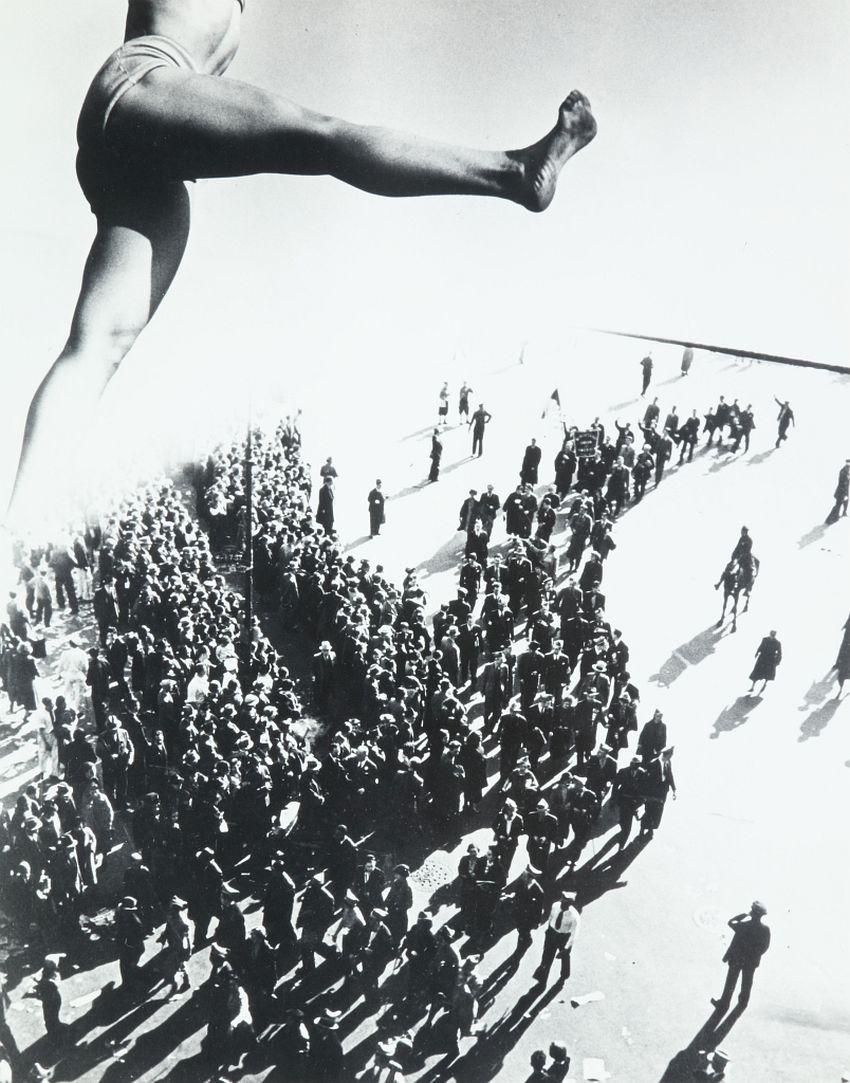
Barbara Morgan American, 1900–1992 Protest, 1940
Between the wars in the 1920s and early 1930s, people were keen to see things differently. The New Vision movement was of its time. Its members railed against what they saw as the confines of traditional photographic methods and embraced avant-garde experimentation and innovative techniques.
New Vision was so called by the artist and Bauhaus teacher László Moholy-Nagy (July 20, 1895 – November 24, 1946). His studies into the abstract arrangement of pictorial space promoted inventive techniques, including photograms, photomontages and light studies. Photographs that favoured sharp angles and unusual viewpoints were the fashion.
V. Elizabeth Turk American, born 1945 Calaeno, 2018 Van Dyke print
The late 1920s saw a series of international exhibitions devoted to New Vision photography. The most significant of these was Film und Foto, an exhibition held in Stuttgart, Germany, in May–July 1929, which included approximately 1,000 works from Europe, the Soviet Union, and the United States.
Imogen Cunningham – American, 1883–1976 Agave Design I, ca. 1920
Walker Evans – American, 1903–1975 – The Bridge, 1929
László Moholy-Nagy – Hungarian, 1895–1946 – Lucia Moholy – Czechoslovakian, 1894–1989 – Stage Set for “Madame Butterfly,” 1931
Laszlo Moholy-Nagy (1895-1946) was an abstract artist who grew up in Hungary, who turned to painting after the Great War, who moved to Berlin and came under the sway of the dadaist and constructivist movements in the flourishing international avant-garde scene of the early twenties, who taught under the direction of Walter Gropius at the Bauhaus in its middle period (1923-28), who moved to Holland and then to Great Britain in flight from the ominous rise of Fascism, who was called to Chicago in 1937 to form a New Bauhaus art school, and who spread Bauhaus modernist art education doctrines in America for the next decade until his untimely demise in 1946. In his ever westward wanderings, Moholy’s journey depicts
Barbara Morgan – American, 1900–1992 Protest, 1940
Aaron Siskind – American, 1903–1991 – Pleasures and Terrors of Levitation #37, 1953
Hiroshi Sugimoto Japanese, born 1948 Lightning Fields 182, 2009
Alexander Rodchenko – Russian, 1891–1956 Sbor na demonstratsia (Gathering for a Demonstration), 1928, printed 1970s
Florence Henri Swiss, born United States, 1893–1982 Composition, 1932, printed 1974
Walker Evans American, 1903–1975 The Bridge, 1929
Eugène Atget French, 1857–1927 Men’s Fashions, 1925, printed 1956
Via: High,
The post The New Vision: The 1920s Movement For New Ways of Seeing appeared first on Flashbak.








 New Posts (Home)
 ChatBox
 Popular Posts
  Game Zone
 Top PodCasts