www.theamericanconservative.com
For Zelensky, Is Losing the War Better Than Losing the Peace?
Foreign Affairs
For Zelensky, Is Losing the War Better Than Losing the Peace?
At Davos, the Ukrainian president scolded European leaders.
The biggest progress in the talks between Russia and Ukraine is that, for the first time since the opening weeks of the war, Russia and Ukraine are talking. That’s important. The first time they held direct talks, they were on their way to ending the war—at least before Ukraine’s friends in the United States, the UK, and Poland encouraged an end to diplomacy and a full commitment to war.
For weeks, Russia has called negotiations “constructive,” the U.S. has said the talks “are at the end now” and that they are “down to one issue,” and Zelensky has called them “90 percent” complete. Though talks may have progressed through 90 percent of the issues, they are no closer to the end. Ukraine and their American and European partners may have agreed on “possible” security guarantees that Russia will certainly reject, and the U.S. and Russia may have agreed to territorial concessions that Ukraine will certainly reject.
While the talks sputter, if not stall, the war goes on. And what Ukraine is refusing to yield at the negotiating table, they are yielding on the battlefield. The media long talked about the 20 percent of the eastern Donbas region that Ukraine still controls and Russia insists they give up. Then they talked about 15 percent. Then 14 percent became the magic number. Last week it was 12 percent, and now some reports are citing 10 percent. And it is not just the Donbas: Some of the Russian forces’ biggest advances are in the other regions Moscow annexed. While Zelensky talks and refuses to surrender territory, the territory is being surrendered.
Ukraine is losing the land in the war that they refuse to lose in the peace. But, for Zelensky, losing the war may be preferable to losing the peace. The result will be the same for Ukraine, but perhaps not for its president.
If Ukraine loses the peace, Ukrainians will blame Zelensky. But if Ukraine loses the war, Zelensky can blame the U.S. and Europe.
Zelensky nourished the people of Ukraine during the war with promises of maximalist achievements: of reconquering all lost territory, including Donbas and the Crimean peninsula, and of gaining membership in NATO. After all the death and anguish, it will be hard to sell a peace that involves relinquishing more land, and without the promised irreversible path to NATO. The result for Zelensky, both politically and personally, would not be good (the result could involve a variation on a theme of a rope and a tree). The acting commander of the ultranationalist Azov Brigade said there would be no “peace without victory.” He warned Zelensky, “There is only one victory—not a single Russian soldier on Ukrainian territory. We will not leave this war to our descendants, and you will not leave it either, because if you try, it will be bad. Both for you and for them.”
It would not be hard for Zelensky to shift the blame for a Ukrainian loss abroad. The U.S. and UK encouraged Ukraine off the path of diplomacy and onto the path of defeating Russia with promises of whatever the Ukrainians need for as long as they need it. Zelensky can tell Ukrainians that Washington broke its promise. The Trump administration has found ways to stop funding Ukraine’s war effort, so losing the war can be blamed on the United States.
Europe, too, encouraged Ukraine to fight on and never surrender territory to the Russian invader. They promised to pick up the slack with money and weapons. But, of course, they could not. Europe is out of money and limping on the production of weapons. They are just as poor in troops and influence. The Europeans were not even invited to the talks in Abu Dhabi.
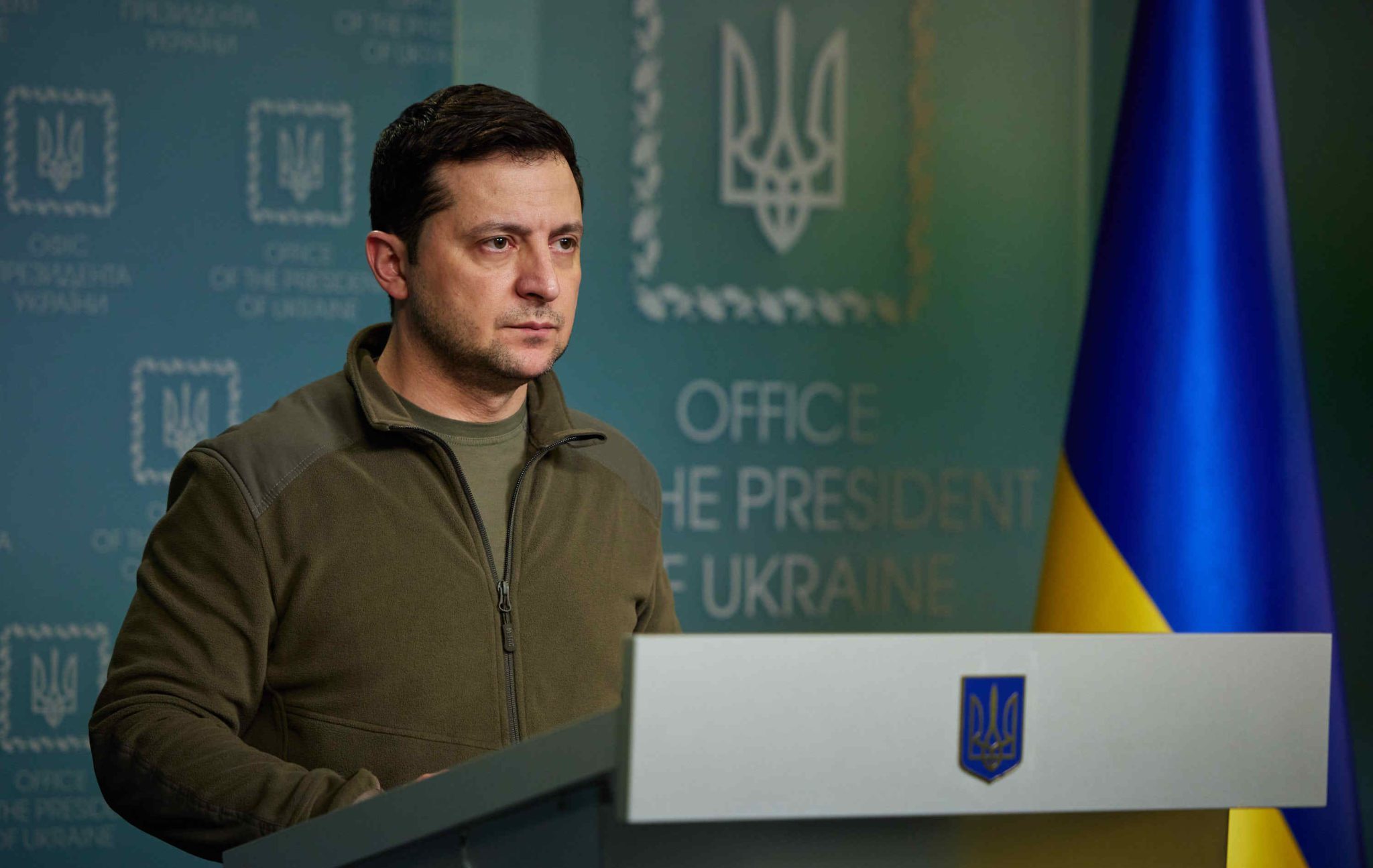
So, the blame for losing the war can be shunted to Europe as well. And that’s just what Zelensky did in his speech at Davos a couple weeks ago. He pounded Europe for its weakness. He castigated Europe for making the same empty promises year after year. “Just last year, here in Davos,” he said, “I ended my speech with the words: ‘Europe needs to know how to defend itself.’ A year has passed—and nothing has changed.” He said that “Europe loves to discuss the future but avoids taking action today.”
He charged Europe with impotence in helping Ukraine on economics and sanctions and on a special tribunal on Russian aggression: “Too often in Europe, something else is always more urgent than justice.”
Most pointedly, he scolded Europe for its military weakness, its dependence, and for not prioritizing Ukraine. “Europe,” he said, “relies only on the belief that if danger comes, NATO will act.” But “Europe hasn’t even tried to build its own response.” Europe is helpless to provide security guarantees for Ukraine without a U.S. “backstop.” Europe, he said, “looks lost, trying to convince the U.S. President to change,” but Trump “will not listen” to a Europe that is “a geography” but “not a great power.” In a final insult, Zelensky called Europe “just a ‘salad’ of small and middle powers.”
By laying the blame for losing the war on the U.S. and Europe, Zelensky can’t be blamed for returning to the negotiating table. While the talks stand still over territorial concessions, those territories are being lost in the war. For Zelensky, though, that may be the preferable option.
The post For Zelensky, Is Losing the War Better Than Losing the Peace? appeared first on The American Conservative.








 New Posts (Home)
 ChatBox
 Popular Posts
  Game Zone
 Top PodCasts