www.dailysignal.com
CLIMATE LAWFARE: Will the People’s Republic of Boulder Bankrupt the Fossil Fuel Industry?
Climate alarmism has lost at the ballot box time and time again, and last year, even Bill Gates significantly dialed down his support for it. However, enterprising lawyers on the Left are still trying to smuggle in an effective carbon tax through the courts—and the Supreme Court should put an end to it.
It works like this: local governments or activist groups file a lawsuit against oil and gas companies, claiming that the burning of fossil fuels impacts the climate, and these impacts negatively harmed people. Activist lawyers bring cases in state courts that are more likely to rule in their favor, and—presto!—you’ve got a “carbon tax” imposed on oil and gas companies without needing a vote in Congress.
Don’t take my word for it. David Bookbinder, who served as part of the legal team representing the left-leaning city and county of Boulder in suing oil companies, described the climate lawfare as “an indirect carbon tax.”
“Tort liability is an indirect carbon tax,” Bookbinder said on a Federalist Society panel in October. “You sue an oil company, an oil company is liable. The oil company then passes that liability on to the people who are buying its products.”
Tellingly, he added, “I’d prefer an actual carbon tax, but if we can’t get one of those… this is a rather, somewhat convoluted way, to achieve the goals of a carbon tax.”
The thing is, the law isn’t supposed to work that way.
'INDIRECT CARBON TAX'Here's David Bookbinder, who represented Boulder in its lawsuit against Suncor (which the Supreme Court should consider and strike down).He admits climate lawsuits for damages under state law are an "indirect carbon tax," trying to circumvent Congress.? pic.twitter.com/QSeq1CXbky— Tyler O'Neil (@Tyler2ONeil) February 6, 2026
Problems With the Argument
It’s hard to overstate just how baseless this cockamamie legal argument is.
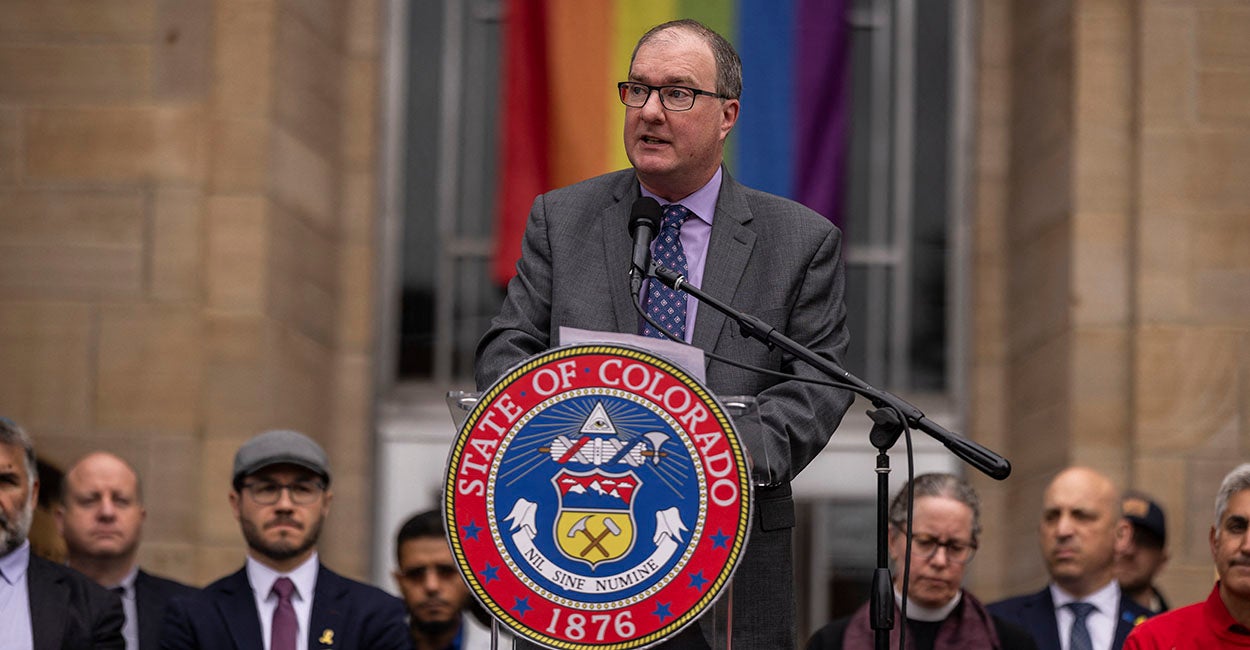
Colorado Supreme Court Justice Carlos Samour Jr., an appointee of Democrat Gov. John Hickenlooper, put it well in a dissent when the Colorado Supreme Court allowed Boulder’s lawsuit against Suncor Energy companies and Exxon-Mobil to go forward.
Samour noted that the court essentially “gives Boulder, Colorado, the green light to act as its own republic.” Why? Because applying Colorado state law to award damages for the companies’ burning of fossil fuels “will both effectively regulate interstate air pollution and have more than an incidental effect on foreign affairs.”
So, why did the Colorado Supreme Court rule this way?
The law has long treated interstate air pollution as an inherently federal concern under federal common law, but when Congress passed the Clean Air Act in 1970, that displaced federal common law. Since the Clean Air Act did not “preempt” Colorado from regulating greenhouse gas emissions, the court ruled that state laws may award damages for greenhouse gas pollution.
Yet Samour noted that “state law has historically been incompetent to address claims seeking redress for interstate and international air pollution.”
“Unlike the Blue Fairy that brought Pinocchio to life, the [Clean Air Act] did not magically breathe life into state-law tort claims that had been as lifeless as a wooden puppet,” the justice added.
Potential Fallout
Boulder cannot prove that a specific oil sale from Suncor had a specific impact on the global climate, which in turn caused a specific harm to Boulder. Instead, the case relies on the “consensus” that the burning of fossil fuels harms the climate—prediction models have failed to demonstrate exactly how—and that somehow this vague impact connects to depriving people of “the right to use and enjoy public property, spaces, parks, and ecosystems,” along with “the right to safe and unobstructed travel.”
Naturally, Boulder seems unconcerned about what a settlement in this case would do to Americans’ right to “safe and unobstructed travel.”
If Boulder wins this case, the fallout could be disastrous.
Bookbinder, who represented Boulder, stated that if a lawsuit like this succeeds, that will lead nearly “every jurisdiction in California” to sue the oil companies, and then “every defendant in all these cases immediately declares bankruptcy.”
Todd Zywicki, a professor at George Mason University’s Antonin Scalia Law School, noted at a Civitas Institute panel Thursday that “any community in America could sue any of these companies, and why stop at the power companies?” Communities could sue airlines, truck drivers, even Americans who drive.
I can imagine few obstructions of travel quite so obnoxious as a court determining that you could be sued just for turning on your combustion engine.
The Supreme Court’s Opportunity
Suncor Energy has appealed the case to the Supreme Court, presenting a golden opportunity for clarification.
Since Suncor asked the court to take the case in August, the Justice Department filed an amicus brief asking for review, as have 26 states and 103 members of Congress led by House Majority Leader Steve Scalise, R-La.
Deputy Solicitor General Sarah Harris put it well in writing that the United States has “a substantial interest” in whether Boulder can “apply one state’s law to the activities of energy companies around the world to hold those companies liable for injuries allegedly caused by global climate change.”
As Harris’ brief notes, the Colorado Supreme Court’s ruling conflicts with the Second Circuit Court of Appeals, which struck down New York’s case against Chevron in 2021.
The Supreme Court denied review in two cases where Honolulu, Hawaii, sought to punish Sunoco and Shell for alleged climate impacts. In June 2024, the Biden administration—which had significant ties to climate activist groups—urged the justices to deny review of those cases.
Here’s hoping Suncor succeeds where Shell and Sunoco did not.
The post CLIMATE LAWFARE: Will the People’s Republic of Boulder Bankrupt the Fossil Fuel Industry? appeared first on The Daily Signal.








 New Posts (Home)
 ChatBox
 Popular Posts
  Game Zone
 Top PodCasts