www.dailywire.com
20 Million Americans Say They’re Always High, And Even Liberals Recognize The Craze Has Gone Too Far
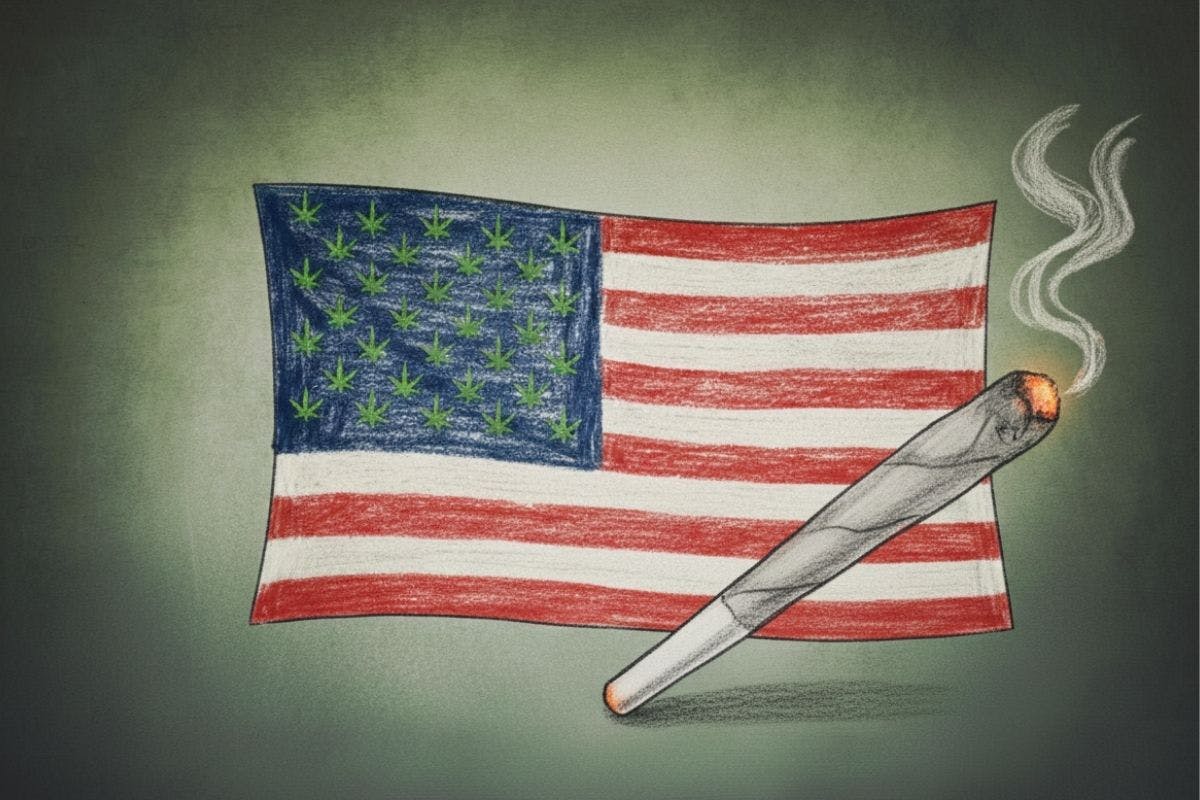
The New York Times editorial board expressed concern this week that the massive marijuana craze in America might have some major side effects — besides drowsiness and the munchies.
The Times editorial board, which dedicated a series of articles to pushing for marijuana legalization over 10 years ago, admitted on Monday that some of its arguments for legalized weed have been proven wrong after states began allowing recreational and medicinal marijuana use. It seems that many talking points from the pro-marijuana legalization side are falling apart as research uncovers some brutal truths about America’s pot craze.
“In our editorials, we described marijuana addiction and dependence as ‘relatively minor problems.’ Many advocates went further and claimed that marijuana was a harmless drug that might even bring net health benefits. They also said that legalization might not lead to greater use,” the Times editorial board wrote. “It is now clear that many of these predictions were wrong. Legalization has led to much more use. Surveys suggest that about 18 million people in the United States have used marijuana almost daily (or about five times a week) in recent years. That was up from around six million in 2012 and less than one million in 1992. More Americans now use marijuana daily than alcohol.”
Later, the editorial board added, “The unfortunate truth is that the loosening of marijuana policies — especially the decision to legalize pot without adequately regulating it — has led to worse outcomes than many Americans expected. It is time to acknowledge reality and change course.”
It’s rare for the Times to admit to so clearly pushing a narrative that turned out to be wrong. So, if America’s pot problem is becoming so evident that even the legacy media is pumping the brakes, how bad is it?
Addiction and other health issues stemming from marijuana use have spiked in the past decade as more states hopped on the pot bandwagon. As the Times pointed out, a large percentage of marijuana users aren’t just smoking a joint or two on the weekend; they’re consuming marijuana on a daily basis. According to research from Yale Medicine, a staggering 30% of cannabis users “meet the criteria for addiction.”
This heavy reliance on marijuana comes with multiple potential health risks, including cannabinoid hyperemesis syndrome, which gives users intense stomach pain and can cause vomiting. At least one recent study has also linked cannabis use to schizophrenia. The study, published in “Psychological Medicine,” found that up to 30% of schizophrenia cases in young men can be linked to cannabis use disorder.
A study conducted by UC San Diego School of Medicine and the New York University Grossman School of Medicine, meanwhile, found that employees who use cannabis regularly were more likely to miss work.
The advocacy group Smart Approaches to Marijuana has also pointed to research showing that driving fatalities involving marijuana skyrocketed between 2000 and 2018. Kevin Sabet, the president and CEO of Smart Approaches to Marijuana, told The Daily Wire that legalization leading to increases in addiction was “absolutely predictable.”
“Despite the promises of the legalizers, federal data show that (just as the Times notes) legalization drives use, including youth use increases,” Sabet said. “This is true in the national aggregate and in individual state data. It’s not rocket science: If you make a powerful addictive drug easier to access (and send the signal that it’s OK to use in the process), more people are going to use it. That is what I and many other people who were aware of the danger warned would happen and it is precisely what did happen.”
Now that nearly half the country has legalized marijuana in some or all forms, Sabet said the best path forward is for “states to focus on making sure that people, and above all young people, know how dangerous and destructive marijuana is: a permanent investment in infrastructure meant to promote prevention and awareness.”
“And it’s beyond important to remember here what the Times piece truly reveals,” he added. “Namely, that while people may disagree about policies and execution, they are now all agreed on the same set of facts. And those facts show beyond doubt that marijuana is dangerous, addictive, and creating havoc across America.”
The data pointing to some of these issues was available when the Times editorial board began publishing its series arguing for federal legalization. In a 2014 paper, researchers Hefei Wen, Jason M. Hockenberry, and Janet R. Cummings found that marijuana legalization led to an increase in marijuana abuse and dependence. The 2014 paper also found that as legalization surged, so did the rate at which adolescents experimented with the drug.
Ironically, the Times editorial board’s shift on marijuana coincides with the federal government in the process of reforming how it regulates the drug. In December, President Donald Trump signed an order to open the door to reclassifying marijuana as a Schedule III drug, meaning marijuana would be in the same category as drugs that have “a moderate to low potential for physical and psychological dependence.” For decades, the U.S. government has categorized marijuana as a Schedule I substance, which is defined as “no currently accepted medical use and a high potential for abuse.”
The U.S. government’s potential reclassification would not legalize marijuana at the federal level, but it could reduce the scale of marijuana-related offenses. As the president was considering the marijuana reclassification last year, nearly 50 organizations signed a letter urging Trump to keep marijuana classified as a Schedule I drug, arguing that marijuana “fits squarely” in the definition of a Schedule I drug, “a fact acknowledged in every scheduling review prior to 2023.”








 New Posts (Home)
 ChatBox
 Popular Posts
  Game Zone
 Top PodCasts