reclaimthenet.org
Newsom Backs Teen Social Media Ban After Daughter’s Birthday Party Phone Moment
If you're tired of censorship and dystopian threats against civil liberties, subscribe to Reclaim The Net.
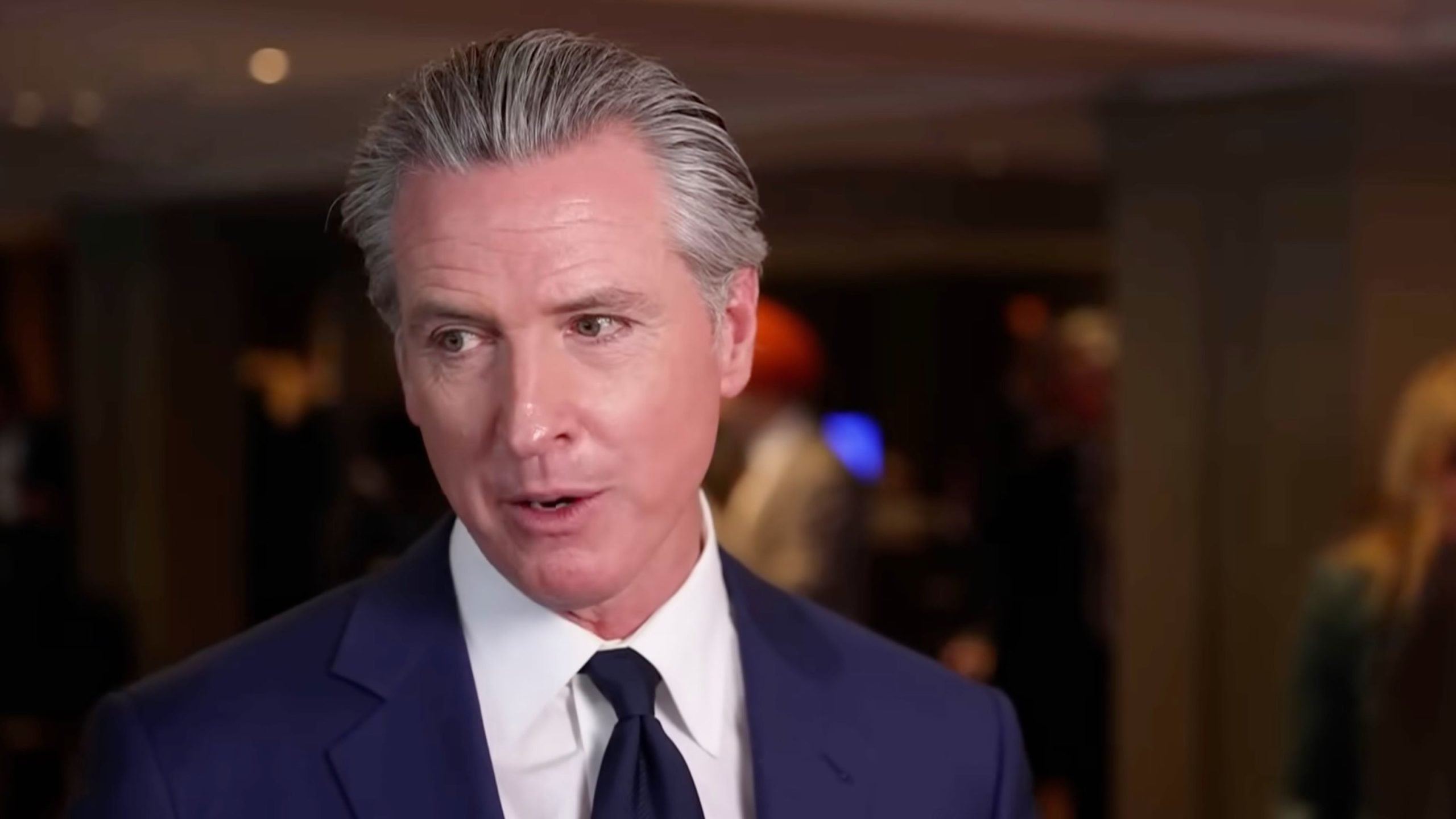
California Governor Gavin Newsom watched seven teenagers ignore each other at his daughter’s birthday party, all of them staring at their phones, none of them talking. His response to that moment wasn’t to ask the kids to put them down. It was to call for a law that would ban an entire generation from social media and ignore the constitutional rights of all Americans.
“I had a birthday party just a few weeks ago, with a lot of my daughter’s friends, and I literally stopped everybody because there were seven of them together — all of them on their cell phone at the birthday party, not one of them talking to each other,” Newsom said Thursday. “We have a generation that’s never been more anxious, less free, more stressed — and we have to address this issue.”
He addressed it by announcing support for age-gating legislation that would bar teens under 16 from having social media accounts, modeled on Australia’s ban. His spokesperson, Tara Gallegos, confirmed the position to Politico. Whether he would back an outright ban, as Australia has done, remains “in flux.”
So let’s be precise about what happened here. The governor of California attended a birthday party. He saw something that bothered him. He had, at that moment, the ability to do what parents have always done: intervene, set a boundary, ask the kids to put the phones away. He “literally stopped everybody.” He had their attention. And the conclusion he drew from that experience is that the government needs to remove these platforms from teenagers across the state.
This is the logic of the age-gating movement rendered in miniature. The problem is real. The phones were out. The kids weren’t talking. And the solution on offer isn’t parental authority. It’s a state authority, applied to every family in California regardless of their own judgment, their own kids, their own circumstances.
Newsom has four children between 10 and 16. He has been signing social media legislation for years: warning labels, restrictions on algorithmic feeds, penalties for deepfake pornography, and age verification requirements for devices. Last year alone, he signed more than a dozen bills touching social media and AI. Each one, including the current push, is framed as protection. Each one also extends the government’s power to decide who gets to speak online, on what terms, verified against what identity data.
A bipartisan group of California lawmakers introduced a bill this month, AB 1709, calling for “a minimum age requirement to open or maintain a social media account.” Lead author Josh Lowenthal, a Long Beach Democrat, is leaning toward 16 as the cutoff. Newsom moved ahead of it, publicly backing the legislation before it reaches his desk, which is unusual for him.
Newsom mentioned countries like Spain that are “moving in this direction.” Australia has already enacted a law that bans children under 16 from maintaining social media accounts.
“I think it’s long overdue that we’re having the debate we’re having now in the legislature, and I’m very grateful the legislature is taking this very seriously,” he said.
The debate he’s grateful for will determine whether teenagers in California have the legal right to post, organize, share journalism, or participate in the political conversations that now happen almost entirely on the platforms this legislation would close to them. A 15-year-old banned from Instagram isn’t simply protected from doomscrolling. They’re removed from the spaces where their generation does its civic life.
The legal battles over what California can actually do are already underway. Google, TikTok and Meta are currently suing to block a 2024 state law requiring parental consent before minors can view personalized content feeds, arguing it violates free speech.
NetChoice, the industry group representing those same companies, has signaled it may challenge two more laws passed last year: one requiring mental health warning labels on platforms for users under 18, and another requiring device-makers like Apple and Google to collect and report user ages.
The enforcement problem is the one nobody in this debate wants to sit with. Meta CEO Mark Zuckerberg was questioned about it Wednesday in a landmark Los Angeles trial, where a 20-year-old plaintiff known by her initials KGM claimed she became addicted to social media as a child, leading to depression and suicidal thoughts. Meta has denied the allegations. Asked about Instagram’s ban on under-13s, Zuckerberg acknowledged that enforcement is the central difficulty.
“I generally think that there are a set of people, potentially a meaningful number of people who lie about their age in order to use our services. There’s a separate and very important question about enforcement, and it’s very difficult,” he said.
That’s the problem with age bans: they don’t work without identity verification, and identity verification means every user, at every platform, must prove who they are. The infrastructure built to keep 15-year-olds off TikTok is the same infrastructure that knows exactly who you are when you post something a future government finds inconvenient. Age-gating and surveillance are the same system, built for different justifications.
Newsom’s answer to seven teenagers on their phones at a birthday party is a law that covers millions of people who weren’t at that party. The kids he saw weren’t doing anything illegal. They were doing what teenagers do. He had the authority, in that room, to ask them to stop. He chose instead to ask the state to stop them for everyone.
If you're tired of censorship and dystopian threats against civil liberties, subscribe to Reclaim The Net.
The post Newsom Backs Teen Social Media Ban After Daughter’s Birthday Party Phone Moment appeared first on Reclaim The Net.








 New Posts (Home)
 ChatBox
 Popular Posts
  Game Zone
 Top PodCasts