www.theamericanconservative.com
Is the Nationalist Revolution in Britain Real?
UK Special Coverage
Is the Nationalist Revolution in Britain Real?
Reform is facing some of its first tests of broad electoral viability.
UK Special Coverage
Nigel Farage’s insurgent Reform UK has now been dominating the British opinion polls since June 2025. Quite an achievement for a party led by one of the political world’s classic outsiders—or losers, according to his critics—Nigel Farage. He has tested a number of political vehicles to destruction in the past, including the UK Independence Party, the Brexit Party and, much earlier, the UK Conservative Party. Carpetbaggers rarely travel farther faster.
The paradox of Reform’s recent rise is that, while large numbers of voters agree with its policies, especially on immigration, many do not rate its leader. Nigel Farage is almost as unpopular as Keir Starmer. According to the polling organization, YouGov, more than 64 percent of voters think unfavorably about Farage, against 69 percent who view Starmer negatively. That is a pretty worrying metric for a party leader who confidently expects to be Britain’s next prime minister.
Moreover, everyone testifies to Farage’s skills as a populist politician—a great communicator, as he is described even by commentators on the left. It is inconceivable that Reform could have become the leading party in UK opinion polls without him. So how does Reform deal with the Farage Paradox?
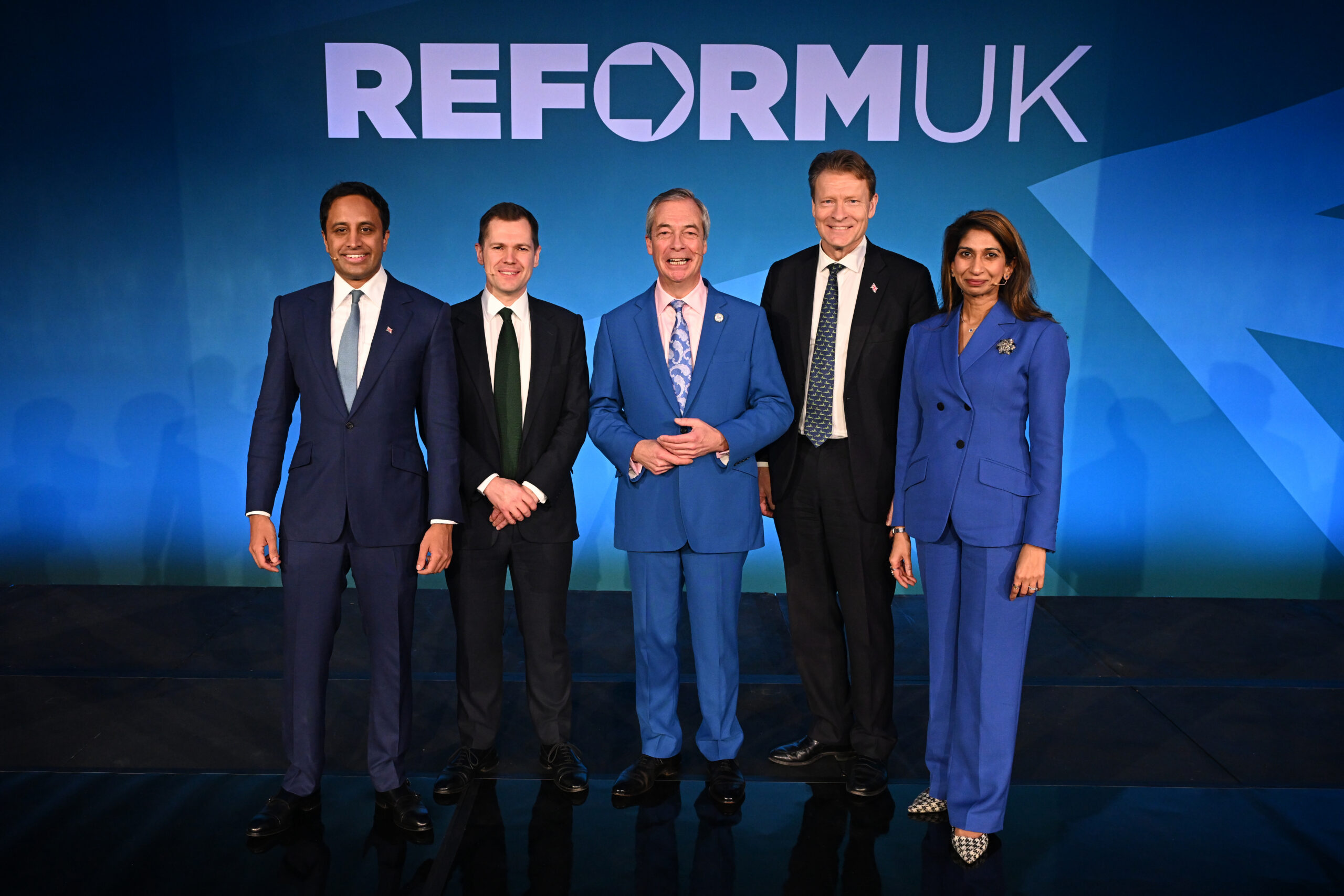
Last week Reform presumptuously announced its “shadow cabinet” with the former Tory ministers, Robert Jenrick and Suella Braverman, occupying the Treasury and equalities briefs respectively, while the Asian businessman, Zia Yusuf, covers home affairs and immigration. Farage joked that Britons would be seeing “less of me in future”.
There was much ribald commentary about this being a cabinet of Tory Party rejects and anti-immigration fruitcakes. But it is undoubtedly the right thing for Reform to do, if only to stop it being regarded as Nigel Farage’s personal property, which it literally was until a year ago. Reform UK was founded by him as a private limited company in 2018 and is still a non-profit company operating as Reform UK Ltd.
British voters dislike the establishment parties, and want to hurt them, but they don’t seem to have great faith in Reform being significantly different. Focus groups run by the architect of the Brexit victory, the former Number 10 adviser, Dominic Cummings, show that even Reform voters fear that they will just be “another bout of chaos” if they get into office. So Reform had to show first of all that it isn’t just the vanity project of a “marmite” politician, and second that it has a snowball’s chance in hell of being competent in government.
Well, Braverman is certainly an experienced minister. A lawyer of Hindu Indian descent, she was home secretary twice under the Conservatives and saw off attempts by left-leaning civil servants to have her cancelled. As Reform’s education and equalities spokeswoman, she promises to drive “cultural Marxism” out of schools and colleges and end the DEI culture in corporate and government bureaucracies by repealing the 2010 Equality Act.
Jenrick, the former Conservative Justice Secretary, is “shadow chancellor” in Reform’s wannabe cabinet, and used to be considered a potential Tory leadership contender and rival to the Tory leader Kemi Badenoch. He is promising to run the economy for “alarm clock” workers, not layabouts on benefits, and says he will stop tax-and-spending governments throwing their money around “like confetti.” So far, so Tory.
Yusuf, the Muslim son of Sri Lankan immigrants, is a luxury-goods millionaire who is relatively new to politics. He has been a star performer for Reform on TV and has even said he agrees with claims that parts of Britain have been “colonized by immigrants”. As Reform’s prospective home secretary, he promises to deport all illegal immigrants and end Britain’s subordination to the European Convention on Human Rights, which he claims has prevented even criminal illegals being deported.
Farage is clearly sending a double message. He is going to be very tough on illegal immigration, but he is not a racist. Else how could such prominent posts have been given to non-white descendants of immigrants? And Muslims to boot. Reform’s candidate for London mayor, Laila Cunningham, is also a Muslim.
But all this multiculturalism has appalled some on the far right of politics who were erstwhile Reform fellow travelers. They think Farage’s line-up is not only too much like the discredited Conservative Party but is not sufficiently nationalist.
The so-called ethno-nationalists to the right of Farage, most notably Elon Musk’s protege, Tommy Robinson—a former football hooligan, as his detractors remind him—want a reversal of all immigration, or “remigration”. They believe too much legal immigration has diluted British culture and made ethnic Englishmen and women feel like second-class citizens in their own country.
They now have a champion. Rupert Lowe, a former Reform MP, has set up his own rival Restore Party, with much vocal support from the X-owner. He has commanded nearly a million followers on the platform for his condemnation of “the rape of Britain” by mainly Muslim immigrants.
Reform’s immigration policy is, Lowe claims, “weak, weak, weak. The barbarians are already in the gates.” He says that “millions must go.” It’s not entirely clear how Lowe intends to remove these millions, or how he classifies them, but he is inviting supporters of Tommy Robinson to back him along with another far-right group, Advance UK, which is led by Reform’s former deputy leader Ben Habib.
There has been much ridiculing of these fragments on the nationalist far right. Comparisons have been drawn with the recent divisions in the left-wing, Corbynite party, Your Party. There is an air of Monty Python about the behaviors of the “ethnos,” intoxicated by the oxygen of publicity on Musk’s X.
This could be to Reform’s benefit. It does Farage no harm to be seen as not racist and even relatively moderate on immigration. His views are close to those of most British voters: Reform doesn’t want immigration halted, just for there to be a balance between those coming to Britain and those leaving, called “net zero migration.” Nor does it necessarily do him harm to be compared with the Conservative Party.
For those of us with long memories, the views of Braverman and Jenrick are what many Conservatives used to believe back when it was a mass-membership party. It was euroskeptic, socially conservative, opposed to mass immigration, and intensely nationalistic. It was the party of “Britain first.” It would never have countenanced net immigration being increased to just under one million a year, as it did under Boris Johnson. Nor would it have supported premature closure of the North Sea oil and gas industry or the subordination of parliament to lawyers in Strasbourg.
This is a make-or-break moment for Reform. But it is also a critical moment in the reshaping of Britain’s political culture. Farage won a modest victory last week in forcing the Starmer government to reverse its attempt to cancel a string of local elections on the grounds that there is to be a reorganisation of local government in future. Reform has to do well in these local elections in May. It will also have to have a decent showing, if not a victory, in this week’s Gorton and Denton parliamentary by-election in Manchester.
We will shortly discover whether or not the much-forecast nationalist revolution in UK politics is really happening.
The post Is the Nationalist Revolution in Britain Real? appeared first on The American Conservative.








 New Posts (Home)
 ChatBox
 Popular Posts
  Game Zone
 Top PodCasts